I was born in Poonch (Kashmir) and now I live in Norway. I oppose war and violence and am a firm believer in the peaceful co-existence of all nations and peoples. In my academic work I have tried to espouse the cause of the weak and the oppressed in a world dominated by power politics, misleading propaganda and violations of basic human rights. I also believe that all conscious members of society have a moral duty to stand for and further the cause of peace and human rights throughout the world.
“We have 48 persons, 48 birthdays, 48 lives and dreams. Each moment we remember them.”
Khitam Elian is speaking of her family, all 48 members killed in a single Israeli strike in November 2023 on a house in Nuseirat in an area of Gaza that was supposed to be safe. Her daughter Roba describes how she first saw the footage on social media without knowing what it was: “People were under the rubble and their legs were out… I wished that they would be strong only to realise later that this is my own family house, and those legs are my people’s.” The babies, she says, “were only four months when it happened… they were both killed.”
Channel 4’s Dispatches investigation, Britain’s Gaza Secrets Exposed, is built on testimony like this and represents a rare break with the silence and evasions that have characterised the British media’s coverage of Gaza. It is a direct exposure of Britain’s complicity in Israel’s war and the mechanisms used to conceal it.
Dispatches: Britain’s Gaza Secrets Exposed argues that UK support for Israel is shaped by strategic, diplomatic and economic interests. Israel is viewed as a key ally in the Middle East, while maintaining support for Israel helps preserve Britain’s close alignment with the United States.
The programme highlights the importance of the arms trade, particularly Britain’s role in the international F-35 fighter jet programme. In what is known as the “F-35 carve-out” successive governments have continued to allow UK-made components for the multinational F-35 supply chain even while other licences have been suspended. Around £360 million of these components have been supplied Israel’s F-35 fleet, its most significant combat aircraft, while British firms hold approximately $7.8 billion in ongoing F-35 contracts.
The programme’s central finding, based on previously unpublished internal government documents including legal assessments of Israel’s conduct in Gaza, is that the Foreign Office’s International Humanitarian Law Compliance Assessment Process (IHLCAP) was designed to ensure no war crimes could be found. Presented as a way to assess alleged Israeli war crimes, it allowed arms sales to continue.
Lawyer Dearbhla Minogue studied documents from the legal challenge brought by the Palestinian human rights organisation Al-Haq against UK arms exports to Israel. She explained how the methodology was “essentially incapable of allowing any kind of finding of breach unless the perpetrator tells you they’ve breached IHL.”
Asked whether Israel could ever be found in breach, she replied, “Not unless they admit it themselves… If Israel either says nothing or says everything was fine then everything’s fine.”
Former Prime Minister David Cameron, brought back into government by Rishi Sunak as foreign secretary, was personally briefed that Israel’s blockade of Gaza could constitute a breach of international humanitarian law. When challenged in Parliament, Cameron resorted to evasions: “I’m not a lawyer… I can’t recall every single bit of paper that’s been put in front of me.” He dodged the question 10 times. Just two days after the World Central Kitchen aid convoy strike killed three British aid workers, he approved the continuation of UK arms exports to Israel.
Foreign Secretary David Cameron (left) holds a meeting with United States Secretary of State, Antony Blinken on his visit to Washington [Photo by Foreign, Commonwealth & Development Office /Flickr / CC BY-NC-ND 2.0]
Within the Foreign Office, hundreds of civil servants signed letters warning that the UK risked complicity in Israeli war crimes in Gaza. Officials told Dispatches they were discouraged from using terms such as “ethnic cleansing” and “genocide” and described an atmosphere of intimidation.
Former diplomat and whistleblower Mark Smith said he resigned after witnessing “illegal activity at the heart of government” and losing faith in a system that could be manipulated because “the nature of the assessment is such that it can kind of make it say whatever you want.” Pointing to Gaza’s devastation, he said, “They’ve destroyed the vast majority of all residential buildings in Gaza. I’ve never seen anything like it in my career, in my life.” When he challenged government policy, he said he was met with a “barrage” of demands to “delete these emails” because “you shouldn’t be asking this.”
The documentary features surgeons who volunteered in Gaza. Professor Nick Maynard described treating groups of young boys whose wounds followed strikingly similar patterns. “One day there was 19 young boys, all of whom had been shot in the head and neck and the head and neck only. Another day mainly in the abdomen, another day in the chest, and one day they were shot in the testicles.” The pattern was so consistent that “we could not believe it was coincidental” and appeared to indicate deliberate targeting.
Maynard and other doctors later met then Labour Prime Minister Keir Starmer but were barred from presenting photographic evidence. Surgeon Victoria Rose said, “We weren’t allowed to screen share” and that Starmer, “a very tiny figure at the back of the screen”, offered no response. Maynard’s conclusion? “There can be no question that our senior politicians know what’s going on and the fact they are ignoring it, I do believe amounts to complicity.”
Channel 4 deserves some credit for putting this material on British television, as it did in July 2025 with its screening of Gaza: Doctors Under Attack–after the BBC had commissioned and then suppressed it, functioning as an arm of the government’s cover-up.
However, the film closes by asking what happens when the law is “enforced for enemies but bent for allies.” It assumes there exists a body of international law and state institutions intended to restrain governments, and that Gaza represents a tragic departure from those principles. But the documentary’s own evidence points elsewhere. It shows that the IHLCAP process was structured to produce findings of “no violation” and that assessments were moved into political offices where experts could be sidelined. The law was not accidentally bent; it functioned as an instrument of state policy. Al-Haq’s challenge to UK arms exports failed, with judges insisting such decisions belonged to ministers. Likewise International Court of Justice rulings have been ignored with the backing of Britain and the United States.
The documentary’s political limitations are clearest in its treatment of Labour. It exposes Labour’s refusal to acknowledge genocide, its support for the “F-35 carve-out” and the fact that Keir Starmer’s administration approved £127.6 million of military export licences to Israel in the final three months of 2024, exceeding the total approved under the Conservatives during the preceding four years.
Yet it frames Labour’s persistence in supplying and licensing arms for Israel despite evidence of war crimes, legal concerns and public opposition as a gap between rhetoric and reality, asking whether its measures were “as meaningful as they say.”
The suggestion is that Labour has fallen short of its principles. The evidence presented points to a different conclusion: Labour’s support for Israel is a continuation of British imperial policy, pursued by governments of both parties.
PCS trade union General Secretary Fran Heathcote is presented as the voice of civil servants warning of British complicity in war crimes. She is allowed to describe their concerns without being pressed on what the union has actually done. Rather than mobilising its members to refuse cooperation, the union bureaucracy has confined opposition to letters, legal complaints and appeals to the very ministers implementing the policy.
The central political question–who can stop this, and how–is left unanswered. The global opposition to the war and mass protests appear only at the margins and the role that must be played by workers in opposing genocide is of course never considered, leaving the documentary trapped within the same political framework it set out to criticise.
Fascist Israeli National Security Minister Itamar Ben-Gvir speaks to the media near Hebron in the occupied West Bank, Friday, Oct. 23, 2026. [AP Photo/Mahmoud Illean]
The Israeli government sealed off the occupied West Bank on Friday, and Prime Minister Benjamin Netanyahu announced that he was preparing a military operation there of a kind “not carried out since” Israel’s conquest of the territory in 1967.
The Israeli government, in alliance with the Trump administration, is extending the Gaza genocide to the West Bank in step with the preparations for a renewed offensive against Iran. Both are part of one continuous operation to create a “new Middle East,” launched in October 2023 under Democratic President Joe Biden and continued under US President Donald Trump. The total subjugation and ethnic cleansing of Palestine is a corollary of the war plans of the Trump and Netanyahu governments.
Netanyahu ordered the lockdown four days before Israel’s national election on October 27, 11 days before the US midterm elections on November 3 and four days after US Defense Secretary Pete Hegseth met him in Israel. The New York Times wrote Wednesday that US officials said Hegseth and Netanyahu discussed new strikes on Iran, to be launched after the US elections.
Just as the October 7, 2023 attacks by Hamas were seized upon by Netanyahu as the pretext to occupy Gaza and displace and exterminate its inhabitants, the Netanyahu government has seized on an attack on Israeli soldiers as its pretext for the offensive to annex the West Bank.
Two soldiers, Staff Sgt. Ron Yonatan Roytman, 23, and Sgt. Yuval Shai Svilem, 20, were killed at a checkpoint outside Hebron, in the southern West Bank, on Friday morning. The Israeli army claimed that two Palestinians from Hebron opened fire on the checkpoint and that troops shot both men dead after a gunfight of about 20 minutes.
Netanyahu pledged to destroy the neighborhood the alleged gunmen came from. “First of all, we will act to destroy this place, to change it completely,” he said at the checkpoint, the Times of Israel reported Friday. The army would “implement the successful and aggressive model we used in the refugee camps” and go “house to house,” Netanyahu said.Available from Mehring BooksThe struggle against imperialism and for workers’ power in IranA pamphlet by Keith Jones
The government was “considering a very extensive IDF [Israeli army] operation in Judea and Samaria [the West Bank], such as has not been carried out since” the 1967 war, Netanyahu said Friday.
Defense Minister Israel Katz said Friday: “Every clan neighborhood in Hebron from which the terrorists emerged today will be evacuated of its residents.” Katz added: “Just like in Gaza …”
Finance Minister Bezalel Smotrich wrote Friday: “There is no alternative to a comprehensive military campaign in Judea and Samaria to dismantle the Palestinian Authority, collect the weapons, and eliminate the terrorists, exactly as we did in Gaza …” The Palestinian Authority administers the Palestinian towns of the West Bank, and there is no evidence linking it to the gunmen.
By Friday evening the army was demolishing Palestinian buildings near Hebron, the Times of Israel reported that day, after Smotrich said he had ordered the immediate destruction of “a large swath of illegal Arab structures.” The army said that evening that it had “launched offensive counter-terrorism operations in the Hebron area.”
In the first 14 days of October the United Nations Office for the Coordination of Humanitarian Affairs counted “at least 160” attacks by settlers tied to the olive harvest, UN News reported Wednesday. On Monday the agency said Israeli troops and settlers had killed five Palestinians in the West Bank and injured more than 240 in two weeks.
Settlers also staged provocative attacks on foreigners. On October 16 about 80 masked settlers carrying clubs charged a group of Palestinian olive pickers near the village of Abu Falah and beat Heidi Levine, a photojournalist working for the Washington Post, Al Jazeera reported October 20. On October 17 masked settlers attacked French, Belgian and Polish diplomats in the town of Taybeh and threw a French mayor, Bernard Baudoux, 78, to the ground, Al Jazeera reported the next day.
On Friday Netanyahu called West Bank settlers “heroic” and “an example to the people of Israel and to the State of Israel,” NBC News reported that day.
TEHRAN — Dutch military hackers sat inside Jared Kushner’s iPhone in 2018 and watched him log in to a Dubai bank account that had taken in hundreds of millions of dollars, according to a new book by journalist Matthew Cole.
The account was allegedly one of at least two through which Abu Dhabi and Riyadh gave Donald Trump’s son-in-law access to about $2 billion while he steered Middle East policy from the White House.
Cole’s excerpt, published October 22 in Vanity Fair, starts with a GRU operative who specialized in stolen bank data. The Dutch MIVD learned he was headed for Britain, got London’s permission to seize him on arrival, and gave him a choice between working for The Hague and facing espionage charges.
He chose The Hague. In late 2017, he opened a GRU server in Rostov, where the Dutch found screenshots of Kushner’s iPhone X.
The MIVD reverse-engineered the Russian break-in. By early 2018 its team could watch Kushner’s screen whenever he used the phone.
Dutch press reported they spent years inside the Cozy Bear hacking group and fed the Americans warnings. This time the target worked in the White House.
Alpha, Beta and a defense fund
On that screen, Cole writes, was a First Abu Dhabi Bank account that Kushner signed for but did not own.
It belonged to the Watani Al Emarat Foundation, a state-funded Emirati “charity” that Cole says doubled as cover for covert weapons purchases abroad.
Roughly $750 million in cash reportedly entered through Azerbaijan, a channel that Cole says was used to conceal the money’s origins in the Arab monarchies of the Persian Gulf.
The ruling Arab families had initially floated a fund exceeding $10 billion to advance Trump’s foreign policy agenda, before settling on accounts for Kushner. “Jared was looking for shortcuts in his diplomacy,” one source told Cole.
A second account, Beta, allegedly held about $1 billion in Israel’s Central Bank by spring 2018. Netanyahu supposedly demanded notice of any transfer, relayed through Ambassador David Friedman, and much of the money later went to Cyprus.
A third deposit was reportedly earmarked for Israeli assistance to the UAE in countering Iran. Cole says the Dutch probably saw only Alpha.
In return for these financial commitments, Kushner backed Abu Dhabi and Riyadh’s regional demands from inside the White House and helped negotiate a secret defense pact committing Israeli military aid to provide military backing to the UAE.
Four senior Trump officials, among them two national security advisers, a chief of staff and a former CIA director, told Cole they knew of no presidential approval for Kushner to use a foreign government account.
A former Mueller prosecutor told him any promise made in return for the money could break bribery and foreign agent laws. House Oversight Democrats say Kushner must answer before the American people.
A marketplace, and Iran across the table
In 2018, The Intercept reported that Mohammed bin Salman bragged to Mohamed bin Zayed that Kushner was “in his pocket.”
Months after leaving office, Kushner took $2 billion from the Saudi sovereign fund for Affinity Partners, over a screening panel’s finding that its due diligence was “unsatisfactory in all aspects.” Rep. Jamie Raskin has since put Affinity’s assets at $6.16 billion.
Cole’s account paints a stark picture of how Washington, Tel Aviv and the Arab monarchies in the Persian Gulf operate behind closed doors.
Israel wanted “normalization” with the Arab states on its own terms. Mohamed bin Zayed and his Israeli allies wanted the 2015 nuclear deal (JCPOA) blown up. Mohammed bin Salman wanted the crown.
Kushner, an unpaid White House adviser with signing rights on an Emirati account, sat at the center of all three demands. Trump pulled out of the Iran deal in May 2018, in the very months the Dutch say they were watching that account.
On the book’s account, the strategy against Iran and the wider Resistance ran on secret slush funds, dark money and a corruption so routine that one source told Cole the Arab rulers in the Persian Gulf spend a billion or two on such arrangements every year.
The reports in Cole’s book date from Trump’s first term. In the second, the money may no longer need hidden accounts, because it moves through deals in plain view.
A $2 billion Emirati investment was tied to the Trump family’s USD1 stablecoin. Steve Witkoff met Tahnoon Bin Zayed on a yacht off Sardinia, and months later the White House moved to ease AI chip exports to Tahnoon’s G42.
David Sacks, the administration’s AI and crypto czar, received an ethics waiver to join those talks despite earlier fund ties to Persian Gulf investors. Tahnoon is the same man who chaired First Abu Dhabi Bank when, Cole says, the Alpha account was filling up.
What has emerged is a marketplace where Saudi and Emirati money, Israeli strategic interests and a president’s son-in-law met behind closed doors and conspired.
That same son-in-law is now a White House envoy deeply involved in Washington’s regional misadventures, including the war on Iran. Tehran has every reason to ask who he really works for.
The Trump administration and the Israeli government are deepening their plans for a massive attack on Iran in a matter of weeks. The New York Times reported Wednesday, citing US officials, that the American and Israeli militaries “have developed specific plans for renewed strikes against Iran after the American midterm elections,” and that the targets “would likely include Iran’s energy infrastructure, nuclear facilities, and missile and drone arsenal.”
President Donald Trump, right, poses for a photo with Israel’s Prime Minister Benjamin Netanyahu before he boards Air Force One at Ben Gurion International Airport, Oct. 13, 2025, near Tel Aviv, as Israel’s President Isaac Herzog watches at left. [AP Photo/Evan Vucci]
Taking place as US President Donald Trump’s approval rating hits a record low, the November 3 midterm elections are expected to reflect widespread popular opposition to the wars being waged by American imperialism and the affordability crisis they have triggered. Both parties, however, are plotting to flout the election results. Trump is actively preparing to attack Iran, while the Democrats are agitating for an escalation of war with Russia.
The Times reported that Secretary of War Pete Hegseth discussed the new strikes with Israeli Prime Minister Benjamin Netanyahu during a visit to Israel this week, and that American and Israeli warplanes have been flying over Iraq to rehearse the strikes. The United States “is assembling a massive arsenal that will be fully in place by early November,” the Times wrote, including “three aircraft carriers, thousands of Marines, fighter jets and Special Operations forces.” The US military “prefers to conduct attacks under the cover of night,” the Times added, “and there will be increasing hours of darkness over Iran early next month.”
Some US planners, according to the Times, believe “an intensive three-day campaign could cause enough economic damage to change the Iranian position.” The Times reported, citing people it described as briefed on the planning, that the two militaries are also preparing to bomb Iran’s nuclear program, possibly including the underground site at Pickaxe Mountain. Trump said in an interview with the right-wing cable channel Newsmax on October 15: “Now we’re looking at Pickaxe Mountain. We may have to go there.”
The Financial Times reported Wednesday, under the headline “Netanyahu made plans to restart Iran strikes earlier this month,” that Israel’s military had planned to open several days of strikes on Iran on the weekend of October 10, against nuclear facilities, power plants and other civilian infrastructure, in an operation more intense than the US-Israeli air war launched in February. The strikes did not go ahead, the Financial Times reported, because Trump was against reopening the bombing until the midterms were over. The New York Times gave a similar account: The two militaries “came close to striking Iran early this month,” with their air forces “on the highest state of alert,” before Trump “decided at the last minute to postpone the attack.”Available from Mehring BooksThe struggle against imperialism and for workers’ power in IranA pamphlet by Keith Jones
Netanyahu is campaigning in the Israeli election of October 27 on the platform of overthrowing the Iranian government. On September 3 he told an audience of Israeli military commanders: “I am convinced that we can remove this threat once and for all—that is, to overthrow this regime. That is the central task that still lies ahead of us, but it is close.”
The Times of Israel, an English-language Israeli news site, reported October 14 that Channel 12, an Israeli television news station, had learned that Netanyahu pushed Trump to restart the bombing before the Israeli vote, and that Trump told him he could “go ahead and prepare.” Five days earlier the Times of Israel reported, again citing Channel 12, that Lieutenant General Eyal Zamir, the Israeli military’s chief of staff, had warned US military commanders that a strike could force Israel to postpone its election.
The war being prepared by Trump and Netanyahu has already cost thousands of lives. US and Israeli warplanes first struck Iran on February 28, and the Times on Wednesday called the February-to-April bombardment the war’s “first phase.” The Qatar-based network Al Jazeera, compiling official figures, put the dead in Iran at 3,527 as of August 28. The toll on the American side, by the US military’s count through September 28, was 19 dead and 861 wounded.
The Times acknowledged Wednesday that the first phase of the war “drove up energy prices and inflation around the world” and “severely strained the Pentagon’s supply of missile interceptors.” Brent crude, the international oil benchmark, traded at $112 a barrel Thursday. The motorists’ association AAA put the average price of a gallon of regular gasoline at $4.27 on Thursday, up from $2.98 on February 26, two days before the bombing began.
The Houthi militia of Yemen, which is allied with Iran, has stepped up its attacks on Saudi Arabia, and on Wednesday the State Department told its non-emergency staff in the kingdom to leave with their families. Strikes this week on the airport in Dammam and on the Shaybah oil field killed at least three people.
Neither Senate Minority Leader Chuck Schumer nor House Minority Leader Hakeem Jeffries has made any significant statement warning about the Trump administration’s plans to attack Iran after the elections. The Democrats are demanding an escalation of war against Russia. Jeffries told the House on September 16, during the debate on a bill authorizing tariffs on countries that purchase Russian oil and gas: “Many of us wonder why the President has been so reluctant to aggressively confront the bully of Eastern Europe.” He added that “you have to confront the bully, not appease the bully.”
Schumer said on October 17, after Trump waived new sanctions on Russia: “Trump is aiding and abetting a dictator who has helped Iran target US troops in the Middle East.” Schumer and Democratic Senators Jeanne Shaheen of New Hampshire and Elizabeth Warren of Massachusetts had said on March 13 that Russian President Vladimir Putin “has been one of the prime beneficiaries of President Trump’s poorly conceived and executed war against Iran,” and that “Russia is reportedly providing Iran intelligence to target and kill U.S. service members.”
Democratic Senator Tim Kaine of Virginia said of the waiver on Fox News Sunday on October 18 that if Trump is “giving that money to Russia … they’re using it to provide support for Iran. In the Iranian US war that’s going on right now, you don’t give money to an adversary.”
Democratic Senator Mark Kelly of Arizona said on ABC’s This Week on September 27: “We can’t leave the Strait in the hands of the Iranians. They can’t be allowed to get a nuclear weapon.” Democratic Senator Ruben Gallego of Arizona said on CNN on September 30 that Hegseth “needs to distract from the fact that he’s losing a war,” and that if Hegseth needed a new office at the Pentagon, it should be for “figuring out how to win this war in Iran.”
On January 22, five weeks before the US bombing of Iran began, 149 House Democrats voted for the $839 billion military appropriations bill. On September 16, 58 House Democrats voted for the Russia sanctions bill, since signed by Trump, which also extends sanctions on Iran through 2031.
The World Socialist Web Site is the voice of the working class and the leadership of the international socialist movement. We rely entirely on the support of our readers. Please donate today!
Western media commemorate the Israelis killed three years ago, while largely ignoring the genocide that began the same day
A girl looks at the temporary tents of displaced Palestinians, alongside destroyed buildings, in Gaza City on 7 October 2026 (Omar al-Qattaa/AFP)
Just after 4pm local time on 7 October 2023, Al Jazeera’s Youmna El Sayed stood on a rooftop to update her audience on the latest from Gaza City, which was already under bombardment following the Hamas-led attacks on Israel early that same morning.
Live on air, as she was about to answer a question from a news anchor, we heard the sound of a missile scream down from the sky before thumping into a tower block with a horrible boom, the orange flash of an explosion appearing over her shoulder.
Sayed cried out in shock and ducked from view, but as so many brave Palestinian journalists would do over the next three years, she tried to continue reporting.
“We have just witnessed live what an Israeli air raid looks like on a populated area of Gaza City,” said the anchor, Cyril Vanier. “What we believe is a residential building.”
That initial strike on Palestine Tower, which indeed was a mixed-use residential and office building, was what the Israelis call a “roof knock” – a warning that a building is about to be destroyed, giving people an absurdly short time to escape.
New MEE newsletter: Jerusalem Dispatch
Sign up to get the latest insights and analysis on Israel-Palestine, alongside Turkey Unpacked and other MEE newsletters
Minutes later, the rockets intended to obliterate the tower arrived, and about 80 apartments – homes that would have had family photos on the walls, toys on the floor and dishes in the sink – were instantly reduced to a painful memory.
Vanier’s words were a portent of what was to come, because what we witnessed in that viral moment has since been repeated daily.
Israel’s campaign of extermination against the Palestinian people had begun. The genocide started on 7 October.
‘Wicked city’
In fact, it started just hours after Hamas and other groups launched their dawn attack. By 8:24am, the Times of Israel reported that Israeli strikes were under way.
The Indonesian Hospital in Beit Lahiya was struck a short while after, killing two people, including a member of staff. This set in motion what would become a pattern of attacking medical facilities, doctors, patients and employees: over the next three years, more than 1,700 healthcare workers were killed, many in targeted attacks.
Journalist Mohammad al-Salhi was shot dead by Israeli forces in al-Bureij on 7 October, and ambulances were hit outside Nasser Hospital in Khan Younis and in Jabalia, where two paramedics lost their lives and several others were wounded.
The industrial-scale slaughter of Palestinian children also began on 7 October. Just after 8pm, with the attack on Gaza ongoing for 12 hours, the Israelis hit a three-storey building in the Zeitoun neighbourhood, where three generations of the al-Dos family lived. Fifteen family members, including seven children, were killed. Adam al-Dos, 18 months old, was the youngest.
The entries on Gaza were so fleeting and by-the-numbers that all they did was underline the disparity. They reeked of afterthought
Children were also killed in other strikes that day. By 9pm, a provisional death toll of 232 Palestinians was reported.
Israeli Prime Minister Benjamin Netanyahu and other politicians were not shy about making their intentions immediately clear, with intent a key component of legally determining that a genocide has been committed.
“We will take mighty vengeance for this black day,” Netanyahu said in a televised address. “We will take revenge for all the young people who lost their lives … We will turn Gaza into a deserted island.”
Yoav Gallant, then the defence minister, vowed to “change reality on the ground in Gaza for the next 50 years”, while Finance Minister Bezalel Smotrich reportedly told a cabinet meeting that Israel must “be cruel now and not think too much about the hostages”. An army general made the sinister promise that Hamas had “opened the gates of hell on the Gaza Strip”.
All of these statements, and more, were made on 7 October. It is clear that the genocide began that morning.
Hierarchy of suffering
Why, then, did much of the western media this month mark the anniversary with wall-to-wall reporting of Israeli commemorations – and only the paltriest of mentions for Palestinians?
Why did the BBC run a live blog with pages of stories humanising Israelis killed three years ago, while Palestinians continue to be massacred? Why did the Guardian?
To be clear, it’s not the fact that there was coverage. It’s the immense scale and prominence of it: a scale that amounted to tens of thousands of words and hours of television, yet found little room for Gaza.
This highlights the hierarchy of suffering that western media has applied to the events of the last three years. It’s more than a hierarchy of suffering: it’s a hierarchy of peoples.
Why Gaza’s genocide ranks among the gravest horrors of human history
The BBC’s blog was headlined “Israeli families mourn 7 October victims as memorials held around world”. Its lead image was a girl placing a candle at a fountain in Tel Aviv’s Dizengoff Square, where photos of victims of the attack on Israel sat alongside photos of Israeli soldiers killed while committing genocide in Gaza.
The pages featured dozens of images of Israeli commemorations; of people weeping, embracing and bowing their heads in remembrance, as they should, because they deserve to heal and to remember their loved ones like anyone else.
The point, though, is that with the genocide ongoing, there were only a handful of Palestinians briefly featured, all of them currently living through hell – and not a single blog post was reserved for the Palestinians killed by Israel on 7 October 2023 itself.
The entries on Gaza were so fleeting and by-the-numbers that all they did was underline the disparity. They reeked of afterthought, or of an attempt to see off criticism.
There was no space for the seven Dos children, who were wiped from mainstream media memory as 7 October victims because they were Palestinian.
Taboo subject
The Guardian’s live blog, headlined “World leaders pay tribute to victims as Israel marks three years since 7 October attack by Hamas – as it happened”, was more of the same. Palestinians were featured, but as footnotes drowned out by Israel’s mourning.
In the US, NBC’s live updates, which focused on how Israel was marking the anniversary with memorials “at homes, roadsides, kibbutzim and a music festival site”, gave more room than others to Palestinians – but in doing so, exposed another dichotomy.
It communicated, or at least implied, to the reader that the Israelis killed three years ago were more important than the Palestinians it rightly pointed out were still being killed. Even on the anniversary itself, at least five Palestinians were killed, including a 17-year-old boy and a rescue worker responding to a previous strike.
The fact is, talking about the Palestinians killed on 7 October is a taboo – one fiercely policed by pro-Israel lobbying groups and the western media and political classes.
The opening line of a BBC report on an anniversary march in London to demand an end to the genocide said that organisers were “ignoring a request by the Metropolitan Police” for it to be called off. Police, it continued, were worried that the march, organised by the University of London coalition, would distress Jewish students and staff.
It then quoted the Union of Jewish Students as saying that the protest was “provocative, deliberate and must be condemned”.
The BBC only briefly – without naming or, it appears, interviewing anyone – mentioned that protest organisers said they wanted to denounce genocide and fight for a free Palestine.
Over on the Guardian, a statement from the Board of Deputies of British Jews was published in full, calling the protesters, some of whom were Jewish, a “small and extremist minority of British society”. The UK’s defence secretary, Wes Streeting, was featured labelling the march “shameful”. Not a single marcher was quoted.
Media manipulation
The strength of the taboo was also demonstrated by the hysterical reactions from the pro-Israel lobby, along with right-wing and centrist politicians, to New York Mayor Zohran Mamdani’s statement on the day, to which the media hungrily responded.
News stories in the US were not framed around what Mamdani actually said. Instead, they centred on the absurd response to it. It’s worth noting that his statement began not with Gaza, but with a condemnation of the Hamas-led attacks, which he called “horrific war crimes” that were “profoundly painful for so many New Yorkers”.
But that wasn’t enough. Mamdani’s transgression, it seems, was that he went on to condemn the genocide, pointing out how many people were killed and underscoring the fact that despite the “so-called ceasefire”, the slaughter continues.
Israel’s genocide against the Palestinian people began on 7 October 2023. It continues. And Palestinian lives are as important as Israeli lives
The New York Times, CNN and Politico all centred their stories around the three paragraphs in which the mayor focused on Palestinians.
Mamdani “draws anger”, the New York Times headline said. For CNN, he drew “ire”. And in the telling of Politico’s headline, he was subject to “bipartisan backlash”.
Those three stories, from some of the most esteemed outlets in the US, collectively provide a pitch-perfect example of media manipulation in action at the highest levels.
Here are the facts: Israel’s genocide against the Palestinian people began on 7 October 2023. It continues. And Palestinian lives are as important as Israeli lives.
That’s the simple truth, whether the western media wants to tell it or not.
The views expressed in this article belong to the author and do not necessarily reflect the editorial policy of Middle East Eye.
Cuba has accused the United States of threatening countries with tariffs, visa restrictions and other retaliatory measures in an effort to get them to change their votes on an upcoming United Nations resolution calling for an end to the long-running embargo against the island.
Every year, a majority in the UN General Assembly votes in favour of a nonbinding resolution seeking a stop to the US embargo, which began in the early 1960s.
The embargo, considered the longest in modern history, has been credited with exacerbating economic hardship on the island.
But on Wednesday, Cuban Foreign Minister Bruno Rodriguez said that the administration of US President Donald Trump was seeking to pressure members of the UN General Assembly to vote against the resolution this year.
He explained that US Secretary of State Marco Rubio and Washington’s ambassador to the UN Mike Waltz were personally leading the campaign, which he alleged had been going on for months.
“It is a new and dangerous way of conducting multilateral diplomacy,” Rodriguez wrote in a statement on the social media platform X. “It reflects the impotence of those who know they are in the wrong and whose only remaining recourse is force.”
Rodriguez said US officials had threatened to suspend cooperation programmes, deny visas to government officials and their families, and even back opposition parties in upcoming elections if countries refused to change their positions.
He also accused the US of urging some countries to abstain or skip the vote altogether if they were unwilling to vote against Cuba.
Al Jazeera has reached out to the US State Department and the US Mission to the UN for comment, but it did not receive a reply by the time of publication.
Heightening pressure on Cuba
The allegations come amid escalating tensions between the two countries ahead of the vote on the resolution, expected to take place on October 27 or 28.
The Trump administration has long maintained that the Cuban government — not the embargo — is to blame for the country’s struggling economy, and it has called for regime change.
On Monday, Waltz accused Cuban diplomats of harassing and intimidating participants at a US-hosted panel on alleged human rights abuses in Cuba.
Cuba’s UN Ambassador Ernesto Soberon Guzman and other representatives had confronted Waltz as he left the event at UN headquarters in New York City.
Speaking to reporters afterward, Waltz said that, every year, the Cuban government “propagates a lie through its annual resolution”.
“It uses excuse after excuse to justify its oppression, to justify the misery of the Cuban people, and what we are doing here at the US Mission to the UN is exposing those lies,” he said.
In a separate briefing that day, Waltz also acknowledged that Washington had been lobbying European countries to reconsider their support for the resolution. He pointed to allegations from Ukraine that Cuban nationals fighting for Russia weren’t being paid and that the money was instead going to the Cuban government.
“Yes, we’ve asked many of our European colleagues: Given this evidence from the Ukrainian government, how can they continue to vote for this resolution that is a propaganda tool for the Cuban regime and that is directly affecting their national security?” Waltz said.
The UN General Assembly has voted overwhelmingly in support of resolutions calling for an end to the US economic embargo on Cuba almost every year since 1992. The embargo itself has been in place for more than six decades.
Since the start of 2026, the Trump administration has intensified pressure on Cuba by blocking oil supplies and threatening tariffs on countries supplying the country with fuel, leaving Cubans to face more severe shortages of essential supplies and prolonged blackouts.
Iran believes the U.S. and Israel may strike before the midterms. Top security official Gen. Mohsen Rezaei tells Drop Site Iran has new targets in its sights.
Drop Site is a reader-funded, independent news outlet. Without your support, we can’t operate. Please consider becoming a paid subscriber or making a 501(c)(3) tax-deductible donation today. Subscribe
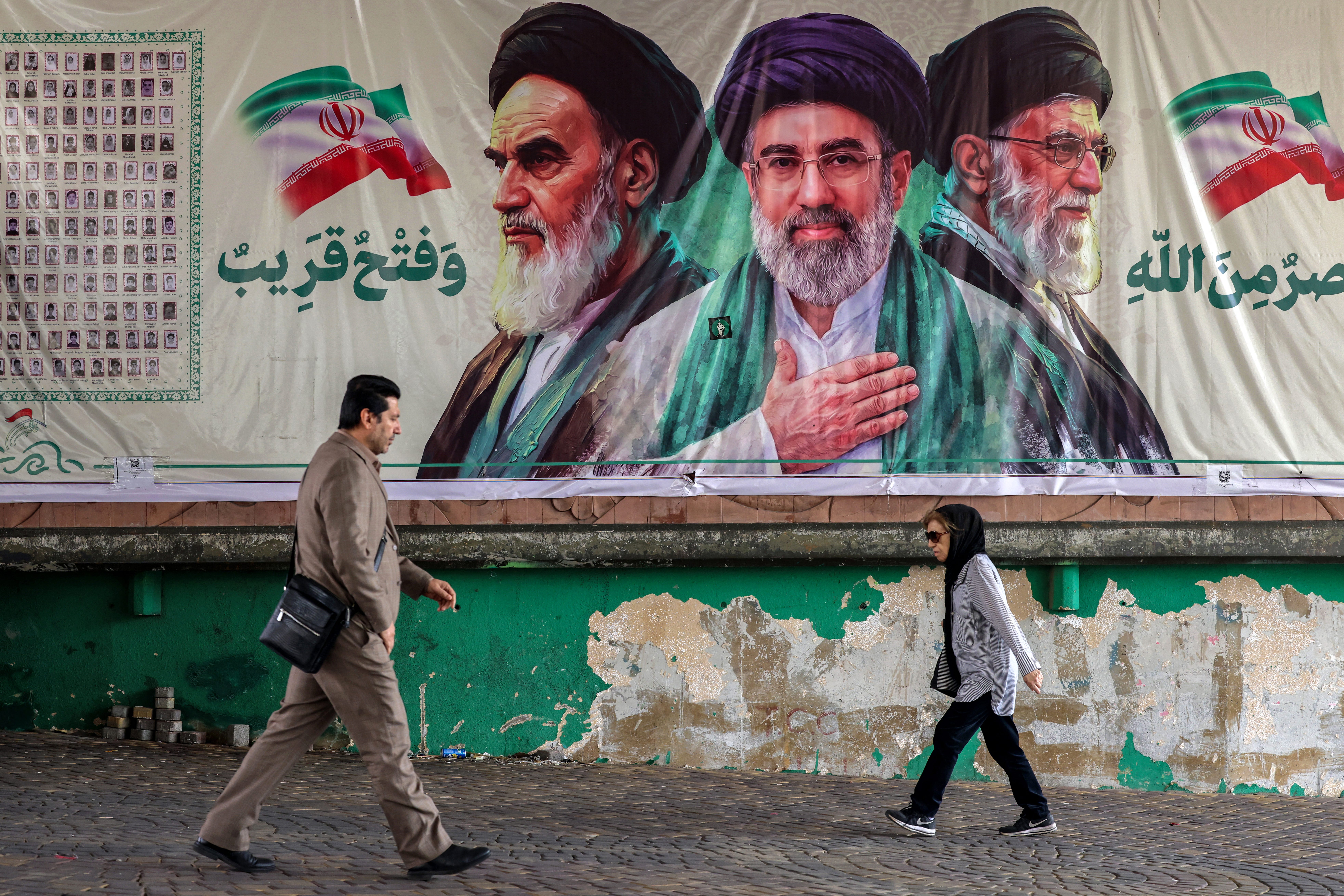
People walk past a banner depicting the portraits of Iran’s former supreme leader Ayatollah Ruhollah Khomeini (L), Iran’s supreme leader Ayatollah Mojtaba Khamenei (C), and slain supreme leader Ayatollah Ali Khamenei (R) in Tehran on October 21, 2026. Photo by ATTA KENARE / AFP via Getty Images.
The U.S. and Israel are preparing to resume attacks on Iran, according to senior Iranian officials and a U.S. official, and may even launch operations before next week’s Israeli elections. Prime Minister Benjamin Netanyahu is fighting for his political life, and the Israeli press is rife with reports that he is looking for a way to exploit the Iran standoff to his advantage. In the U.S., President Donald Trump’s approval ratings are at historic lows, and the midterm elections are less than two weeks away.
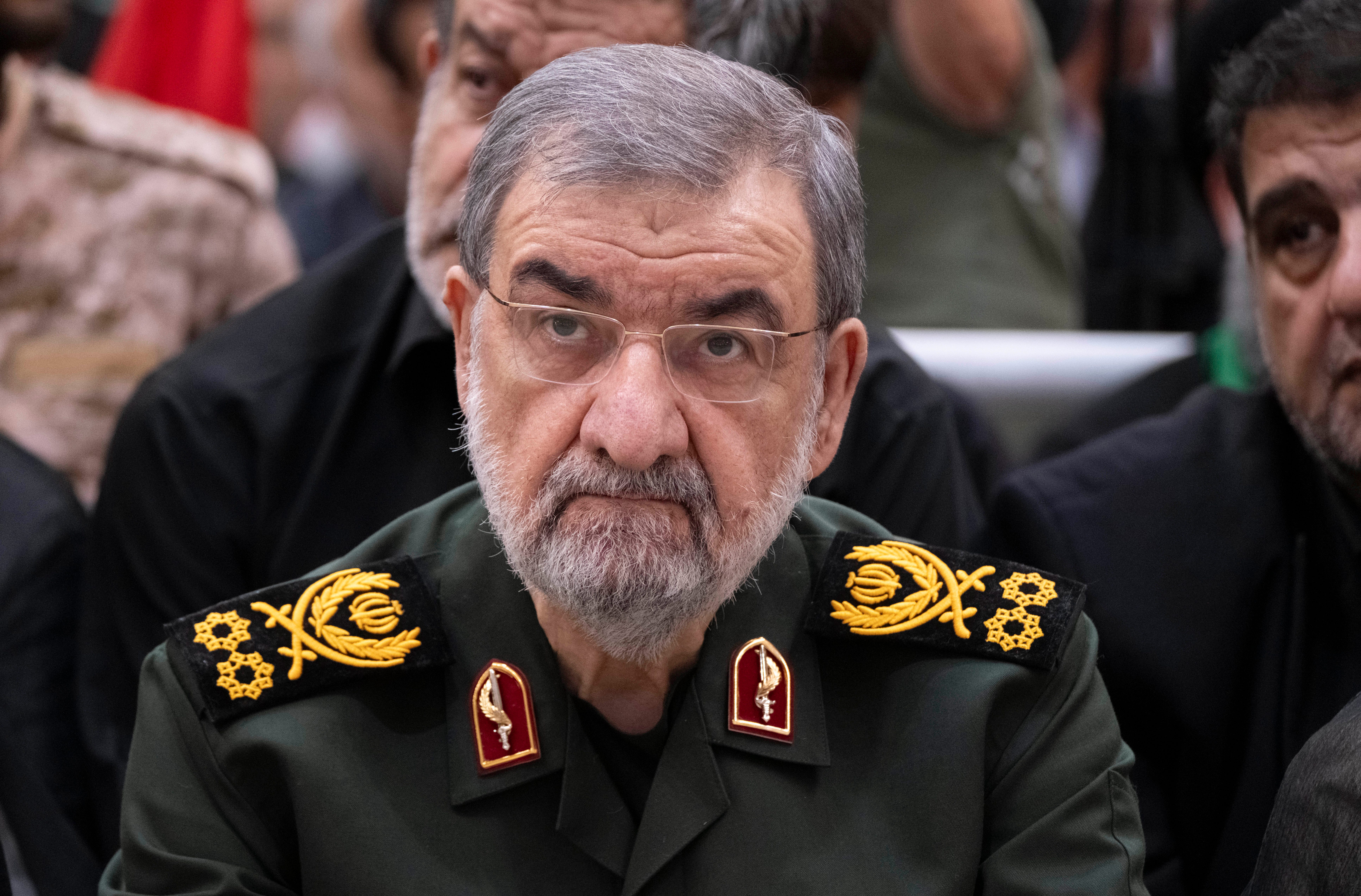
Iran’s top security official, Gen. Mohsen Rezaei, the Secretary of Iran’s Supreme National Security Council and personal representative of Supreme Leader Ayatollah Mojtaba Khamenei, told Drop Site that, in the event of an attack, Iran still has capacity to continue launching missiles and drones at various U.S. assets across the region in retaliation and that it would expand its range of targets.
“If the question is whether Iran still has the ability to continue missile and drone operations, the answer is yes,” Rezaei said in an exclusive written interview. “The United States has valuable assets in the region. In the event of war, cables, data centers and artificial intelligence facilities could also come within range. If the conflict begins again, we will have a broader plan.”
“Everyone must understand that action against Iran carries a cost,” he added. “If diplomacy can bring about that understanding, we prefer diplomacy. But if the war continues, Iran has the tools it needs to keep responding.”
A senior Iranian official told Drop Site that Tehran’s current internal intelligence assessment indicates a high likelihood that large-scale bombing may even begin before Tuesday’s Israeli elections. “Trump has sat on Iran’s proposed package for ending the war, and negotiations have stalled,” said the official, who is not authorized to speak publicly. “Contrary to the show he is putting on, Trump has no clear or actionable plan for [ending] the war with Iran. This has been the cause of a diplomatic deadlock.” He warned that Iran should not be underestimated, claiming, “Should another war against Iran begin, given our knowledge of the patterns of American force deployment in the countries of the region, their casualty figures will be ten times higher.”
The White House denied it was planning to strike Iran in the next two weeks. “The United States will not be attacking Iran at any time prior to the midterm elections,” White House Principal Deputy Press Secretary Anna Kelly said in a statement to Drop Site.
Tehran believes Israel would be tasked with firing the first shots, the senior Iranian official said, aimed at “destroying Iran’s newly deployed air defense systems, in order to open the path for American bombers.” The U.S., he said, would likely focus on attacking Iran’s southern defense systems along the Strait of Hormuz and potentially attempt to seize one of the islands off the Iranian mainland after heavy bombing. Trump, he said, is continuing his quest for a notable action that he can use to proclaim victory, adding that Iran believes he may seek to launch a “token” attack on one of Iran’s underground nuclear sites, such as Pickaxe Mountain, and subsequently portray it as a definitive blow. “Trump is flat-out lying about Iran’s nuclear program,” the official said.
A U.S. official confirmed to Drop Site that military assets are being moved rapidly into place in preparation for an expected green light from Trump. Among the American officials pushing for renewed attacks is U.S. Central Command chief Gen. Bradley Cooper, the official said. “CENTCOM is putting all the pieces into place to renew major combat operations,” added the official, who is not authorized to discuss war plans. He was skeptical the war would resume before the Israeli elections, but conceded, “We did start Epic Fury without all our assets in place.”
The USS Theodore Roosevelt carrier and the 13th Marine Expeditionary Unit are heading to the Middle East, bringing approximately 10,000 additional sailors and Marines to the region. The Roosevelt, which departed Japan on Monday, could reach the region by the end of next week ahead of its initially expected deployment slated for late November. It will join the USS George H.W. Bush and USS George Washington, both currently in the Arabian Sea.
While the U.S. official said the likelihood of new U.S.-Israeli attacks was high, he acknowledged that Trump has gone to the brink of military action and pulled back more times than is publicly known. “Trump has backed off major combat operations against Iran or the Houthis seven times since July,” the U.S. official said, referring to Ansarallah, who launched a major offensive against Saudi-backed groups in Yemen. “At the last minute, he calls it off.”
Netanyahu, who is behind in the polls, claimed Wednesday without evidence that Iran was actively working on the development of a nuclear weapon and said he had ordered the Israeli military to prepare for preemptive action. “The Iranian regime still has not learned its lesson. Mojtaba Khamenei decided to follow in his father’s footsteps. He has taken off the safety, and Iran is once again trying to develop its weapons of death,” Netanyahu said. “There is only one way to remove this threat once and for all, to topple the regime in Iran, and that is my directive to the IDF, the Mossad and the security agencies.”
Drop Site News is reader-supported. Consider becoming a free or paid subscriber.Subscribe
Analysts say that Trump is continuing to pursue an elusive clean victory narrative, while Netanyahu understands this may be his last chance at continuing the war he has agitated for his entire political career.
“This is Netanyahu’s last chance to do so. And he’s not going to leave until he turns every stone to be able to achieve it. Particularly knowing that either his career is going to end or the United States is going to go in a direction in which this no longer will be an option,” said Trita Parsi, a leading Iran expert and the executive Vice President of the Quincy Institute. “Trump, I suspect, has already made a decision that he’s going to go to war,” he added. “The Israelis have been very successful playing to his psychology, which is that he’s willing to take massive risks as long as he has the belief that it can get him a victory so that he avoids accepting defeat, which is so crucial for him. But it is a massive miscalculation that will make the situation 100 times worse.”
The intersection of Trump’s and Netanyahu’s political interests increases the chances that the war will resume, argues former senior U.S. Iran negotiator Robert Malley. “Netanyahu may want a longer campaign with broader objectives. Trump may want something shorter that he could quickly get out of. The overlap between the two might well be an intensive campaign that doesn’t last too long,” said Malley, a key figure in brokering the 2015 Iran nuclear deal. “President Trump may want a victory lap and an exit ramp. But as has been proven time and time again, the exit is not decided by him alone,” said Malley, who currently directs the Middle East Program at the International Crisis Group. “There is every reason to believe the Iranians are preparing all kinds of steps, whether by them or by their regional partners, whether in or out of theater, to ensure that however much he wants a victory lap and an exit ramp, he is deprived of both.”
“We Are Prepared for the Next Stage”
Gen. Rezaei is one of the most prominent military figures in modern Iranian history. A former commander of the Islamic Revolutionary Guard Corps, he was tapped to serve as the top military advisor to Khamenei in August. His comments are often viewed as reflecting the consensus at the top of Iran’s power structure. He told Drop Site that despite U.S. claims to have “obliterated” or “decimated” Iran’s military infrastructure, Iran spent decades preparing for a broader war waged by the U.S.
Gen. Mohsen Rezaei attends a ceremony at Ayatollah Ruhollah Khomeini’s shrine in southern Tehran, Iran, on June 4, 2026. Photo by Morteza Nikoubazl/NurPhoto via Getty Images.
“Iran has invested for years in building redundancy into these capabilities: dispersed production, underground facilities, different launch systems and the ability to repair damage and replace losses,” Rezaei told Drop Site. “More importantly, you should not assess our capacity solely by asking how many missiles remain in storage. In a prolonged war, the central question is whether a country can sustain a continuous cycle of production, deployment and response. We have shown that, even months after the war began, we can still impose costs on the other side.”
Rezaei also indicated that Tehran would deploy new capabilities in its retaliatory response. “We did not deploy all our capabilities in the previous stages. We brought more capabilities into operation in proportion to the intensity of the war, and we are also prepared for the next stage,” Rezaei said.
During the war, Iran carried out at least 135 drone and missile strikes on 84 critical infrastructure sites across seven countries—Saudi Arabia, the UAE, Iraq, Qatar, Kuwait, Oman, and Bahrain, according to a Reuters investigation. While Gulf governments repeatedly attributed the damage to falling debris from intercepted Iranian missiles and drones, the investigation found evidence of deliberate, precision strikes targeting critical equipment. The attacks demonstrated “precision, targeting expertise, and patience,” Ryan Stevens, a former U.S. Marine Corps special operations airstrike coordinator, told Reuters.
Echoing Rezaei’s warning about communications infrastructure, Iran’s Islamic Revolutionary Guard Corps spokesperson, Hossein Mohebi, also threatened to target internet cables passing through the Strait of Hormuz if the U.S. launched renewed attacks. Mohebi further warned Monday that another U.S. military operation would trigger a global energy crisis. “If America takes a new action—even a limited one—the world will face a serious energy crisis,” he told the Tehran Times.
Rezaei did not rule out targeting energy infrastructure in Gulf states as a retaliatory measure. “If the U.S. strategy is to prolong the war while using neighboring countries’ energy infrastructure to offset the pressure arising from Hormuz and maintain the blockade of Iran, those governments should not assume they can participate in economic warfare against Iran without putting themselves at risk,” he said. “The message is not that Iran wants to destroy the Persian Gulf’s energy system. The message is that there can be no arrangement in which Iran’s economic lifelines come under attack while the economic architecture enabling those attacks is considered untouched and immune.”
The senior Iranian official said Trump’s approach to Iran has been focused on short-term objectives that are often disconnected from geopolitical realities or core U.S. interests, likening him to a day trader. “The wartime secrecy surrounding military operations has given him and his family exclusive and extraordinary access to information regarding forthcoming actions and the state of the markets—access that benefits only those closest to him,” he said. “Perpetuating the current situation will carry strategic consequences, not least that the energy markets will not find calm for the next three years. The continuation of this war has shifted the dynamics of relations in Iran’s favor, as the littoral states of the Persian Gulf are rapidly redefining their relationship with Iran, having become convinced that the U.S. military is incapable of defending its own bases, this at a time when those same states had expected America to defend their countries.”
Iranian officials have said repeatedly that Iran will not back away from its red lines in any negotiations, consistently pointing to Tehran’s acceptance of the June 17 Memorandum of Understanding, which was swiftly violated by the U.S., leading to a breakdown in the diplomatic process in early July.
Iranian Foreign Minister Abbas Araghchi said he presented a “Seven-Day Plan” to the U.S. through mediators at last month’s UN General Assembly, outlining steps for an end to the war and the reopening of the Strait of Hormuz. “Under this proposal, the U.S. would not be expected to do anything that it has not already agreed to,” Araghchi wrote in an op-ed for the Financial Times on Wednesday. He said the framework’s steps and outcome were clear: “The Strait would reopen on Day 6, with the resumption of talks for a final deal commencing on Day 7.” Araghchi claimed in an interview with Iraqi television that the U.S. had accepted the seven-day proposal but requested the addition of a “few more clauses,” adding that diplomatic contacts through mediators remain ongoing.
“As President Trump stated, Iran is in very bad condition, both economically and militarily, and the blockade will remain in full force and effect, with oil flowing in record numbers of barrels through the Hormuz Strait,” Kelly told Drop Site in a statement.
Rezaei told Drop Site that Iran’s negotiating strategy has evolved as a result of Trump’s unreliability. “We will not return to our previous approach to diplomacy, but we will not abandon diplomacy either. We have presented seven new conditions through intermediaries. Until those conditions are fulfilled, Iran will neither reopen the strait nor return to negotiations,” Rezaei said. “The first memorandum failed because the commitments were implemented in the wrong order. We opened the strait and maritime traffic resumed, but the other side’s political and economic commitments were not implemented in a way that could sustain the agreement. Once the United States obtained what it immediately needed, the balance of leverage shifted. That experience matters to us.”
“If Washington honors its commitments, there is a path to reopening the Strait of Hormuz and continuing diplomacy,” he continued. “But Iran will not first give up the leverage that brought the other side to the negotiating table and then wait to see whether its promises are fulfilled.”
Parsi said that Iran is not eager to resume the war, but has recognized that the diplomatic track has been treated by the U.S. as an ultimatum operation masquerading as negotiations. “Their conclusion—based on extensive experience with Trump now—is that he simply won’t back off unless his policy is reaching a cost to him that is intolerable. And that it’s not concessions or face saving exits that will get Trump to back off, but simply that the policy becomes too costly.”
Attacks on ships in and around the Strait of Hormuz have surged to a record high in recent weeks, with more than two dozen vessels reporting attacks so far in October, according to data released Friday by the UK Maritime Trade Operations agency. The agency said the actual number was likely far higher, as the “majority of vessels attacked” were refusing to report incidents.
The IRGC reported further attacks over the weekend and into Tuesday, including a supertanker carrying two million barrels of oil struck Saturday, another tanker hit Sunday, and two tankers that it said caught fire Tuesday after striking naval mines south of the Strait. Iran says it is targeting vessels violating its maritime restrictions or using unauthorized shipping routes.
“Over the past two or three months, we have struck an average of five vessels belonging to these smugglers every night,” Rezaei said. “Smuggling is taking place along the southern edge of the strait at enormous cost and with considerable risk. Trump then says the Strait of Hormuz is open.”
Despite the escalating attacks, oil exports from the Middle East appear to have rebounded past prewar levels, primarily through tanker-to-tanker transfers in the Gulf of Oman, and expanded use of Saudi and Emirati pipelines bypassing the Strait of Hormuz. However, oil prices remain high, hovering well above $100 per barrel of Brent crude amid fears of the ongoing attacks and diminishing U.S. fuel stockpiles. “The current price of oil reflects the reality,” Rezaei said.
“The management of Hormuz is a national asset for us, and this is not simply about collecting tolls. The main issue is security,” he continued. “Charges can also be collected for security, insurance and environmental costs, but the importance of managing the strait goes far beyond the revenue it generates,” he said. “We will continue managing it to maintain peace and security in the region, and we will not back down from this position.”
The senior Iranian official said that the standoff over the Strait of Hormuz “has become the new pretext—the nuclear issue, previously, was a lie upon which the war was launched—for the United States to prolong the war.” Trump, he charged, “has fallen into the trap of prolonging what was advertised as the shortest of wars.” A “war of attrition,” he said, “will work to Iran’s advantage and to America’s detriment.”
The war has had a devastating impact on Iran’s economy. As part of its escalation over the summer, the U.S. reimposed a blockade on Iran’s southern ports and launched a new campaign of sanctions dubbed Operation Economic Outcast. The Iranian rial subsequently collapsed, falling to record lows, making imports dramatically more expensive and imposing even more scarcity on people in Iran.
“Iran will suffer from a prolonged blockade; anyone who says otherwise is not being realistic. Families will bear the costs, investment will suffer, and sustaining some sectors of the economy will become more difficult. But economic pain and strategic collapse are not the same thing,” Rezaei said. “Washington has repeatedly made the mistake of assuming that, if it can make life inside Iran difficult enough, Iran’s political system will consequently accept America’s strategic demands. These are two different calculations.”
“Our goal is not to make it to 2029. Our goal is to end the war on terms that reduce the likelihood of another war.”
Sharif Abdel Kouddous contributed to this report. This article is published in collaboration with Egab.