I was born in Poonch (Kashmir) and now I live in Norway. I oppose war and violence and am a firm believer in the peaceful co-existence of all nations and peoples. In my academic work I have tried to espouse the cause of the weak and the oppressed in a world dominated by power politics, misleading propaganda and violations of basic human rights. I also believe that all conscious members of society have a moral duty to stand for and further the cause of peace and human rights throughout the world.
A Saudi delegation will also visit the US in an effort to de-escalate tension in the Middle East
by Kyle Anzalone | January 29, 2026 at 2:52 pm ET
Senior Israeli defense officials met with top US officials to discuss a future conflict with Iran. According
to Axios, “The Israelis came to DC to share intelligence on possible
targets inside Iran.” Israeli military intelligence chief Gen. Shlomi
Binder led the Israeli delegation and met with US officials at the
Pentagon for two days earlier this week. US officials told the outlet
that President Donald Trump is still considering an attack on Iran. One
official with knowledge of the meetings said Bidner had brought
intelligence that was requested by the President. Late last year,
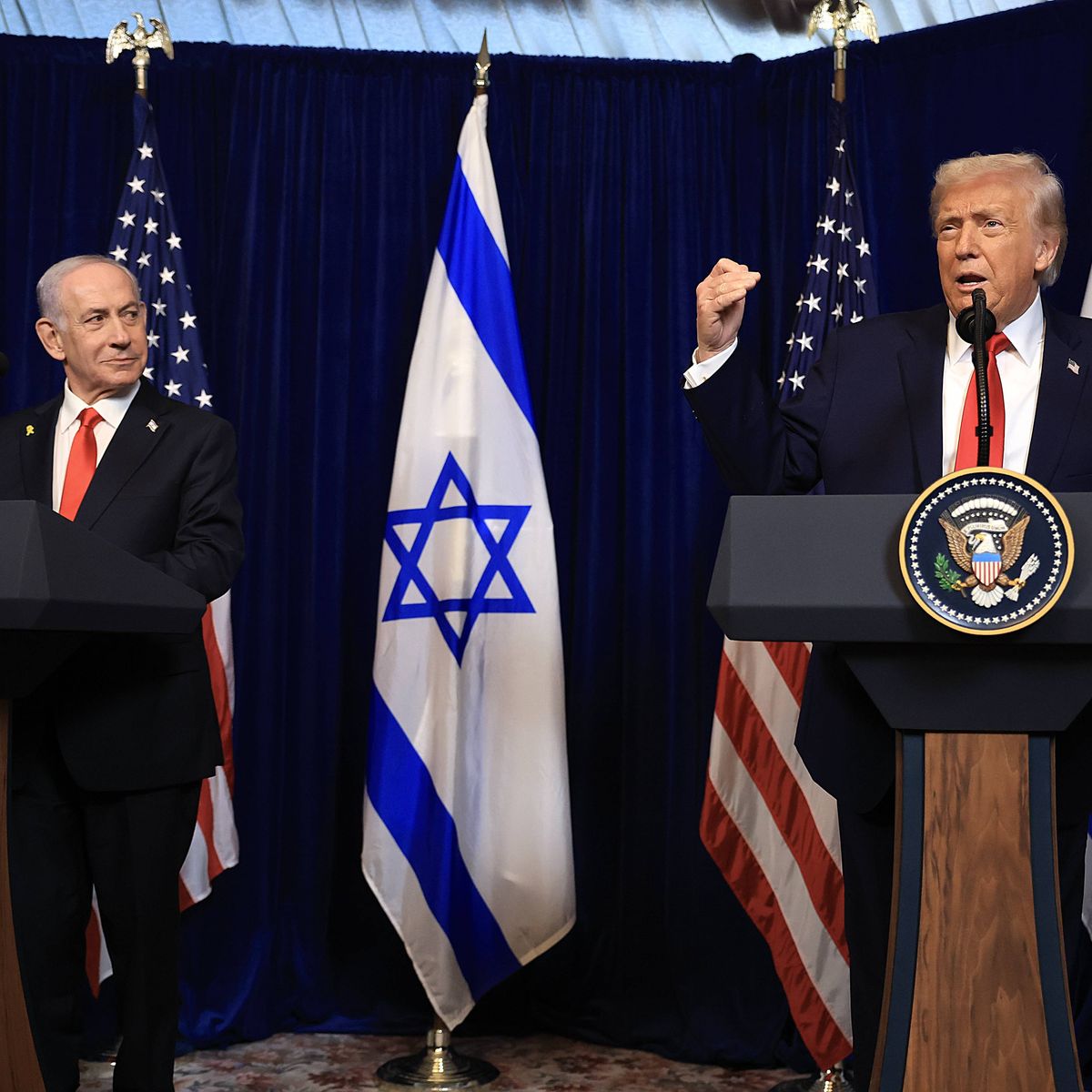
Prime Minister Benjamin Netanyahu pressed Trump to help Israel take out
the government of Iran. The President is reported to be considering a
range of options to cause regime change in Iran, including high-level
strikes and an oil blockage. Trump has ordered a massive military
buildup in the Middle East, including fighter jets, an aircraft carrier
strike group, and advanced air defense systems. On Wednesday, Trump
renewed the threat to attack Iran if Tehran does not agree to a nuclear
deal with the US. Iranian officials have stated they are willing to
negotiate with the US if Trump stops threatening Iran. Additionally,
Tehran has ruled out agreeing to eliminate its uranium enrichment
program. While Israel is pushing for Trump to start a war with Iran,
other countries in the Middle East are trying to broker a deal. Turkey
has offered to host talks with Iran. Saudi Defense Minister Prince
Khalid bin Salman will meet with US officials in the Pentagon on
Thursday. Axios notes that Ryiahd has been acting as a backchannel
between Washington and Tehran. Iran has threatened to retaliate against any attack by striking US bases across the Middle East.
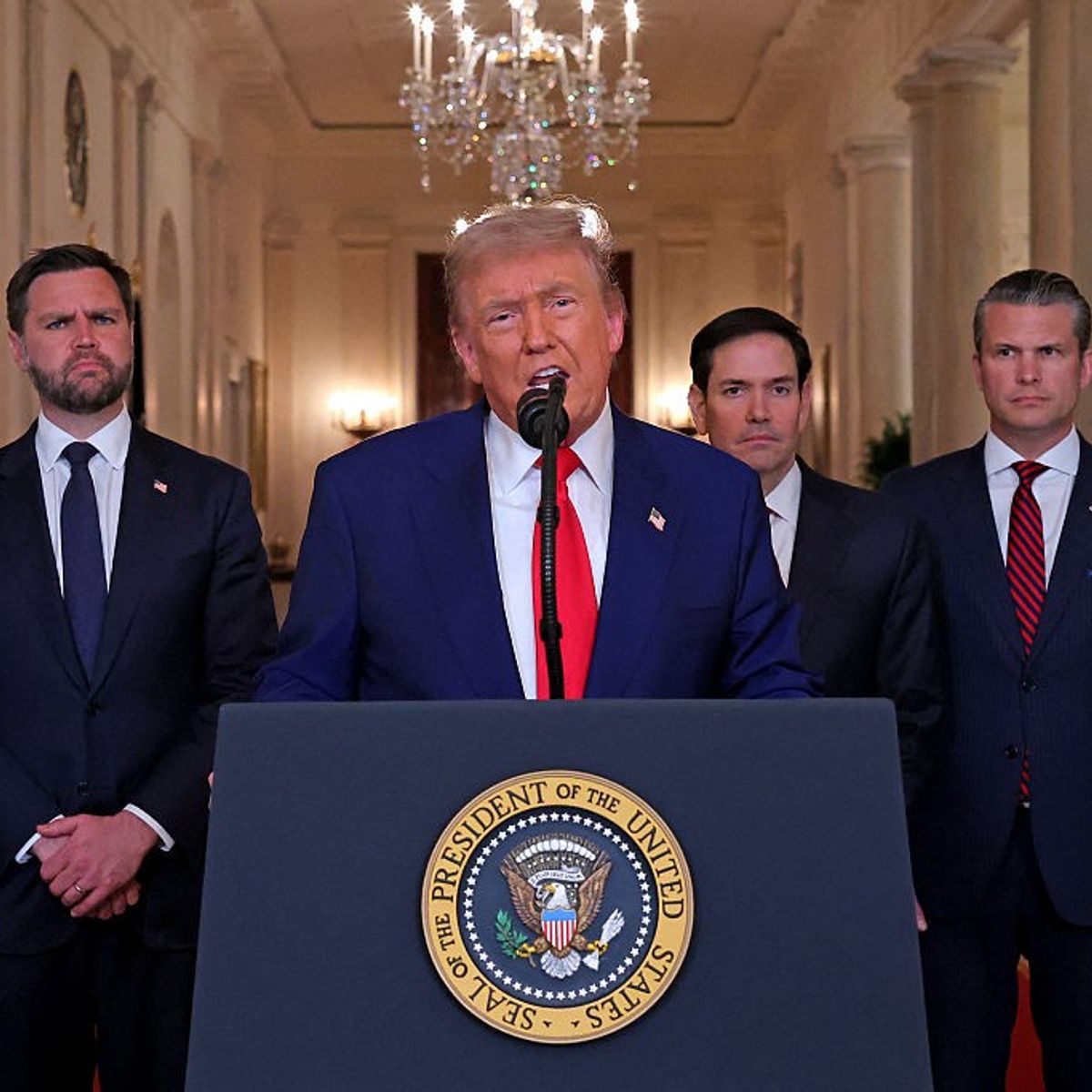
President Donald Trump renewed
his threats to attack Iran if the Islamic Republic does not comply with
his demands. The President claimed that Iran must agree to a new nuclear
deal or would be attacked by the “armada” Trump has assembled in the
Middle East.
“A massive Armada is heading to Iran.
It is a larger fleet, headed by the great Aircraft Carrier Abraham
Lincoln, than that sent to Venezuela. Like with Venezuela, it is ready,
willing, and able to rapidly fulfill its mission, with speed and
violence, if necessary,” the President wrote on Truth Social Wednesday.
“Hopefully Iran will quickly ‘Come to
the Table’ and negotiate a fair and equitable deal – NO NUCLEAR WEAPONS
– one that is good for all parties. Time is running out, it is truly of
the essence!” He continued, “As I told Iran once before, MAKE A DEAL!
They didn’t, and there was ‘Operation Midnight Hammer,’ a major
destruction of Iran. The next attack will be far worse! Don’t make that
happen again.”
After returning to the White House,
Trump tightened sanctions on Iran and threatened to attack the Islamic
Republic if it did not agree to a deal that would limit or eliminate its
civilian nuclear program.
Tehran has stated that it is willing
to agree to limitations and strict inspections of its nuclear program,
but it will continue to enrich uranium. The President has asserted that
Iran must completely eliminate its enrichment program.
Prior to the unprovoked Israeli
attack on Iran in June that ignited a 12-day conflict, Washington and
Tehran were in the process of establishing a new nuclear agreement. When
Trump ordered US forces to aid Israel and attack Iran, those
negotiations failed. Iran has offered to return to the table if Trump
stops threatening the Islamic Republic.
Late last year, Trump renewed his
threats on Iran, this time asserting that the US would attack the
Islamic Republic if the government’s crackdown led to the deaths of
protesters. While thousands died during the demonstration in Iran, Trump
decided not to launch an attack.
Trump declined to give the order to
attack Iran out of concern that the planned strikes would fail to topple
the government, and US troops in the Middle East and Israel would be
vulnerable to counterattacks.
Trump has ordered an aircraft carrier
strike group, fighter jets, and advanced air defense systems to the
Middle East. The larger American military presence in the region will
give the President additional options for attacking Iran and defeating
counterattacks.
Trump is reportedly considering
a range of options for bringing about regime change in Iran, including
an oil blockade and strikes on high-level targets in Tehran.
Trump and Kushner’s plans for Gaza are bound to fail. Here is why.
US
President Donald Trump takes part in a charter announcement for his
Board of Peace initiative on the sidelines of the World Economic Forum
in Davos, Switzerland on January 22, 2026 [Jonathan Ernst/Reuters]
Professor in public policy at Hamad Bin Khalifa University,.
Published On 25 Jan 202625 Jan 2026
Share
Save
By any measure, Gaza’s devastation demands
urgent and serious reconstruction. Homes, hospitals, schools, farms,
cultural heritage, and basic infrastructure lie in ruins. Entire
neighbourhoods have been erased. The humanitarian need is undeniable.
But urgency should never become an excuse for illusion, spectacle, or
political shortcuts.
The contrast between rhetoric and reality
could not be sharper. While United States President Donald Trump and a
group of world leaders gathered in Davos, Switzerland, to sign the
charter of the so-called Board of Peace and unveil glossy reconstruction
plans, the killing in Gaza continued.
Since the ceasefire came into effect on October 10, no fewer than 480 Palestinians have been killed. Four of them were killed
on the very day the charter was signed by 19 ministers and state
representatives, many of whom were less interested in the issue of Gaza
and much more in being seen alongside Trump.
Against that backdrop, the board’s
carefully staged optimism feels like performance rather than
transformation. It resembles a sandpit where those signing up get to
build sandcastles with Trump that will wash away with the first real
wave.
The proposals may look impressive and
sound hopeful, but structurally, they are hollow. They sidestep the real
drivers of the conflict, marginalise Palestinian agency, privilege
Israeli military priorities over civilian recovery, and align
uncomfortably with longstanding efforts to maintain the occupation,
displace Palestinians, and deny the right of return for the population
uprooted in 1948 and 1967.
Gaza is not a real estate prospectus
The glossy vision of presidential adviser
and son-in-law Jared Kushner treats Gaza not as a traumatised society
emerging from catastrophic violence, but as a blank investment canvas
for luxury housing, commercial zones, data hubs, beachfront promenades,
and aspirational gross domestic product (GDP) targets.
It reads less like a recovery plan and
more like a real-estate prospectus. Development language replaces
political reality. Sleek presentations replace rights. Markets replace
justice.
But Gaza is not a failed start-up looking
for venture capital. It is home to more than two million Palestinians
who have endured siege, displacement, repeated wars, and chronic
insecurity for decades. Reconstruction cannot succeed if it is detached
from their lived experiences or if it treats Gaza primarily as an
economic asset open to speculative investment, including by extreme
Zionists, rather than as a human community struggling to preserve its
identity and social fabric.
For many families, even modest homes in
Gaza’s formal refugee camps represented a fragile bridge worth holding
on to as a step towards an eventual return to places from which they
were forced to flee, in what is today known as Israel.
These homes were valued not for their
comfort or market worth, but for the social networks they sustained and
their symbolic links to continuity, memory, and political claims.
Palestinians are therefore unlikely to be swayed by offers of glitzy
towers, luxurious villas, or promises of a “market economy” under siege.
Their experience over the past decades has taught them that no level of
material improvement can substitute for deeper aspirations tied to
dignity, rootedness, and the right of return.
A future designed without Palestinians
A glaring flaw of Trump’s plan is the
systematic exclusion of Palestinians themselves from shaping the vision
of their future. These plans are unveiled in elite conference halls, not
debated with the people whose neighbourhoods have been flattened.
Without Palestinian ownership, legitimacy
collapses. Experience from Iraq, Afghanistan, and elsewhere has shown
repeatedly that reconstruction imposed from the outside — however well
branded — reproduces the very power imbalances that fuel instability in
the first place.
Equally troubling is the plan’s deliberate
avoidance of addressing the root causes of Gaza’s suffering:
occupation, blockade, and military control. You cannot rebuild
sustainably while continuing to preserve and fund the machinery that
repeatedly destroys what is built.
No amount of concrete, branding, or
foreign investment can substitute for political resolution. A territory
that remains militarily besieged, economically sealed, and politically
subjugated will never achieve durable recovery.
Prosperity cannot flourish inside a cage.
The European Union learned this lesson the hard way through multiple
reconstruction cycles it funded in Gaza, which may help explain why none
of its members rushed to join the board, despite being able to afford
the permanent membership fee and despite the political incentives of
cultivating a more cordial relationship with Trump in light of the war
in Ukraine and his threats on Greenland.
Aiding Israel’s military control through spatial redesign
There is also a serious risk that the proposed physical design of Gaza
would entrench Israeli military strategy rather than restore
Palestinian life. The plans envision buffer zones, segmented districts,
and so-called “green spaces and corridors” that would break up the
territory internally.
This kind of spatial engineering would
facilitate surveillance, control, and rapid military access. Urban
planning would become security architecture. Civilian geography would
turn into militarised space. What is sold as modernisation would
constitute a sophisticated system of containment, just like the illegal
settlement networks and road systems in the occupied West Bank.
The emphasis on reclaiming land from the
sea using rubble may repeat the problems of Beirut’s reconstruction
after the civil war, where newly reclaimed areas attracted
disproportionate investment because they were free of unresolved
ownership claims, ultimately allowing elites to appropriate the city’s
waterfront and pull it away from public use.
The demographic implications of the plan
are equally profound. Shifting Gaza’s population centre southward —
closer to Egypt and further from Israel’s settlements — would quietly
alter the political and social centre of gravity of Palestinian life.
It may ease Israeli security anxieties,
but it would do so at the expense of Palestinian continuity, identity,
and territorial coherence. Population engineering under the banner of
reconstruction raises serious ethical concerns and risks externalising
Gaza’s long-term humanitarian burden onto neighbouring states. This may
also help explain Egypt’s absence from the signing ceremony and its
decision to limit participation to its intelligence leadership.
No amount of political theatre can replace freedom
The Board of Peace itself also deserves
careful scrutiny. Its branding suggests neutrality and collective
stewardship, yet its political framing remains highly personalised
around Trump, with little clarity about how it is meant to operate in
practice.
This is not the kind of multilateral
peacebuilding mechanism envisaged by United Nations Security Council
Resolution 2803 of November 2025; it is political theatre. Peace
mechanisms anchored in personalities rather than institutions and
international law rarely survive political change.
At the heart of all this lies a familiar
but dangerous assumption: that economic growth can substitute for
political rights. History teaches the opposite. People do not resist
simply because they are poor; they resist because they lack dignity,
security, freedom of expression, and self-determination. No master plan
can bypass these realities. No skyline can compensate for political
exclusion.
This does not mean Gaza must wait for the
perfect peace before rebuilding. Recovery must proceed urgently. But
rebuilding must empower Palestinians rather than redesign their
constraints. It must dismantle systems of control, not embed them into
concrete and zoning maps. It must confront the political roots of
destruction rather than cosmetically repackage its aftermath.
Until those foundations exist, the Board
of Peace and Kushner’s vision risk becoming exactly what they resemble —
a form of sandcastle diplomacy: impressive to the global public,
comforting to elites, and destined to wash away when the first serious
wave of political reality arrives.
The views expressed in this article are the author’s own and do not necessarily reflect Al Jazeera’s editorial stance.
Sultan BarakatProfessor
in public policy at Hamad Bin Khalifa University,Sultan Barakat is
professor in public policy at Hamad Bin Khalifa University, honourary
professor at the University of York, and member of the Raoul Wallenberg
Institute ICMD Expert Reference Group.
Refusal to join will be an act of national
self-respect. The UN-based international order, however flawed, should
be repaired through law and cooperation, not replaced by a gilded
caricature.
The so-called “Board of Peace” being created by President Donald Trump
is profoundly degrading to the pursuit of peace and to any nation that
would lend it legitimacy. This is a trojan horse to dismantle the United Nations. It should be refused outright by every nation invited to join.
In its Charter, the Board of Peace (BoP) claims to be an “international
organization that seeks to promote stability, restore dependable and
lawful governance, and secure enduring peace in areas affected or
threatened by conflict.” If this sounds familiar, it should,
because this is the mandate of the United Nations. Created in the
aftermath of World War II, the UN has as its central mission the
maintenance of international peace and security.
It is no secret that Trump holds open contempt for international law and the United Nations. He said so himself during his September 2025 speech at the General Assembly, and has recently withdrawn
from 31 UN entities. Following a long tradition of US foreign policy,
he has consistently violated international law, including the bombing of
seven countries in the past year, none of which were authorized by the
Security Council and none of which was undertaken in lawful self-defense
under the Charter (Iran, Iraq, Nigeria, Somalia, Syria, Yemen, and Venezuela). He is now claiming Greenland, with brazen and open hostility towards the US allies in Europe.
So, what about this Board of Peace?
It is, to put it simply, a pledge of allegiance to Trump, who seeks
the role of world chairman and the world’s ultimate arbiter. The BoP
will have as its Executive Board
none other than Trump’s political donors, family members, and
courtiers. The leaders of nations that sign up will get to rub shoulders
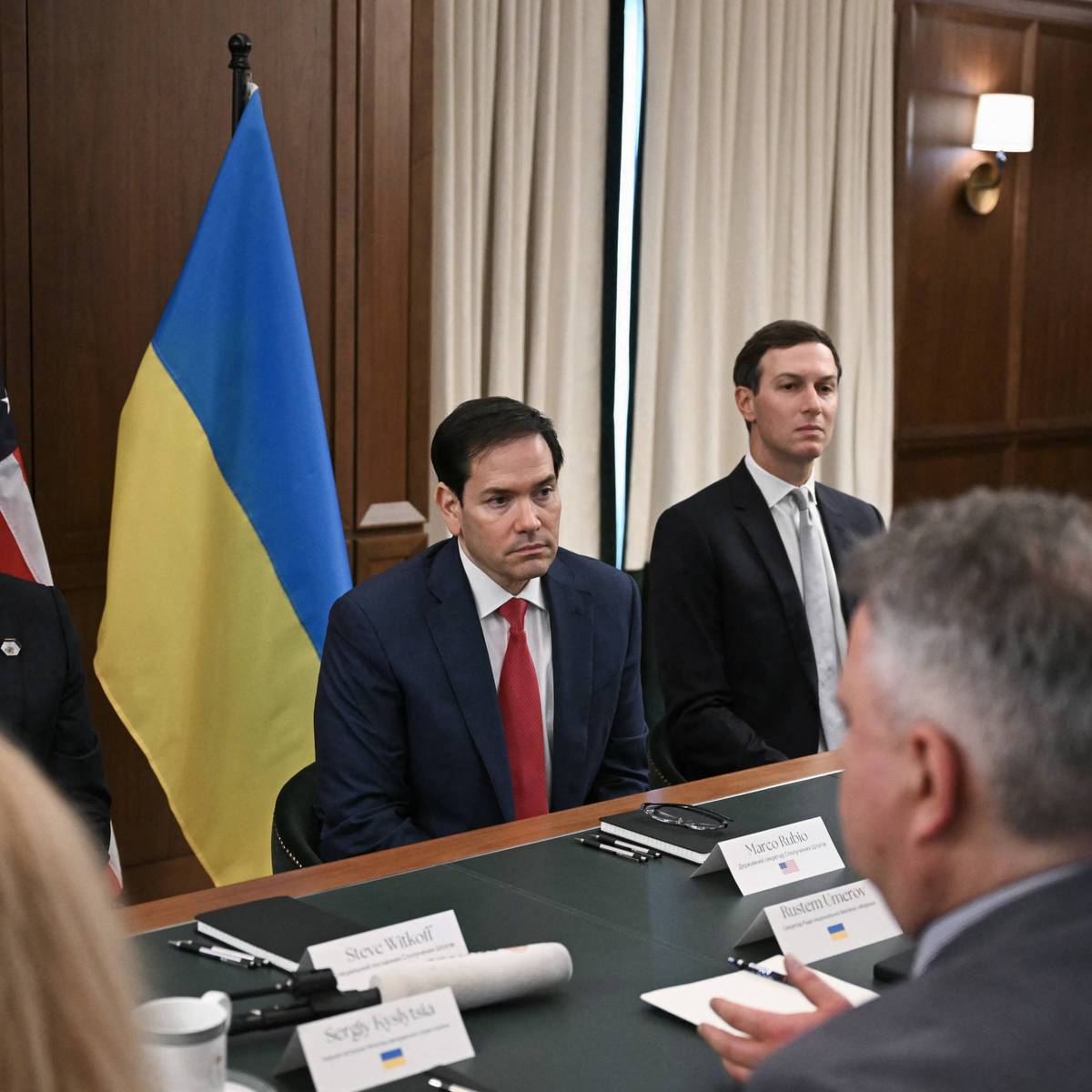
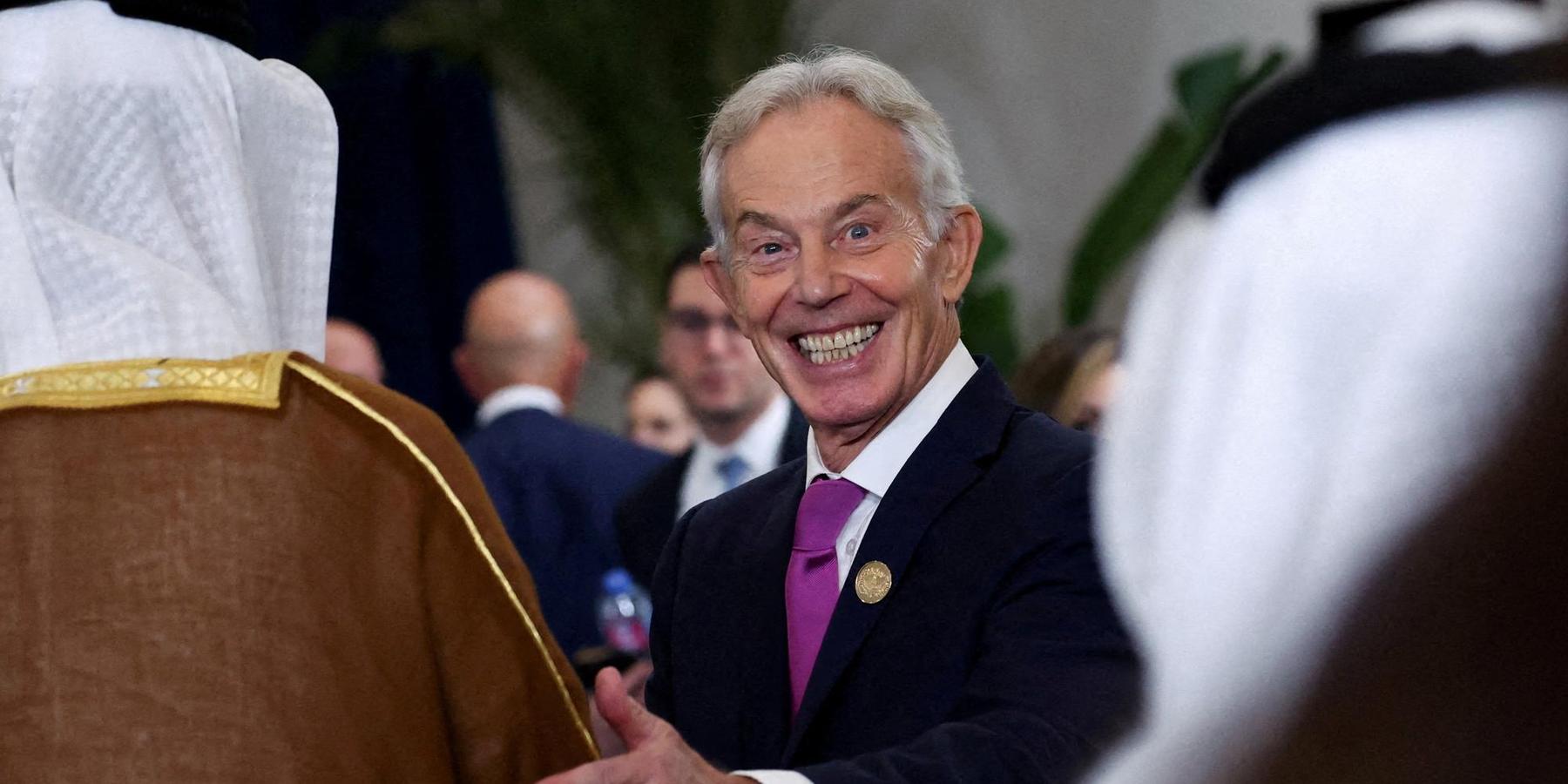
with, and take orders from, Marco Rubio, Steve Witkoff, Jared Kushner and Tony Blair. Hedge Fund owner and Republican Party mega-donor Marc Rowan also gets to play. More to the point, any decisions taken by the BoP will be subject to Trump’s approval.
If the charade of representatives isn’t enough, nations will have to
pay $1 billion for a “permanent seat” on the Board. Any nation that
participates should know what it is “buying.” It is certainly not buying
peace or a solution for the Palestinian people (as the money supposedly
goes to Gaza’s reconstruction). It is buying ostensible access to Trump
for as long as it serves his interests. It is buying an illusion of
momentary influence in a system where Trump’s rules are enforced by
personal whim.
The proposal is absurd not least because it purports to “solve” a
problem that already has an 80-year-old global solution. The United
Nations exists precisely to prevent the personalization of war and
peace. It was designed after the wreckage of two world wars to global
base peace on collective rules and international law. The UN’s
authority, rightly, derives from the UN Charter ratified by 193 member states (including the US, as ratified by the US Senate
in July 1945) and grounded in international law. If the US doesn’t want
to abide by the Charter, the UN General Assembly should suspend the US
credentials, as it once did with ApartheidSouth Africa.
Trump’s “Board of Peace” is a blatant repudiation of the United
Nations. Trump has made that explicit, recently declaring that the Board
of Peace “might” indeed
replace the United Nations. This statement alone should end the
conversation for any serious national leader. Participation after such a
declaration is a conscious decision to subordinate one’s country to
Trump’s personalized global authority. It is to accept, in advance, that
peace is no longer governed by the UN Charter, but by Trump.
Still, some nations, desperate to get on the right side of the US,
may take the bait. They should remember the wise words of President John
F. Kennedy in his inaugural address “ those who foolishly sought power by riding the back of the tiger ended up inside.”
The record shows that loyalty to Trump is never enough to salve his
ego. Just look at the long parade of Trump’s former allies, advisers,
and appointees who were humiliated, discarded, and attacked by him the
moment they ceased to be useful to him.
For any nation, participation on the Board of Peace would be
strategically foolish. Joining this body will create long-lasting
reputational damage. Long after Trump himself is no longer President, a
past association with this travesty will be a mark of poor judgment. It
will remain as sad evidence that, at a critical moment, a national
political system mistook a vanity project for statesmanship, squandering
$1 billion of funds in the process.
Ultimately, refusal to join the “Board of Peace” will be an act of
national self-respect. Peace is a global public good. The UN-based
international order, however flawed, should be repaired through law and
cooperation, not replaced by a gilded caricature. Any nation that values
international law, and the respect for the United Nations, should
decline immediately to be associated with this travesty of international
law.
The
U.S. is on a fast track to authoritarianism like nothing I’ve ever
seen. Meanwhile, corporate news outlets are utterly capitulating to
Trump, twisting their coverage to avoid drawing his ire while lining up
to stuff cash in his pockets.
That’s why I believe that Common Dreams is doing the best and most consequential reporting that we’ve ever done.
Our
small but mighty team is a progressive reporting powerhouse, covering
the news every day that the corporate media never will. Our mission has
always been simple: To inform. To inspire. And to ignite change for the
common good.
Now here’s the key piece that I want all our
readers to understand: None of this would be possible without your
financial support.
That’s not just some fundraising
cliche. It’s the absolute and literal truth. We don’t accept corporate
advertising and never will. We don’t have a paywall because we don’t
think people should be blocked from critical news based on their ability
to pay. Everything we do is funded by the donations of readers like
you.
Will you donate now to help power the nonprofit, independent reporting of Common Dreams?
Thank you for being a vital member of our community. Together, we can keep independent journalism alive when it’s needed most.
– Craig Brown, Co-founder
about:blank
about:blank
Our work is licensed under Creative Commons (CC BY-NC-ND 3.0). Feel free to republish and share widely.
Jeffrey D. Sachs is a University Professor and Director of the Center
for Sustainable Development at Columbia University, where he directed
The Earth Institute from 2002 until 2016. He is also President of the UN
Sustainable Development Solutions Network and a commissioner of the UN
Broadband Commission for Development. He has been advisor to three
United Nations Secretaries-General, and currently serves as an SDG
Advocate under Secretary-General Antonio Guterres. Sachs is the author,
most recently, of “A New Foreign Policy: Beyond American Exceptionalism”
(2020). Other books include: “Building the New American Economy: Smart,
Fair, and Sustainable” (2017) and “The Age of Sustainable Development,”
(2015) with Ban Ki-moon.
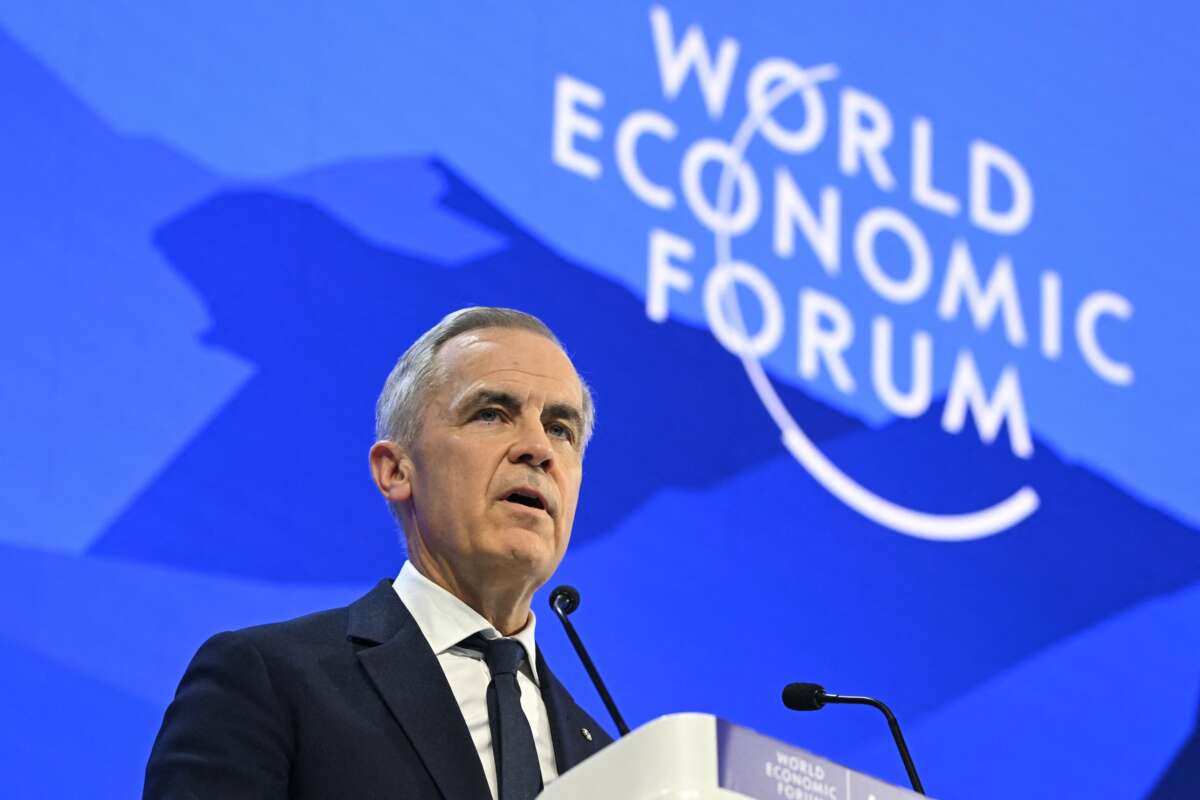
Canada's
Prime Minister Mark Carney delivers a speech during the World Economic
Forum annual meeting in Davos on January 20, 2026.Fabrice COFFRINI / AFP via Getty
Truthout is a vital news source and a living history of political struggle. If you think our work is valuable, support us with a donation of any size.
In an unusually candid speech in Davos, Switzerland, on Tuesday,
Canadian Prime Minister Mark Carney warned that world order is at a
“rupture” point due to the U.S.’s longstanding vise-grip on the world
and its swiftly expanding authoritarian nature under President Donald
Trump.
Skewering “American hegemony,” Carney said
that countries like Canada have long known that the idea of the
international rules-based order was a “fiction” that states nonetheless
signaled their support for in order to be granted access to crucial
goods, trade, and other resources like finance.
For decades, states with “middle” amounts of power like Canada
“participated in the rituals, and largely avoided calling out the gaps
between rhetoric and reality,” Carney said. In return, the U.S. allowed
other states access to important systems.
“This bargain no longer works,” Carney told the World Economic Forum. “We are in the midst of a rupture, not a transition.”
But, over the past two decades, great powers like the U.S. are
increasingly using “economic integration as weapons,” he said. This is
causing countries to retreat into themselves, becoming less reliant on
outside sources — which Carney warned will lead to greater fragmentation
and volatility.
“Tariffs as leverage, financial infrastructure as coercion, supply
chains as vulnerabilities to be exploited. You cannot live within the
lie of mutual benefit through integration when integration becomes the
source of your subordination,” he said.
Countries like Canada “compete with each other to be the most
accommodating,” he said. “This is not sovereignty. It is the performance
of sovereignty while accepting subordination.”
He calls for countries to form a third path, one of greater
cooperation, in order to push back against the threats by major powers.
Doing this would require dispensing with simply signalling support for
global order in favor of redoubling efforts to actually enforce
principles like those laid out in the UN charter, he said.
“We should not allow the rise of hard power to blind us to the fact
that the power of legitimacy, integrity, and rules will remain strong if
we choose to wield it together,” he said. Countries must “stop invoking
the ‘rules-based international order’ as though it still functions as
advertised. Call the system what it is: a period where the most powerful
pursue their interests using economic integration as a weapon of
coercion.”
The speech comes just weeks after German President Frank-Walter Steinmeier similarly said
that the U.S. is ending world order as it’s known, and instead turning
the world “into a den of robbers, where the most unscrupulous take
whatever they want” and countries are “treated as the property of a few
great powers.”
Carney and Steinmeier both, perhaps, ignore their countries’
respective responsibilities for the erosion of the enforcement of
international order — in theirsupport for Israel’s genocide in Gaza, their contributions to the global system of imperialism, and their participation in an increasing crackdown on asylum and immigration by wealthy countries, among other actions.
However, many experts have noted the vast erosion of international principles brought on by the U.S. in particular, which is accelerating under Trump.
Amnesty International USA warned in a report on Tuesday, the
anniversary of Trump’s inauguration, that Trump’s first year has led to a
“human rights emergency” in which the administration is “cracking the
pillars of a free society.”
“At stake are the rights that enable people to defend all other
rights and live without fear from the arbitrary exercise of power and
discrimination, including the rights to freedom of the press,
expression, and peaceful protest; a fair trial and due process; equality
and non-discrimination; and privacy,” the report said. “When these
rights are weakened, the harms do not stay contained — they spread.”
Trump is silencing political dissent. We appeal for your support.
Progressive
nonprofits are the latest target caught in Trump’s crosshairs. With the
aim of eliminating political opposition, Trump and his sycophants are
working to curb government funding, constrain private foundations, and
even cut tax-exempt status from organizations he dislikes.
We’re concerned, because Truthout is not immune to such bad-faith attacks.
We
can only resist Trump’s attacks by cultivating a strong base of
support. The right-wing mediasphere is funded comfortably by billionaire
owners and venture capitalist philanthropists. At Truthout, we have
you.
Truthout has launched a fundraiser to raise $45,000 in the next 8 days. Please
take a meaningful action in the fight against authoritarianism: make a
one-time or monthly donation to Truthout. If you have the means, please
dig deep.
The
mainstream media in the West is committed to portraying the protests in
Iran as strictly an internal affair. The people of Iran, so the
argument goes, spontaneously rose up against their government because
they were in desperate straits due to their leaders’ corruption and
mismanagement of the economy, as well as their oppressive policies.
Virtually all the protestors in this story were peaceful, but their
protests were met with government violence. Outside forces had little to
do with causing the protests.
This interpretation of what
happened in Iran is wrong and contradicted by an abundance of evidence.
None of this is to deny that there were many peaceful protestors who had
legitimate grievances against the government, but that is only part of
the story.
If fact, what happened in Iran is an attempt by the
Israeli & American tag team to overthrow the government in Tehran
and break apart Iran, much the way the US, Turkey, and Israel fractured
Syria. The playbook in Iran is one we have seen before. It has four
elements.
First, the US has long been
working to wreck the Iranian economy with sanctions. Indeed, President
Trump redoubled those efforts after moving into the White House last
January (2025). His aim was to bring “maximum pressure” to bear on
Iran’s economy and he did just that. There is no question that Iran’s
leaders mismanaged their economy in certain ways, but Western sanctions
did far more damage than government ineptitude. The ultimate goal of the
sanctions, of course, is to inflict so much pain and punishment on the
Iranian people that they rise up and overthrow their government.
Second,
the tag team went to work in late December 2025 to foment and support
violent protests that would precipitate a violent government response,
which would hopefully set off a spiral of violence that the government
could not control. To be more specific, there is clear evidence that
Mossad agents were on the ground in Iran and surely there were CIA
operatives working alongside them. They worked closely with local
agitators — the rioters who were bent on destruction and assassination —
to turn the peaceful protests into violent protests, which would then
lead the government to turn to violence. There is abundant video footage
of the agitators at work.
Moreover, the tag team sent many
thousands of Starlink terminals into Iran before the protests began.
Should the government shut down the internet and the phone system – as
expected – the Starlink terminals would allow the protestors to
communicate among themselves and with the outside forces helping them.
Unsurprisingly,
Trump was cheering on the protestors, saying on 13 January 2026:
“Iranian Patriots, KEEP PROTESTING - TAKE OVER YOUR INSTITUTIONS!!!...
HELP IS ON ITS WAY.” Trump’s first CIA director, Mike Pompeo, said on 2
January 2026: “Happy New Year to every Iranian in the streets. Also, to
every Mossad agent walking beside them.” And just as the protests were
beginning in late December 2025, Mossad sent a message in Farsi to
Iranians saying: “Go out together into the streets. The time has come.
We are with you. Not only from a distance and verbally. We are with you
in the field.”
Third, the Western media
played along with the tag team and purveyed the story that the protests
were principally a response to the policies of an evil government in
Tehran, not because of outside interference. Moreover, the protests were
peaceful and it was the government that initiated the violence.
Naturally, Israel and the US were portrayed as the good guys. This
propaganda was not only designed to win over support for the protests in
the West, but also to influence events inside Iran by fostering the
narrative that the regime was brutal in the extreme, yet the protestors
were destined to topple the government.
Fourth,
the US military (and maybe the Israeli military) was primed to attack
Iran once the protests had reached critical mass, finishing off the
regime and creating chaos in Iran that would hopefully break the country
apart.
But the strategy failed, mainly because the Iranian
government was able to shut down the protests quickly and decisively. A
key element in the government’s success was shutting down Starlink,
which made it extremely difficult for the protestors to communicate with
each other and the outside world. Once that happened, the protests were
doomed and both Prime Minister Netanyahu and Trump understood that the
tag team could not use military force to deliver the coup de grâce. The
Iranian regime had survived.
In short, the
tag team’s regime change campaign failed. Israel and the US lost this
round to Iran. Of course, the results are unlikely to be portrayed this
way in the Israeli or Western media.
These recent events
have relevance for the 12-Day war between Iran and the tag team that
took place 13-24 June 2025. That conflict is usually portrayed in the
West as a great victory for Israel and the US. However, that is not an
accurate description of the outcome of that earlier conflict. It was
Israel more than Iran that wanted to end the 12-Day war, because Israel
was burning through its inventory of defensive missiles while Iran was
becoming increasingly adept at using its large inventory of ballistic
and cruise missiles to pound Israel. In fact, some argued at the time
that Iran should not have agreed to a ceasefire, because it was gaining
the upper hand over Israel. That outcome does not look like an Israeli
victory to me.
Relatedly, it is apparent from news stories in the
West and from Israel itself that Netanyahu asked Trump not to bomb Iran
last week (14 January 2026) because he feared that Israel did not have
sufficient forces to defend itself from an Iranian counterattack. In
other words, Israel is as exposed today to Iran’s missiles as it was
when the fighting stopped on 24 June 2025. This is more evidence that
Israel did not triumph over Iran in the 12-Day war or in the recent
attempt at regime change.
A final point on the 12-Day war. One
might argue that although Israel got the short end of the stick in its
direct engagement with Iran, the US attack on Iran’s nuclear facilities
on 22 June 2025 was a resounding success, which carried the day for both
members of the tag team. Trump, after all, claimed that the US military
had “completely and totally obliterated” Iran’s nuclear facilities. The
Defense Intelligence Agency (DIA) disagreed shortly after the attack,
assessing that that it had not obliterated Iran’s nuclear program, but
instead had set it back by only a few months. Trump and his allies
trashed the DIA’s assessment and that was the last we heard from that
intelligence organization about the effects of the US strike.
I
find it curious that there is virtually no meaningful information in the
public record about what the US attack on 22 June 2025 did to Iran’s
nuclear infrastructure – especially its installations that enrich
uranium – as well as the 400 kilograms of uranium that Iran had enriched
to 60 percent. One would think that if everything had been destroyed,
as the president claims, the tag team would be advertising that fact and
backing up its claims with at least some data. Moreover, one wonders
why the tag team is so anxious to attack Iran again if a stunning
victory was achieved in the 12-Day war. One also ponders what Iran is
doing these days in terms of developing or repairing its nuclear
enrichment facilities. These are especially important matters because
what the tag team has done to Iran – and is likely to continue doing –
gives Iranian leaders a powerful incentive to acquire a nuclear
deterrent.
The bottom line is
two-fold: 1) the tag team failed to overthrow the regime in Iran,
although it surely has not given up on that goal; and 2) there is good
reason to think that Israel and the US did not win the12-Day war.
There is no ceasefire, no aid, no Hamas
disarmament, IDF withdrawal or stabilization force. Just a lot of talk
about Trump-run panels with little buy-in.
The Trump administration’s announcements about the Gaza Strip would
lead one to believe that implementation of President Trump’s 20-point
peace plan, later largely incorporated into a United Nations Security Council resolution, is progressing quite smoothly.
As such, Trump’s special envoy Steve Witkoff announced this month on social media
the “launch of Phase Two” of the plan, “moving from ceasefire to
demilitarization, technocratic governance, and reconstruction.” But
examination of even just a couple of Witkoff’s assertions in his
announcement shows that “smooth” or even “implementation” are bitter
overstatements.
Witkoff said that Phase One has “maintained the ceasefire.” No, it has not. Israel has continued daily attacks
against the Gaza Strip ever since the ceasefire was supposed to go into
effect last October. As usual with unobserved ceasefires, both sides
accuse the other of violations. The casualty count, however, reveals
which side lethal violations are coming from. According to the
Palestinian Ministry of Health, Israeli attacks since the start of the
supposed ceasefire have killed
at least 451 Palestinians and injured 1,251. As was true of Israeli
attacks during the previous three years, many of the victims have been civilians. On the other side, the Israeli military states that three of its soldiers were killed in combat during the first few days of the ceasefire in October 2025.
Witkoff also said that “Phase One delivered historic humanitarian aid” to Gaza. What he did not say is that continued Israeli rejections
of requests to deliver aid to the Strip have made the flow of aid much
less than what was agreed to and far less than what is needed. As of
mid-January, 24,611 aid trucks have entered
Gaza since the ceasefire agreement—fewer than half of the 57,000 that
Israel should have allowed in under the agreed allocation.
Phase Two thus is being announced without anything close to full implementation of Phase One.
The administration has announced
some, though not all, members of the “Board of Peace,” headed by Trump,
that is supposed to function as an international board of directors
overseeing implementation of the rest of the plan. Recruitment of a full
slate of members evidently has been difficult. Hesitation by many
governments to participate is perhaps understandable, given the
uncertainties about implementation so far and the nature of the overall
project as one that Trump has directed in coordination with Israel.
Recruitment will not be made any easier by the administration requiring a $1 billion cash contribution from any government wanting extended membership on the board.
The personnel announcements made so far are sufficient to displease
each side in this conflict. The Board of Peace includes, among others,
Witkoff, Trump’s son-in-law Jared Kushner, and former British prime
minister Tony Blair. Arab governments and many others in the Muslim
world distrust
Blair because of his role in the Iraq War and his perceived pro-Israel
bias when he was an international envoy addressing the
Israeli-Palestinian conflict.
Israel has been quick to object to the membership of a “Gaza
Executive Board,” which the White House also announced and will have a
vaguely defined relationship with the other bodies involved in Gaza.
This board will include — besides Blair, Kushner, Witkoff, and others —
the Turkish foreign minister and a senior Qatari official. The office of
Israeli Prime Minister Benjamin Netanyahu stated
that the Gaza Executive Board as constituted is “at odds with Israeli
policy.” The statement evidently reflects Israel’s sour relations with
Türkiye and Qatar, largely because of the relations of those two
governments with Hamas.
The Israeli objections will provide Netanyahu’s government with an
additional rationale for overturning the whole diplomatic process
whenever it chooses to do so. It is not just the government, but also
the Israeli opposition that is making an issue of the Executive Board
membership. Opposition leader Yair Lapid called
the inclusion of Türkiye a “grave diplomatic failure.” Itamar Ben Gvir,
the extreme right-winger who is minister of national security, called for the Israeli military “to return to war with tremendous force in the Strip.”
Subscribe now to our weekly round-up and don’t miss a beat with your
favorite RS contributors and reporters, as well as staff analysis,
opinion, and news promoting a positive, non-partisan vision of U.S.
foreign policy.
Invalid emailEnter your email
Meanwhile, some apparent organizational progress has taken place in Cairo, with the first meeting
of the National Committee for the Administration of the Gaza Strip
(NCAG), a group of 15 Palestinian technocrats who are supposed to
function as an interim administration under the supervision of the Board
of Peace. The committee met with Bulgarian diplomat Nickolay Mladenov,
who has been named “director-general” of the Board of Peace. Members of
the NCAG have not been announced apart from the committee’s head, a
civil engineer and former deputy minister of transportation in the
Palestinian Authority named Ali Shaath.
In his announcement about Phase Two, Witkoff said nothing about the
prospective International Stabilization Force (ISF), which is supposed
to play a major security role during the interim administration and
reconstruction of the Gaza Strip. Recruiting participants in the ISF has
been even more difficult
than recruiting members of the Board of Peace. Governments do not want
their troops to get involved in an active combat situation, as the
Israeli attacks continue. They especially do not want to be involved in a
mission of disarming Hamas, an objective that Israel was unable to
achieve through three years of unrestricted warfare.
Amid frequent mention by Witkoff and others about Hamas needing to
live up to its obligations, it is important to remember that Hamas never
signed up to Trump’s 20-point plan. What Hamas has agreed to, going
back to a framework agreement
in 2024, has been a complete ceasefire, release of all hostages in
exchange for release of an agreed number of Palestinian prisoners, and
return of remains of the deceased, amid an ending of the siege of the
Gaza Strip and the beginning of internationally supervised
reconstruction of the territory.
Hamas also has made clear it is willing to cede governance of the
Gaza Strip to independent Palestinian technocrats. In this regard, Hamas
publicly welcomed as an “important positive development” the establishment and initial meeting of NCAG. Hamas also accepts in principle the presence in Gaza of a neutral international peacekeeping force.
As for disarmament, the conditions matter. Hamas has offered to bury its weapons as part of the long-term truce or hudna that it has long offered Israel. But it would completely surrender its weapons only to a genuine Palestinian government.
What Hamas will not do is unilateral disarmament as Israel continues
to occupy Palestinian territory and to kill Palestinian citizens. It is
unrealistic and unreasonable to expect that, especially in view of the
slaughter in Gaza of the past three years.
The technocrats on NCAG have an enormous task, and they face it with
major handicaps. Perhaps symbolic of the handicaps is how Shaath, to get
to the Cairo meeting from where he has been living in the West Bank,
had to travel through Jordan and was detained
by Israeli authorities for six hours at the Allenby crossing. A
Palestinian official commented that this incident demonstrates an Israel
intention to sabotage the committee’s work.
An Arab diplomat observed
that a committee of 15 members cannot administer the Gaza Strip without
large numbers of civil servants. But Israel is blocking the
participation of not only anyone on Hamas’s payroll but also anyone on
the Palestinian Authority’s payroll.
In his initial public comments after being named chairman of NCAG,
Shaath talked about the huge task of clearing the rubble, which could
take three years while overall reconstruction would take about seven
years. The situation could become even worse. Israel is continuing to create still more rubble by methodically demolishing buildings in the half of the Gaza Strip that it still occupies.
Neither Trump’s plan nor any other peace plan will be able to bring
anything close to peace, security, and prosperity to Gaza as long as
Israel is the controlling power on the ground and is determined to
oppose anything that looks like Palestinian self-governance.
Paul R. Pillar is Non-resident Senior Fellow at the Center for
Security Studies of Georgetown University and a non-resident fellow at
the Quincy Institute for Responsible Statecraft. He is also an Associate
Fellow of the Geneva Center for Security Policy.
The director of Israel’s Mossad spy agency, David Barnea, arrived in
the U.S. on Friday morning for talks on the situation in Iran, according
to an Israeli source and another source with knowledge of the meeting.
Why it matters: Barnea’s visit is part of the consultations between
the U.S. and Israel over the protests in Iran and possible U.S. military
action in response to the regime’s crackdown.
Barnea is expected to meet in Miami with White House envoy Steve
Witkoff, who is managing the direct channel of communication between the
U.S. and Iran. Witkoff has been in touch with Iran’s foreign minister, Abbas Araghchi, during the protests. It’s not yet clear whether Barnea will meet President Trump in Mar-a-Lago over the weekend.
Driving the news: Barnea’s trip follows a phone call on Wednesday
between Trump and Israeli Prime Minister Benjamin Netanyahu about the
Iran crisis.
During the call, Netanyahu asked Trump to hold off on military action
against Iran to give Israel more time to prepare for potential Iranian
retaliation. An Israeli source said that in addition to concerns
about retaliation, the current U.S. plan includes strikes on security
force targets in Iran, but is not seen by Israel as strong enough to
meaningfully destabilize the regime. U.S. officials say military
action is still on the table if Iran resumes the killing of protesters.
Israeli officials think that despite the delay, a U.S. military strike
could take place in the coming days.
What to watch: The U.S. military is sending additional defensive and
offensive capabilities to the region to be ready in case Trump orders a
strike, U.S. sources say.
The Abraham Lincoln aircraft carrier and its strike group are making their way to the Middle East from the South China Sea. More air defense systems, fighter jets and possibly submarines are also expected to arrive in the region.
The intrigue: When he reached out to Witkoff, Araghchi proposed a meeting and the resumption of nuclear negotiations.
The Israeli government is concerned the Iranians will use such negotiations to buy time and relief from the U.S. pressure. On
the other hand, some officials think the current crisis could convince
the Iranian regime to make concessions it refused to consider in the
past, on the nuclear program, missile program, and proxy groups.
At a conference of the Israeli-American Council in Miami on Thursday
night, Witkoff said he communicated with the Iranians the day before
about the potential mass hangings.
“That has been shut down,” Witkoff said.
Witkoff said he hopes it will be possible to get a diplomatic
solution with Iran and noted that any deal will have to address uranium
enrichment and Iran’s stockpile of enriched uranium, Iran’s inventory of
ballistic missiles, and its network of proxies in the region. Witkoff
said Iran’s economy was badly “stumbling” and if Tehran wants to change
that and return to the community of nations, it can be accomplished
through diplomacy. “The alternative will be a bad one.”
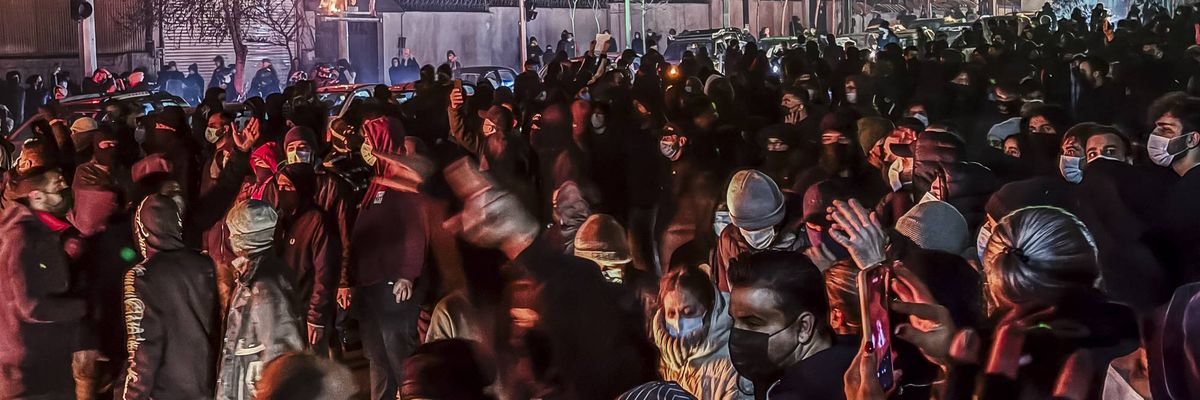
Iranians gather while blocking a street during a protest in Tehran, Iran on January 9, 2026.
(Photo by MAHSA / Middle East Images / AFP via Getty Images)
It’s
virtually impossible to predict what lies ahead for Iran and its
people. But if President Donald Trump decides to take military action
against Iran’s current regime, nothing good will come out of it.
Iran’s Islamic regime is under incredible pressure as the protests that begun in late December over the collapse of the currency
have morphed into a mass popular uprising that has spread across the
entire country and shows no sign of slowing despite a brutal crackdown
that has resulted so far in the killing of thousands of protesters.
Make
no mistake about it. Iran’s current leadership is murdering its own
citizens in order to remain in power and thus block the growing support
for secularism, freedom, and democracy. It’s as simple as that. This is a regime that has been facing unprecedented hostility by the United States
and some of its closest allies since coming to power in 1979 but has
been far more interested in exporting the Islamic revolution than
looking after the well-being of its own citizens. It is a reactionary
regime that has suppressed the fundamental rights of women, banned
independent tradeunions,
and engaged in a systematic crackdown of communists and other leftists,
all the while catering to powerful national capitalist interests.
Iranians have a long history of rebellion against authoritarianism
and repression. Under the Shah, Iran had one of the world’s most brutal
and repressive regimes, strongly supported by the United States.
Indeed, while the Shah sought to modernize the country and even gave
women the right to vote, and the Family Protection Law of 1968 granted
women certain rights in divorce and custody, he and his generals ran the
country with an iron first. Tens of thousands of Iranians were killed
during the Shah’s reign, and Iran’s dreaded secret police, SAVAK,
employed torture and execution to stifle political opposition.
Yet,
Ayatollah Khomeini’s 1979 revolution, aided by Marxists, intellectuals,
various secular groups, and the middle class, did not represent a
transition from monarchy to democracy. Instead, it replaced a brutal,
pro-Western monarchy with a theocratic regime that rolled back much of
the social progress that had occurred up to that point. Repression came
back, this time with an Islamic face, though the regime enjoyed at first
considerable support among merchants, students, clerics, and the poor.
Khomeini’s regime massacred and exiled all communists and embarked on a
campaign of purification of policies. Women’s rights were drastically
curtailed, and this included the removal of professional women from the
public sector as well as the adoption of various means and methods aimed
at discouraging women in general from entering the labor force.
The
US is an imperialist power with a long history of undermining democracy
throughout the world. The Iranian people will not accept US
interference into their own political affairs.
Iranian women took to the streets by the thousands just a few weeks after the revolution to oppose
Khomeini’s decree mandating the hijab. This decree was followed by a
ban on alcohol, the separation of men and women in schools and beaches,
and the criminalization of music. Iran was converted in no time from a
Westernized society with a brutal political regime to an Islamic state
sustained by an equally brutal political regime. Under the new social
order, religion and state mixed as thoroughly as they did in Saudi Arabia.
The only difference is that the two countries followed different
branches of Islam--Iran’s political system is based on Shiism, while
Saudi Arabia’s rests on Wahhabism.
More recently, in 2022, the
death of the 22-year-old Kurdish-Iranian woman Jina Mahsa Amini while
under morality police custody sparked the nationwide “Woman, Life,
Freedom” protests, which people from all walks of life joined to call
for an end to the four-decade rule of Iran by the religious fanatics.
The Iranian authorities responded by detaining thousands of people while
killing more than 560 protesters. It was reported that the average age of those arrested was 15.
The
key reasons behind the current anti-government protests are economic
hardships and political grievances. Iran’s economy has been under severe
strains for a long time due to the international sanctions but also because of mismanagement, corruption, and a host of deep structural problems (chronic inflation, widespread poverty, and high youth unemployment, among others) which the regime has failed to address.
Protests
broke out on December 28 after the Iranian currency, the rial, crumbled
against the US dollar, leading to soaring food prices and to an even
higher inflation
rate, which had already risen to nearly 50%. It all started with
demonstrations by shopkeepers in Tehran’s Grand Bazaar, but they quickly
spread to numerous cities across the country, reflecting deep and
widespread discontent among the general citizenry with the current
regime. This means that the protests, which have been very large in size
and joined by people from across Iranian society, are not simply driven
by economic worries. They are political protests against a corrupt and
oppressive regime.
According to some sources, more than 2,500 people have been killed by the Iranian authorities since the protests begun, but there are unverified reports,
suggesting that the number of protesters killed could be at least
12,000 and possibly as high as 20,000. Leading Iranian officials have
labeled protesters as “enemies of God,” a charge that is punishable by
death under the laws of the Islamic Republic of Iran. They also insist
that the protests are foreign driven.
Israel and the United States would like nothing more than to see regime change in Tehran
and turn Iran into a US-Israeli vassal state. But the claim that the
Iranian people are protesting against a dictatorship by being a pawn in
the hands of foreign powers deserves nothing but scorn. Nonetheless, it
speaks volumes of how alienated the regime’s rulers must feel from the
nation’s citizenry. I suspect that deep down they are cognizant of the
fact that their regime lacks political legitimacy in the eyes of the
vast majority of the Iranian people.
The people of Iran have not forgotten the involvement of the CIA in the 1953 coup
that ousted the democratically elected Prime Minister Muhammad
Mossadegh. Their desire to get rid of Iran’s current regime is not an
invitation for foreign interference. Indeed, who is to say that perhaps
none of the courageous protesters would be paying with their lives for
Iran to be free from an oppressive theocracy if the 1953 coup hadn’t
happened?
It’s virtually impossible to predict what lies ahead for Iran and its people. But if President Donald Trump
decides to take military action against Iran’s current regime, nothing
good will come out of it. The US is an imperialist power with a long
history of undermining democracy throughout the world. The Iranian
people will not accept US interference into their own political affairs.
In fact, such action may cause many Iranians to unite, at least
temporarily, behind the regime. In sum, only the Iranian people
themselves should be able decide their nation’s future.
The
U.S. is on a fast track to authoritarianism like nothing I've ever
seen. Meanwhile, corporate news outlets are utterly capitulating to
Trump, twisting their coverage to avoid drawing his ire while lining up
to stuff cash in his pockets.
That's why I believe that Common Dreams is doing the best and most consequential reporting that we've ever done.
Our
small but mighty team is a progressive reporting powerhouse, covering
the news every day that the corporate media never will. Our mission has
always been simple: To inform. To inspire. And to ignite change for the
common good.
Now here's the key piece that I want all our
readers to understand: None of this would be possible without your
financial support.
That's not just some fundraising
cliche. It's the absolute and literal truth. We don't accept corporate
advertising and never will. We don't have a paywall because we don't
think people should be blocked from critical news based on their ability
to pay. Everything we do is funded by the donations of readers like
you.
Will you donate now to help power the nonprofit, independent reporting of Common Dreams?
Thank you for being a vital member of our community. Together, we can keep independent journalism alive when it’s needed most.
- Craig Brown, Co-founder
Our work is licensed under Creative Commons (CC BY-NC-ND 3.0). Feel free to republish and share widely.
C.J.
Polychroniou is a political economist/political scientist who has
taught and worked in numerous universities and research centers in
Europe and the United States. His latest books are The Precipice:
Neoliberalism, the Pandemic and the Urgent Need for Social Change (A
collection of interviews with Noam Chomsky; Haymarket Books, 2021), and
Economics and the Left: Interviews with Progressive Economists (Verso,
2021).