Sunday, December 18, 2022

Richard Falk: On Justice for Kashmir
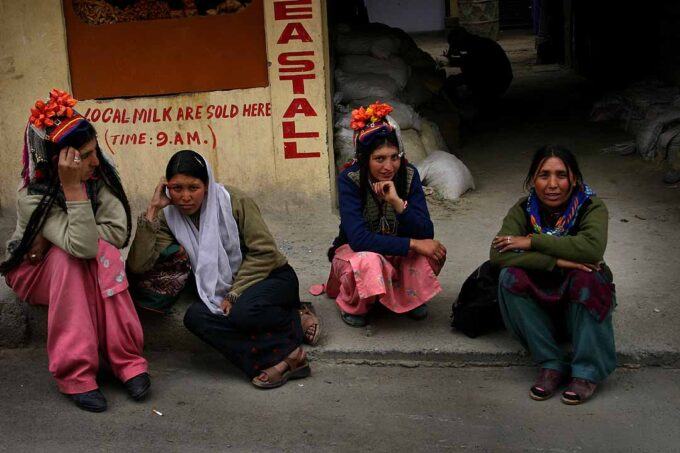
Introductory Note: Prof. Richard Falk, a famous American expert on international law and human rights, highlights the deplorable situation of the occupied people of Kashmir when they were put under direct Indian rule by prime minister Modi in 2019 after he abrogated the semi-autonomous status of Kashmir which was enshrined in the Indian constitution. The exposition of the situation of the people of Kashmir by Prof. Falk is important for understanding the hopes, aspirations, and the struggle of the people of Kashmir for independence (Azadi) from the oppressive colonial rule of India.
 
 -
 

On Justice for Kashmir

Photograph Source: Steve Evans – CC BY 2.0

Among the self-determination struggles of our time, Kashmir is at risk of being forgotten by most of the world (except for Pakistan), while its people continue to endure the harsh crimes of India’s intensifying military occupation that has already lasted 75 years. In 2019, the Hindu nationalist government of the BJP, headed by the notorious autocrat, Narendra Modi, unilaterally and arbitrarily abrogated the special status arrangements for the governance of Kashmir that had been incorporated in Article 370 of the Indian Constitution, and although often violated in spirit and substance, at least gave the people of Kashmir some measure of protection.

1947 was a momentous year for South Asia as British colonial rule came to an end, followed by a partition of India that resulted in much bloodshed throughout the process of establishing the Muslim state of Pakistan alongside the secular Hindu majority state of India. At this time, Kashmir was one of 560 ‘princely states’ in India, governed by a Hindu Maharajah while having a population that was 77% Muslim. The partition agreement reached by India and Pakistan gave the peoples of these ‘states’ a partial right of self-determination in the form of a free choice as to whether to remain a part of India or join their destiny with that of Pakistan, and in either event retaining considerable independence by way of self-rule. It was widely assumed that these choices would favor India if their population was Hindu and to Pakistan if Muslim. In a confused and complicated set of circumstances that involved Kashmiris and others contesting the Maharahah’s leadership of Kashmir, India engaged in a variety of maneuvers including a large-scale military intervention to avoid the timely holding of the promised internationally supervised referendum, and by stages coercively treated Kashmir more and more as an integral part of India. This Indian betrayal of the partition settlement agreement gave rise to the first of several wars with Pakistan, and it resulted in a division of Kashmir in 1948 that was explicitly not an international boundary, but intended as a temporary ‘line-of-control’ to separate the opposed armed forces. It has ever since given rise to acute tension erupting in recurrent warfare between the two countries, and even now no international boundary exists between divided Kashmir. The leadership of Pakistan has always believed that Kashmir was a natural projection of itself, treating India’s behavior as occupying power as totally unacceptable and illegitimate as have the majority of Kashmiris.

The essence of India’s betrayal was to deny the people of Kashmir the opportunity to express their preference for accession to India or Pakistan, presumably correctly believing that it would lose out if a proper referendum were held. Back in 1947 the Indian secular, liberal leadership did itself make strong pledges to the effect that Kashmir would be allowed to determine its future affiliation in an internationally supervised referendum or plebiscite as soon as order could be there restored. The two governments even agreed to submit the issue to the UN, and the Security Council reaffirmed the right of Kashmir to the agreed process of self-determination, but India gradually took steps clearly designed to prevent this internationally supervised resolution of Kashmir’s future from ever happening. It appears that India sought control of Kashmir primarily for strategic and nationalist reasons associated especially with managing Kashmir’s borders with China and Pakistan, and in doing so converting Kashmir into a buffer state of India, giving it the security that supposedly accompanies strategic depth of a ‘Great Power.’ Unsurprisingly, Pakistan reacted belligerently to India’s failure to live up to its commitments, and the result for Kashmir was a second level of partition between India occupied Kashmir and a smaller Pakistan-occupied-Kashmir. In effect, India’s unilateralism poisoned relations between these two countries, later to become possessors of nuclear weapons, as well as producing a Kashmiri population that felt deprived of its fundamental rights with accompanying atrocities (including torture, forced disappearances, sexual violence, extrajudicial killing, excessive force, collective punishment, the panopoly of counterinsurgency crimes), which amount to Crimes Against Humanity, in a manner somewhat resembling the deprivations associated with Palestine and Western Sahara.

Part of the blame for this Kashmiri prolonged tragedy reflects the legacy of British colonialism, which characteristically left behind its colonies as shattered and factionalized political realities, an obvious consequence of a colonialist reliance on a divide and rule strategy in its execution of its policies of control and exploitation. Such a strategy understandably aggravated the internal relations of diverse ethnic, tribal, and religious communities. This Indian story is repeated in the various British decolonizing experiences of such diverse countries as Ireland, Cyprus, Malaysia, Rhodesia, and South Africa, as well as in the quasi-colonial mandate in Palestine, which Britain administered between the two world wars. In these cases, ethnic and religious diversity was manipulated by Britain to manage the overall subjugation of a colonized peoples so as to minimize its administrative challenges, which became increasing troublesome in the face surging national independence movements in the 20th century.

Adding to the misery, these cleavages were left behind as open wounds by Britain during the decolonization process, with a crude display of irresponsibility toward the wellbeing of the previously dominated native populations. The historical outcome was dramatized by a variety of post-colonial unresolved political conflicts that resulted in prolonged strife, producing severe suffering for the population while addressing such post-colonial challenges. These adverse results were only avoided, ironically enough, in the few ‘success’ stories of settler colonialism—Australia, Canada, New Zealand, and the United States. Such successes were achieved through reliance on genocidal tactics by settlers that overcame native resistance by eliminating or totally marginalized hostile indigenous populations. South Africa is a notable instance of the eventual failure of a settler colonial enterprise and Israel/Palestine is the sole important instance of an ambiguous, ongoing struggle that has not reached closure, but is now at a climactic stage.

Kashmir’s status, despite the denial of self-determination, had given the beleaguered country substantial autonomy rights, and despite many encroachments by India during the 75 years of occupation, chief of which was blocking the Kashmiri people from exercising their internationally endorsed right of self-determination. Nevertheless, what Modi did on August 5, 2019 definitely made matters worse. It ended Kashmir’s special status in the Indian Constitution and placed the territory under harsh direct Indian rule, accompanied by various religious cleansing policies and practices counterinsurgency pretexts designed to promote Hindu supremacy in an undisguised framework of domination, discrimination, highlighted by altered residence and land ownership laws in a pattern favoring the Hindu settlement and minority control. After taking journalistic notice of these events in a surprisingly non-judgmental fashion, the world, especially in the West, has fallen silent despite the crimes against the people of Kashmir continuing to mount on a daily basis, including the branding of all forms of Kashmiri opposition to Indian behavior as ‘terrorism’ giving the incredibly large occupying Indian forces of 700,000 or more a green light to use excessive force without accountability and impose repressive conditions on the entire population.

This outcome in Kashmir should not cause much perplexity. International reactions to human rights abuses rarely reflect their severity, but rather the play of geopolitics. Washington sheds many tears about alleged violations of human rights in Cuba or Venezuela while giving Egypt and Saudi Arabia a free pass. More reflective of the international politics governing the inter-governmental and UN discourse on human rights is the insulation of Israel’s apartheid regime from any kind of punitive response at the international level while screaming for action in the same institutional settings against China’s far milder abuse of the rights of the Uyghur people in Xinjiang. India like Israel is too valuable a strategic partner of the West to alienate the Modi leadership by objecting to its behavior however extreme and criminally unlawful. It is unfortunate that the best human rights defenders can hope for in such cases is silence.

India as a large country with a huge population and nuclear weapons which, under the best of circumstances, is hard to challenge with regard to policies that seem almost normalized by the passage of time within the domain of its territorial sovereignty, given the state-centric allocation of legal authority in the post-colonial world. Many important countries have ‘captive nations’ within their borders and are united in opposing internal self-determination claims. At the same time, the harshness and cruelty of India’s policies over time have given rise to an insurgent mood and movement on the part of Kashmiris who now seem themselves somewhat divided as between aspiring for accession to Pakistan or independent statehood. Despite the long period since partition, such a choice, however improperly delayed for decades, should be made available to the people of Kashmir if only the UN was in a position to implement its long ignored responsibility to organize and administer a referendum in Kashmir. Such a peaceful transition does not seem presently feasible given India’s recent further encroachment on Kashmir’s normal development.

Yet the situation is not as hopeless as it seems. The rights of the Kashmiris are as well established in law and morality as are the wrongs of India’s increasingly apartheid structure of domination, exploitation, and subjugation. The Kashmir struggle for justice enjoys the high ground when it comes to the legitimacy of its claims, and struggles of a similar sort since 1945 have shown that the political outcome is more likely to reflect the nationalist and insurgent goals of legitimate struggle than the imperial goals of foreign encroachment. In effect, anti-imperial struggles should be thought of as Legitimacy Wars in which the resistance of a repressed people backed by global solidarity initiatives are in the end more decisive and effective than weaponry or battlefield superiority. It is worth reflecting upon the startling fact that the major anti-colonial wars since 1945 were won by the weaker side militarily. At this preliminary stage, a liberation strategy for Kashmir needs to concentrate on raising global awareness of the criminal features of India’s treatment of the Kashmiri people. To achieve such awareness, it might even be helpful to grasp how Gandhi mobilized public opinion in support of India’s own struggle for independence and study of the brilliant tactics used by Vietnam in mobilizing global solidarity with its nationalist struggle and sacriice to neutralize the weight of the U.S. massive military intervention.

Richard Falk is Albert G. Milbank Professor Emeritus of International Law at Princeton University, Chair of Global law, Queen Mary University London, and Research Associate, Orfalea Center of Global

.

https://www.counterpunch.org/2022/12/16/on-justice-for-kashmir/?fbclid=IwAR3XHht06ijpqLt8SGeVjgbzmZBpcppdKm0C9HOs8SRVTNC8kFmg-_o6zMo


Tuesday, November 29, 2022

2023 : What MUST be done!

 In his new film, Canadian academic and filmmaker Dr Garry Potter offers both information and argument. It provides an analysis of our current ecological condition, emphasizing just how close are the many tipping points after which we shall be unable to recover. The urgent timeline for dramatic change is the real emergency! The film also looks at the linkage between energy and environmental issues, and fascism. Finally, it discusses the debates around the use of violence in addressing climate change politics. It situates the ethical debates in the context of carbon capitalism’s intensification and acceleration of problems, rather than any mitigation of climate change.

https://www.youtube.com/watch?v=lHMarGhERBY&t=1254s

Thursday, November 17, 2022

𝐎𝐮𝐭 𝐟𝐨𝐫 𝐚 𝐫𝐞𝐯𝐨𝐥𝐮𝐭𝐢𝐨𝐧: 𝐒𝐡𝐚𝐩𝐮𝐫𝐣𝐢 𝐒𝐚𝐤𝐥𝐚𝐭𝐯𝐚𝐥𝐚 (1874-1936)


MARC WADSWORTH salutes the remarkable talents of Labour’s first Indian MP, a communist who rocked the Commons with savage takedowns of the empire and the monarchy'
 
ONE hundred years ago, on November 15 1922, an Indian freedom fighter and communist was elected to the British Parliament as the Battersea Trades Council and Labour Party MP.
Shapurji Saklatvala was a member of India’s industrially wealthy Tata family, yet he bridged class and cultural barriers with his powerful commitment to the revolutionary cause.
Much of what Saklatvala spoke about a century ago still has relevance. He was forthright in support of the many, among the international working class, and not the world’s elite few. He opposed capitalism, imperialism, colonialism, racism and monarchism.
In a celebrated speech in support of the 1926 general strike, he said: “I am out for a revolution and am quite willing to be shot down.” He was put in jail for three months as a result of what he said.
Saklatvala also suffered police raids on his home. He was banned by the British government from entry to countries such as Egypt, the United States, Belgium — and even from his native India.
Despite a heart condition — he died aged just 61 in 1936 — as the Daily Worker wrote: “Night after night, year after year, in all parts of Britain he carried out his task of working-class agitation, education and organisation. No comrade ever did more of his work so uncomplainingly as comrade Saklatvala. No call was ever made to which he did not respond.”
He travelled to Ireland, giving his speeches in support of trade unionists, fellow socialists and backing Indian and Irish independence. In Battersea, he worked closely with many comrades, including leading pan-Africanist John Archer, who was elected London’s first black mayor in 1913.
Fellow communist Tom Bell observed: “There is no doubt Saklatvala wore himself out before his time in an unselfish devotion to the cause of the colonial peoples and of communism.”
Commentators described Saklatvala as one of the most gifted orators of his generation. While serving as an MP, he wrote a ferocious article ridiculing the House of Commons — but at the same time, he revelled in being a parliamentarian, putting himself forward as a candidate at a time when few fellow communists thought it was a good idea.
From Saklatvala’s first days in the Commons, his biting wit and irreverence were unleashed. The Times in 1923 reported: “As to the Indian Civil Service, Saklatvala said, it was not Indian, it was not civil, and it was a domination and a usurpation. Barring those three great defects, the service was all right.”
Referring to a debate in 1928, the Manchester Guardian wrote: “No contribution to the debate had such a stirring and stimulating effect as Mr Saklatvala’s, and for some hours afterwards the enquiry was everywhere made when two persons met within the walls of Parliament, ‘Did you hear Saklatvala’?”
He scored a parliamentary first when he addressed the speaker as “comrade” and his rejection of the ruling class and its institutions, particularly the monarchy, was evident when he lampooned them.
“A few families supply monarchs to Europe just as a few biscuit factories supply biscuits all over Europe,” he told the Commons.
In a debate about whether or not to allocate the prince of Wales a £2,000 grant (more than £30,000 in today’s money) for a trip to Africa and South America, Saklatvala mocked the muted Labour criticism of the proposal. “If they want an empire and a ‘royal nob’ at the head of it,” (eliciting loud cries of “order” and “withdraw”) Saklatvala, quipped: “The royal head, I mean.”
He added, in the same spirited fashion, that he opposed any grant to the prince on the grounds that it was “the usual trickery of the minority, who were helping themselves at the expense of the majority.”
Sometime earlier, the Commons was told the prince of Wales had received a “cordial invitation” to visit India. Saklatvala protested: “The people of India said they did not want his royal highness there, and the government of India had to empty out the jails and pay money to spectators.”
He made almost 500 speeches and other parliamentary interventions during 1922-23 and 1924-29.
They covered foreign, colonial and domestic issues, from world revolution to cases of hardship and injustice faced by British and Indian workers.
For Saklatvala, the battle against imperialist subjugation was just as important whether it was being fought in India, Palestine, Ireland or Africa.
Saklatvala was uncompromising in arguing that the exploitation of the global South damaged African, Asian and Caribbean workers and white workers in the Western hemisphere alike.
He said that private enterprise, which was so lauded in Britain, had spread to India, with the result that its big dividends, low wages, and long hours were depriving thousands of workers in the cotton industry in this country of their livelihood.
Marc Wadsworth is the author of the political biography Comrade Sak.
 
Source: The Morning Star 
 
 https://www.morningstaronline.co.uk/article/f/out-revolution-shapurji-saklatvala?fbclid=IwAR3uWSIfegrcGFomrLm-nlonaK020g67qW4-ORhKfgaTl2_ORxJUx8mA-EI
 

Sunday, October 30, 2022

𝐑𝐞𝐥𝐢𝐠𝐢𝐨𝐮𝐬 𝐟𝐫𝐞𝐞𝐝𝐨𝐦 𝐨𝐫 𝐫𝐞𝐥𝐢𝐠𝐢𝐨𝐮𝐬 𝐜𝐨𝐞𝐫𝐜𝐢𝐨𝐧?

 
--Nasir Khan

The whole history of mankind shows when Religion and State were united, the world saw only political and social oppression, injustice and disasters. The same thing is happening in many countries now where some people are killing others in the name of their religion and for imposing their brand of religion on others by terror and coercion to take political power. But they reject the other course, a humane and sensible course, which allows a peaceful existence of all people in a democratic way, which leads to the well-being of all, respect for all religions and their followers, such as, Muslims, Christians, Jews, Hindus, Sikhs, Baha'is, Buddhists, animists, all sorts of believers or non-religious people. 
 
Under such a democratic and humane system all people have equal social and political rights. There is no discrimination against anyone because of their religion or oppression of any religion under any pretext. All people have freedom to follow their religions according to their customs and traditions freely. Religion becomes a matter of personal choice over which no other authority, social or political, can intervene.
The question before all of us is: which is the better way? I think the people who have not been fully brainwashed and indoctrinated will accept the democratic path. But those who want to kill and terrorise to impose their only misguided convictions and dogmas will continue to kill and terrorise. If they gain power, they will impose their unjust laws, discriminate against other faiths and sects and make the life of minorities intolerable and brutish.

Saturday, September 03, 2022

The Dangers of a Nuclear War

What if such a big investment in the war leads not only to a modern conventional war but to a nuclear war, then who will be the big winners? Will a nuclear war remain confined to Europe and Russia only, or will it have the potential to reach other distant countries, such as the United States of America? No power will be safe. It will be total destruction on an unpredictable and unimaginable scale.

Still, there is time to de-escalate the conflict in Ukraine and seek a negotiated settlement that takes into account the legitimate geopolitical interests of Ukraine and Russia. 
 
 -- Nasir Khan

White House Asks Congress for $14 Billion To Fund Its War Against Russia

It would bring the total funds authorized for the war in Ukraine to $67 billion if approved

The Joe Biden administration requested another massive infusion of cash for its war against Russia. The latest short-term spending proposal seeks nearly $14 billion for weapons and economic assistance for Ukraine. Since Russia invaded Ukraine six months ago, the US has sent Kiev tens of billions in weapons and direct economic assistance.

On Friday, the White House asked Congress to approve $13.7 billion in funds to confront Russia in Ukraine as part of a short-term spending package. The Biden administration’s total request is $47.1 billion for a wide array of issues, including Covid, Monkeypox, disaster relief, and the war in Ukraine.

The White House largely supported Kiev’s war effort by transferring arms owned by the Department of Defense to Ukraine’s military. Within the $14 billion for Ukraine, over half will go to buy weapons. $4.5 billion will go towards the Department of Defense replenishing American stockpiles.

The Presidential Drawdown Authority (PDA) allows the president to make the transfers without Congressional oversight. However, Congress authorized additional funds for the PDA in the $40 billion Ukraine aid bill passed earlier this year. Now, sources in the Pentagon are reporting that Biden’s prolific use of the PDA to arm Ukraine has started to deplete American stockpiles.

The latest spending proposal asks for an additional $2.7 billion in military and intelligence support for Ukraine and $4.5 billion in direct economic support for the government in Kiev. Since Russian President Vladimir Putin ordered the invasion, Congress has authorized $53 billion in funding for the war in Ukraine. If passed, the latest aid package will bring the total to about $67 billion.

In addition to the $11.7 billion to support Ukraine’s war effort, the proposal includes $2 billion to fund the White House’s economic war against Russia. $1.5 billion will be spent on uranium to be used as nuclear fuel. $500 million will go towards upgrading the Strategic Petroleum Reserve. Washington says it is in the middle of an energy war with Moscow. In Europe, gas prices are ten times the average, while the Ruble has strengthened against the dollar.

Kyle Anzalone is the opinion editor of Antiwar.com, news editor of the Libertarian Institute, and co-host of Conflicts of Interest.

 
.
 Click on the link to read the article: 

https://news.antiwar.com/2022/09/02/white-house-asks-congress-for-14-billion-to-fund-its-war-against-russia/?fbclid=IwAR1LUZnJMHq7b_sXXPzQvXMUdRdE9PgoXsfa5E2pYkabaNyE012WRKOJYuo

Thursday, September 01, 2022

𝐓𝐡𝐞 𝐦𝐞𝐬𝐬𝐚𝐠𝐞 𝐨𝐟 𝐉𝐞𝐬𝐮𝐬 𝐟𝐨𝐫 𝐭𝐡𝐞 𝐩𝐨𝐰𝐞𝐫𝐥𝐞𝐬𝐬 𝐚𝐧𝐝 𝐭𝐡𝐞 𝐩𝐨𝐨𝐫

 --- Nasir Khan


The message of Jesus of Nazareth (c. 7-2 BC – c. 30-33 AD) was viewed as a challenge to the Roman Empire and a threat to the Jewish religious establishment. Jesus was a great teacher and revolutionary of those times. Even though our knowledge of this unique person is limited due to the lack of original sources, according to a critical analysis of the contents of the Christian Bible, we see him on the side of the poor, the sick and the marginalized people. For his activities he was branded as a criminal, a subversive rebel and then eradicated.

Even after the lapse of two thousand years, his message of hope and the possibility of creating a just and righteous world order (the Kingdom of Heaven) is still alive.

In my view, that message will never die, no matter how difficult the problems confronting the human race. There will always be some courageous people to pick up the message and carry on the struggle against the exploitation of humans by humans, against oppression, ignorance, injustice and poverty.

The appeal of the message lies in the universality of human values for a worthy life. History has seen the oppressive religious rulers of the Middle Ages, the autocratic monarchs of the bygone ages, the great dictators of the twentieth century and the fall of great empires. The present global imperial world order headed by the US military-industrial complex will also come to an end in the future. But the message of hope and justice will live on.

Incidentally, I am not discussing any theological beliefs or views around Jesus in whose name a world religion arose and now has over 2 billion followers. We know how the vast array of his followers around the world see him. However, many ignore the revolutionary content of his message.

It is important for us to see the universal and revolutionary content of his message. Human values existed long before him, and they still do. Moreover, history bears the testimony that some of the most gruesome crimes have been committed in his name and in the name of Christianity. For all of that, he bears no responsibility. Instead, I point to the positive side of his message for humanity in general.

-
The following figure of Jesus is imaginary. It should not be taken as a real image of him.

No photo description available.

Monday, August 29, 2022

𝐀 𝐜𝐨𝐦𝐦𝐞𝐧𝐭 𝐨𝐧 𝐭𝐡𝐞 𝐒𝐚𝐜𝐫𝐞𝐝 𝐆𝐨𝐥𝐝𝐞𝐧 𝐂𝐚𝐥𝐟 𝐨𝐟 𝐭𝐡𝐞 𝐖𝐞𝐬𝐭

 Israel is the new Golden Calf of Western political establishments. It is eulogised, worshipped and commonly seen as sacrosanct. The 'Holocaust' industry is also its big stick with which Israel has subdued the West and many others regions of the world. 
 
No one who holds or aspires to hold any high political or official position in the West can dare to say a word about the way the Zionists have manipulated the event of the Holocaust to justify the colonisation of Palestine and silence any criticism of their brutal occupation, rampant killings and illegal expansion in the occupied territories.

---Nasir Khan