In this picture obtained by AFP from the Iranian news agency Tasnim on September 2, 2026 a child lies on a hospital bed receiving treatment following injuries from an overnight strike in Kuhestak, Sirik County, in Iran’s southern Hormozgan province on September 2, 2026.
(Photo by Morteza Akhondi/Tasnim News/AFP via Getty Images)
If we truly believe that all human life has equal value, then we must demand that those who order and carry out attacks on civilians face the same scrutiny and consequences, whoever they are.
Sep 29, 2026, Common Dreams
On Tuesday, September 1, 2026, the United States military struck a home in the town of Kuhestak, in Sirik County, southern Iran, where a wedding was underway, killing four people and wounding more than 50. The youngest victim was 4-year-old Amir Ali Karimi. Asked about the strike, US Vice President JD Vance told reporters: “What I can say with 100% confidence is that, unlike the IRGC, the United States never targets civilians in combat. We never will do that. We never have done that.” However, he added, “Sometimes, things happen.”
It’s worth remembering that the campaign the United States and Israel waged against Iran—launched without United Nations Security Council authorization—opened with a strike on the office of Iran’s Supreme Leader that killed him along with his daughter, son-in-law, daughter-in-law, and his 14-month-old granddaughter. Roughly an hour or two later, the US struck the Shajareh Tayyebeh elementary school in Minab with Tomahawk cruise missiles, killing 156 people, including 120 schoolchildren between the ages of six and 13. That same day, an attack on the small town of Lamerd used Precision Strike Missiles (PrSM)—munitions that burst in midair and scatter thousands of tungsten fragments—killing at least 21 people, including four children, among them 2-year-old Avina Barzegar, and wounding 100 more. In the months since, the US and Israel have struck not only military sites but universities, bridges, power plants, police stations, and even desalination plants serving remote islands in southern Iran. Whatever assurances Vance offers, the record is clear that the United States has a long history of striking civilians.
RECOMMENDED…
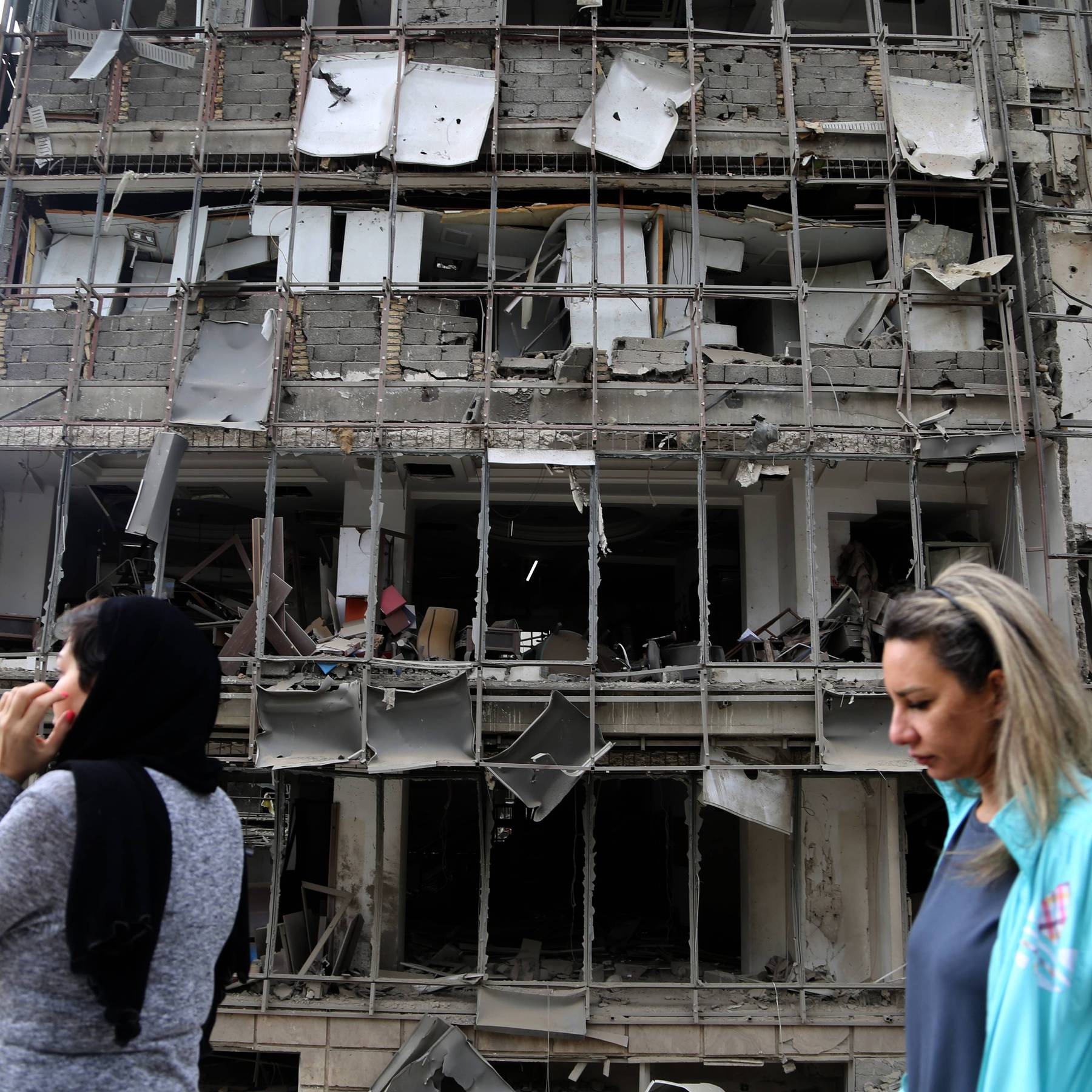
Amnesty Says US-Israeli Attacks With Indiscriminate Weapons in Tehran May Have Been War Crimes
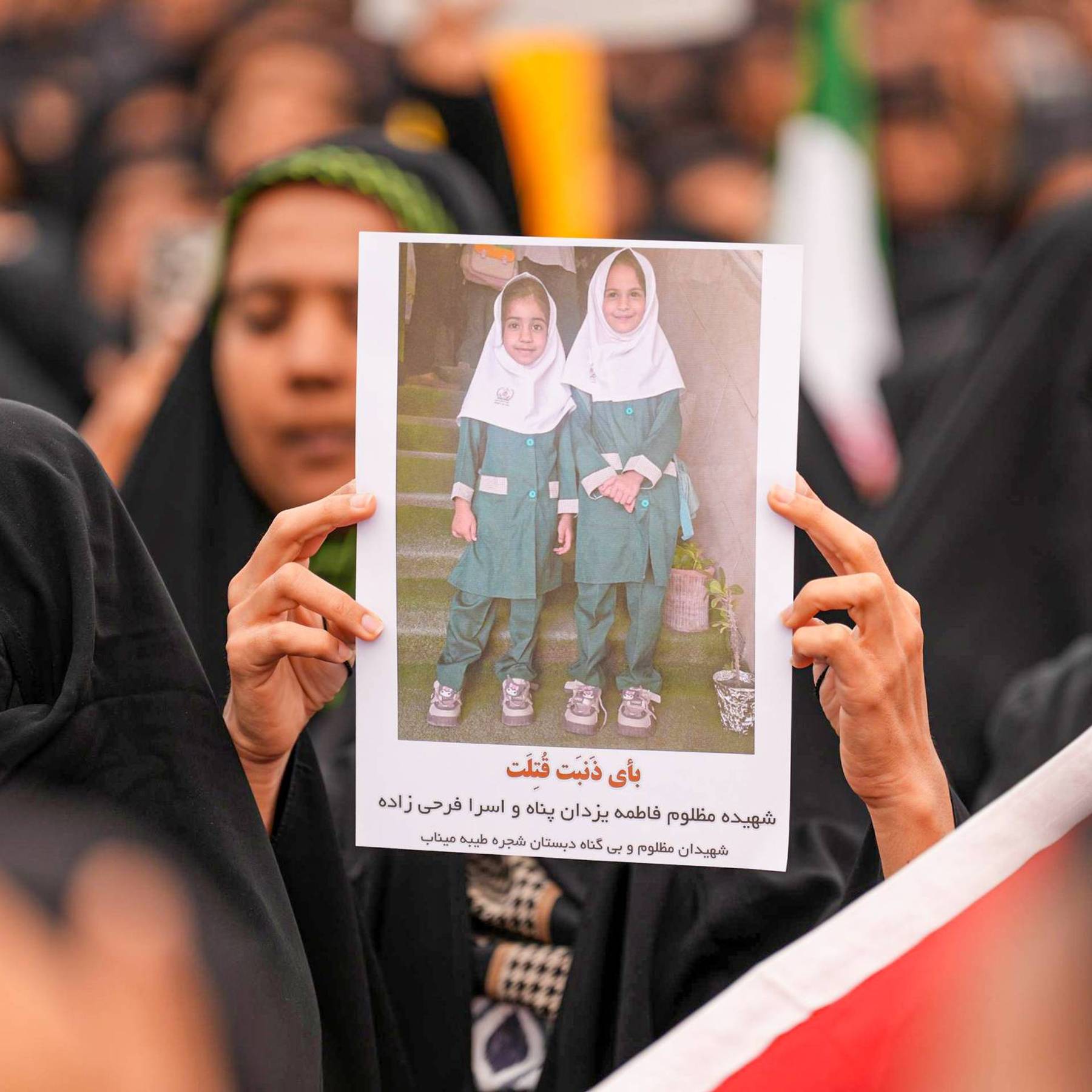
UN Experts Say US War Crimes Likely in Iran School, Sports Complex Massacres
Of course none of this is new. More than two years have now passed since Israel launched its full-scale assault on Gaza, backed fully by the United States and most Western governments. Over those two years the world has watched strikes on hospitals, schools, and universities, the shooting of civilians, even an assault captured on camera—and despite an International Criminal Court arrest warrant for Israel’s prime minister, no action has been taken either to enforce that warrant or to halt the war. It was hardly surprising that a year-plus of unanswered war crimes in Gaza—what many now call a genocide—normalized the same conduct elsewhere. Israel applied much the same pattern in Lebanon, violating that country’s sovereignty to bomb schools, apartment buildings, universities, and villages. The absence of any serious response to crimes broadcast live to the world sent every power on Earth a clear message: If you are strong enough, you can commit any crime—including the crime of crimes.
Isn’t it time that those responsible for striking a bridge, a wedding, a power plant, a desalination plant, be held to account?
President Donald Trump himself has, through his own public statements, documented attacks that could easily amount to war crimes. In one Truth Social post, he wrote, “A whole civilization will die tonight, never to be brought back again.” In another, he shared footage of the strike that brought down Karaj’s unfinished B1 bridge—a civilian structure, not yet even complete, hit on Sizdah Bedar, the 13th day of Nowruz, when most Iranians are out picnicking in nature and many families were gathered under and around the bridge. The strike was a so-called double tap: A second missile hit after rescue workers arrived to help the wounded, killing two more and injuring several others. In all, 13 people were killed and 95 wounded.
This scale of targeting civilians, met with so little response from the media or the international community, is itself a troubling kind of normalization—one we cannot afford to treat with indifference. Imagine, for a moment, that Iran had bombed the White House on a holiday morning, killing the American president along with members of his family, and then struck an elementary school in Texas, killing more than 120 American students along with their teachers. How would American society, and the West more broadly, have responded? Would the dead children be called a “necessary action” or “mistake”? Or would the entire West have mobilized to respond to such an atrocity?
This same Western indifference to the deaths of people in the Global South—particularly at American hands—is visible in the words of Afghanistan’s former president, Hamid Karzai. Asked recently why he, perhaps alone among Afghan leaders, had wept in public, Karzai spoke of “our national helplessness before powers that had come in the name of helping Afghanistan,” and recalled asking American officials a simple question: If their bombs killed Afghan children, was that terrorism? They told him no—terrorism, he said they told him, is when American interests are put at risk.
This becomes painfully concrete when you consider that the Sirik wedding was only the latest entry in a long, grim record of American strikes on wedding celebrations across Afghanistan, Iraq, and Yemen going back more than two decades—a pattern trackers have documented since at least December 2001.
Isn’t it time that those responsible for striking a bridge, a wedding, a power plant, a desalination plant, be held to account? Don’t the citizens of a country whose president launched a war on another nation without UN authorization, and whose forces have committed numerous documented war crimes in the process, bear some responsibility for holding their own leaders accountable? Would the West have stayed this indifferent if a wedding, or a school, had been hit at home—or would it have moved heaven and Earth to bring the perpetrators to justice? These are the questions that demand an answer. The world cannot continue to condemn violence selectively while treating the deaths of civilians in the Global South as an unfortunate but acceptable consequence of geopolitics.
Every time a war crime is ignored, the threshold for the next one becomes lower. Every time accountability is abandoned, impunity becomes stronger. If we truly believe that all human life has equal value, then we must demand that those who order and carry out attacks on civilians face the same scrutiny and consequences, whoever they are. The first step toward ending war-crime normalization is refusing to look away.








![Smoke rises after Israeli forces carried out air and artillery attacks on towns in Nabatieh, southern Lebanon, despite a ceasefire, on September 21, 2026. [Ramiz Dallah - Anadolu Agency]](https://i0.wp.com/www.middleeastmonitor.com/wp-content/uploads/2026/09/AA-20260921-42532560-42532559-ISRAELI_FORCES_ATTACK_LEBANON_DESPITE_CEASEFIRE.jpg?fit=920%2C613&ssl=1)

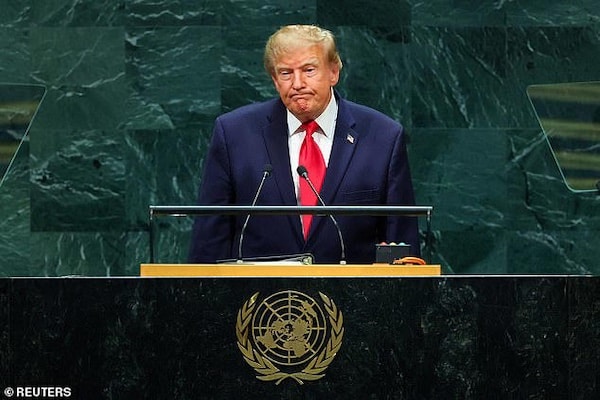 Melania admits Trump sometimes ‘doesn’t want to hear the truth’ as she grades his UN speech. (Photo: MSN(cc))