Thursday, November 19, 2026

Inside the Trump Administration’s War on the International Criminal Court

 Ashley Gate, Counterpunch, 19 Nov 2026

A New World Order

Secretary of State Marco Rubio has once again attacked the global system of laws, norms, and principles instituted to place limits on international armed violence. Advocating for a return to might-makes-right barbarism during a keynote speech on Friday, Rubio threatened to use military force against the International Criminal Court, which prosecutes individuals accused of the gravest atrocities. Warning that if the ICC was “foolish enough to try to enforce their paper decrees on Americans, our answer will probably be the same as the Roman general Pompey when he said to those who were trying to invoke their city’s charters against his legions. … ‘Stop quoting laws to men with swords.’”

Rubio’s effort to undermine the principles and rules that regulate the means and methods of warfare and the humanitarian protection of civilian populations, sick and wounded combatants, and prisoners of war is part of the Trump administration’s wide-ranging effort to upend the rules-based international order that the U.S. has championed — but often failed to abide by — since World War II.

Speaking before the conservative Federalist Society at the National Lawyers Convention in Washington, D.C., Rubio disparaged the ICC as a “fake court” and “an unelected world tribunal, which claims to supersede the laws and constitutions of sovereign states, even those who never signed up for it.”

Rubio’s tirade was the latest salvo in a long-running campaign against the ICC by President Donald Trump’s administration, which has vowed to cripple the court. In October, after former ICC judge Navanethem “Navi” Pillay was awarded the Nobel Peace Prize, Trump — who has relentlessly campaigned for the award — was enraged and derided the South African jurist as “a liberal person who works at the United Nations, who nobody has ever heard of.”

Hours after the award was announced, the U.S. imposed sanctions on the ICC. These latest sanctions are intended to turn the judicial organ into an economic pariah. They prohibited the court from conducting dollar-denominated transactions, froze its U.S.-based assets, and barred the judicial body from using the U.S. banking system or working with American institutions — effectively blacklisting the court.

The ICC was created by the international community to investigate and prosecute war crimes, crimes against humanity, genocide, and the crime of aggression — when one country uses armed force against another without legal justification. The Hague, Netherlands-based court is unique as a permanent judicial organ capable of prosecuting anyone, infantry soldiers and sitting heads of state alike, for humanity’s gravest crimes if they are committed in the territories of its 125 member states. The ICC is critically a court of last resort that will only intervene when domestic jurisdictions either fail to hold their own service members and political leaders accountable, or when state parties to the court call for an investigation.

While the Trump administration’s timing in sanctioning the ICC was notable, this latest strike against the court is just one facet of the Trump administration’s yearslong campaign to — in the words of Rubio’s State Department — “dismantle” it. The effort dates back to 2020, when the first Trump administration imposed sanctions on ICC officials after the court opened an investigation into alleged U.S. war crimes and crimes against humanity committed in Afghanistan.

Overturned by the Biden administration in 2021, the first round of U.S. sanctions against the court were replaced last February by a new series targeting the court’s chief prosecutor, its two deputy prosecutors, and six of its judges. All of these judges had either investigated the actions of U.S. nationals in Afghanistan or were part of the ICC’s decision to issue arrest warrants for Israeli Prime Minister Benjamin Netanyahu and his former Defense Minister Yoav Gallant for their co-perpetration of “the war crime of starvation” and crimes against humanity in Gaza.

Though the litany of prior U.S. sanctions against the court impacted the lives of those nine individuals and their families — cutting them off from their bank accounts, emails, and blocking their travel — the actions were piecemeal and did not fully upend the work of the court.

Now, all of the ICC’s U.S.-based partner organizations have six months to completely cut ties with the court or face legal retribution. What’s more, since the current global economic system is built upon the U.S. dollar, international — particularly European — organizations often preemptively abide by U.S. sanctions even if their workings fall completely outside of America’s jurisdiction. For example, when the French company Axa terminated its life and health insurance contracts with the ICC on October 1, the insurer reportedly cited the escalating campaign by the U.S. against the court.

Absent the implementation of effective countermeasures — like amending and enforcing the EU Blocking Statute, which can shield EU individuals and businesses from “unlawful” third-country sanctions — this latest move by the U.S. may not kill the ICC, but it will cut off the judicial organ’s blood supply.

Victors’ Justice?

For over 80 years, the U.S. has enjoyed the privilege of proscribing — and not necessarily abiding by — international law. American representatives served as the chief arbiters of the post-World War II Nuremberg and Tokyo military tribunals that prosecuted Nazi and Japanese war criminals, which are seen by many in the field as the birthplaces of modern international criminal law. American arbiters, notably U.S. Supreme Court Justice Robert H. Jackson, led the victors of the Second World War as they tried and prosecuted their former adversaries for novel notions of wrongdoing, including crimes against peace and crimes against humanity. These newly defined criminal acts form the bedrock of the ICC’s jurisdiction.

At the International Military Tribunal for the Far East, all 25 major Japanese leaders were convicted, with seven receiving death sentences. Judge Radhabinod Pal of India argued for the acquittal of all 25. In his dissent, he complained that the tribunal dispensed victors’ justice. He said that America’s atomic strikes on Hiroshima and Nagasaki were among the most criminal acts of the conflict, yet immune from prosecution.

Indeed, the international criminal justice system was never intended to hold the U.S. or its allies accountable. And in the decades since, consecutive U.S. administrations have wielded the nation’s political and military strength to avoid any semblance of international legal oversight.

Although relations with the court have oscillated over the course of Democratic and Republican administrations, the U.S. has always been wary of the court’s potential jurisdiction over American nationals. From the court’s conception, in which the U.S. played a role, the global hegemon has continuously shown its disdain for the court’s territorial jurisdiction. While the ICC cannot prosecute any American nationals for their actions in the U.S., it does have jurisdiction over acts undertaken, by U.S. nationals or otherwise, within the territories of its member nations including Afghanistan, Libya, and Palestine.

Under the Clinton administration in the 1990s, the U.S. was one of only seven drafting nations to initially veto the Rome Statute — the international treaty that created the ICC — due to its concerns over the court’s territorial jurisdiction. Later, in 2002, the same year the ICC was established, the George W. Bush administration signed the Hague Invasion Act into law. The act, which is still in effect, grants the president the legal backing to use military force against the court in order to free any U.S. or allied person held or imprisoned by the ICC. The Bush administration subsequently pressured dozens of countries to agree to never transfer U.S. nationals to the ICC, and threatened to cut military assistance, cease counterterrorism operations, or cut humanitarian aid if these states did not comply. Though relations with the ICC thawed somewhat under the Obama administration in the 2010s, the U.S. has never shown a substantial interest in joining the court and has worked for years to restrict its jurisdiction.

The Trump administration’s courtwide sanctions on the ICC are, however, a far leap beyond the pressure campaigns against the court and its member states by prior U.S. administrations. While the Trump administration cares little for the thin veneer of justice that prior U.S. administrations sought to maintain, the ongoing campaign to “dismantle” the ICC is just one piece of a larger effort by the current administration to ensure the U.S. military can act with impunity.

Soon after taking office, Trump and Defense Secretary Pete Hegseth ordered a mass purge of senior judge advocates general. Among their many functions, JAGs historically educated military leaders on the laws that prohibit the use of the U.S. military in domestic law enforcement and ensured commanders were aptly informed of the international legal obligations to protect civilians and prisoners of war. When asked about the mass layoffs in February 2025, Hegseth explained that the action was taken to remove potential “roadblocks to orders that are given by a commander in chief.”

In a concerted effort to further “maximum lethality,” Trump and Hegseth additionally gutted the Pentagon’s Civilian Protection Center of Excellence and the broader Civilian Harm Mitigation and Response program in the early months of 2025. The budding program, which the majority of U.S combatant commanders urged Hegseth to maintain, was established in 2022 to prevent, reduce, and respond to civilian casualty incidents. Stark cuts to the program’s manpower and funding coincided with a rise in civilian casualties reported in U.S. military operations in Iran, Yemen, Somalia, and in the Pacific Ocean and Caribbean Sea.

When taken together, the administration’s cuts to internal legal mechanisms and policy programs intended to maintain law and protect civilians, as well as its ongoing attempts to dismantle the ICC, can be seen as two aspects of a larger campaign to eradicate all avenues of military oversight.

The Fight for Justice Will Continue

The sweeping courtwide sanctions against the ICC are formidable for the same reasons they are survivable: They aim to isolate the court from its broad system of support. The international criminal justice system depends on evidence. This evidence is not found in The Hague; it is brought to it by an array of local, national, and international investigators, researchers, watchdogs, and atrocity survivors.

The evidence needed to confirm the genocide in Palestine; the U.S. bombing of the elementary school in Minab, Iran; and the extrajudicial killings of fisherman in the Caribbean would not exist without the networks of dedicated researchers, local journalists, and courageous survivors. And the work of these people, while critical to the court’s functions, will continue, even if the court is dismantled brick by brick.

The ICC has strongly condemned the U.S. sanctions. ICC President Tomoko Akane has said that the court will “continue to fully discharge its mandate, with independence and impartiality, acting only on the basis of the law and the evidence, for the sake of the countless victims of grave crimes.” Pillay has also used the publicity stemming from her Nobel Peace Prize to showcase the court’s work. She further dedicated her award to “all the survivors of international crimes” as well as the international jurists “whose compassion and courage continue to ensure that impunity will not be allowed to reign.”

In his speech on Friday, Rubio took aim at those very jurists, declaring that the U.S. would never submit to the “sterile vision of radical judges or soulless global bureaucrats.” He claimed that this “global elite” was using international law as “an instrument to advance their interests under the pretense of universal principles.” This was, in fact, a stark about-face for Rubio, who was an advocate for international law during his 14 years as a U.S. senator. He even co-sponsored a resolution encouraging other nations to support the ICC’s investigations of Russian war crimes in Ukraine.

Rubio claimed that those who advocate for the restraint of law over all nations are anti-American. “For these people — the fundamental purpose of the law, American law and international law alike, is to weaken the United States,” he claimed. “It is to hinder the American government’s ability to defend American interests at home and abroad.” He continued, “There is nothing — there is nothing — in our history or the history of any other great nation that requires us to recognize the authority or legitimacy of any of these ridiculous ideas.”

Prior to Rubio’s speech, however, Pillay offered up a differing vision of America. In her estimation, Americans are not the singularly self-interested, lawless, reprobates envisioned by Rubio but a people who eschew limitless violence and value humanitarian principles. “I know,” she said, “that Americans support the principle of ending impunity for these serious crimes and that they support justice and accountability.”

This piece first appeared on TomDispatch.

Ashley Gate is a freelance foreign affairs correspondent with Foreign Exchanges and a guest lecturer on international arms control at Columbia University’s Institute for the Study of Human Rights.

Report: Mossad Chief Pushed for Joint US-Israeli Strikes Against Iran During Washington Visit

 The Israeli spy chief met with CIA Director John Ratcliffe and other senior US officials

by Dave DeCamp | November 18, 2026 at 5:52 pm ET | Iran, Israel

The head of the Israeli spy agency Mossad, Roman Gofman, lobbied for the resumption of the US-Israeli bombing campaign against Iran during his visit to Washington last week, Reuters reported on Wednesday.

The report, which cited two unnamed sources briefed on the visit, said that Gofman met with senior US officials, including CIA Director John Ratcliffe, and also traveled to Florida for talks with Steve Witkoff, who has previously led US negotiations with Iran.

While the US has been launching strikes against Iran and escalating the economic sanctions and blockade, President Trump so far has held off on escalating to a full-scale bombing campaign, something Israeli Prime Minister Benjamin Netanyahu is likely desperate for, as he is now leading a caretaker government and may lose power after Gadi Eisenkot was tasked with forming an Israeli government.

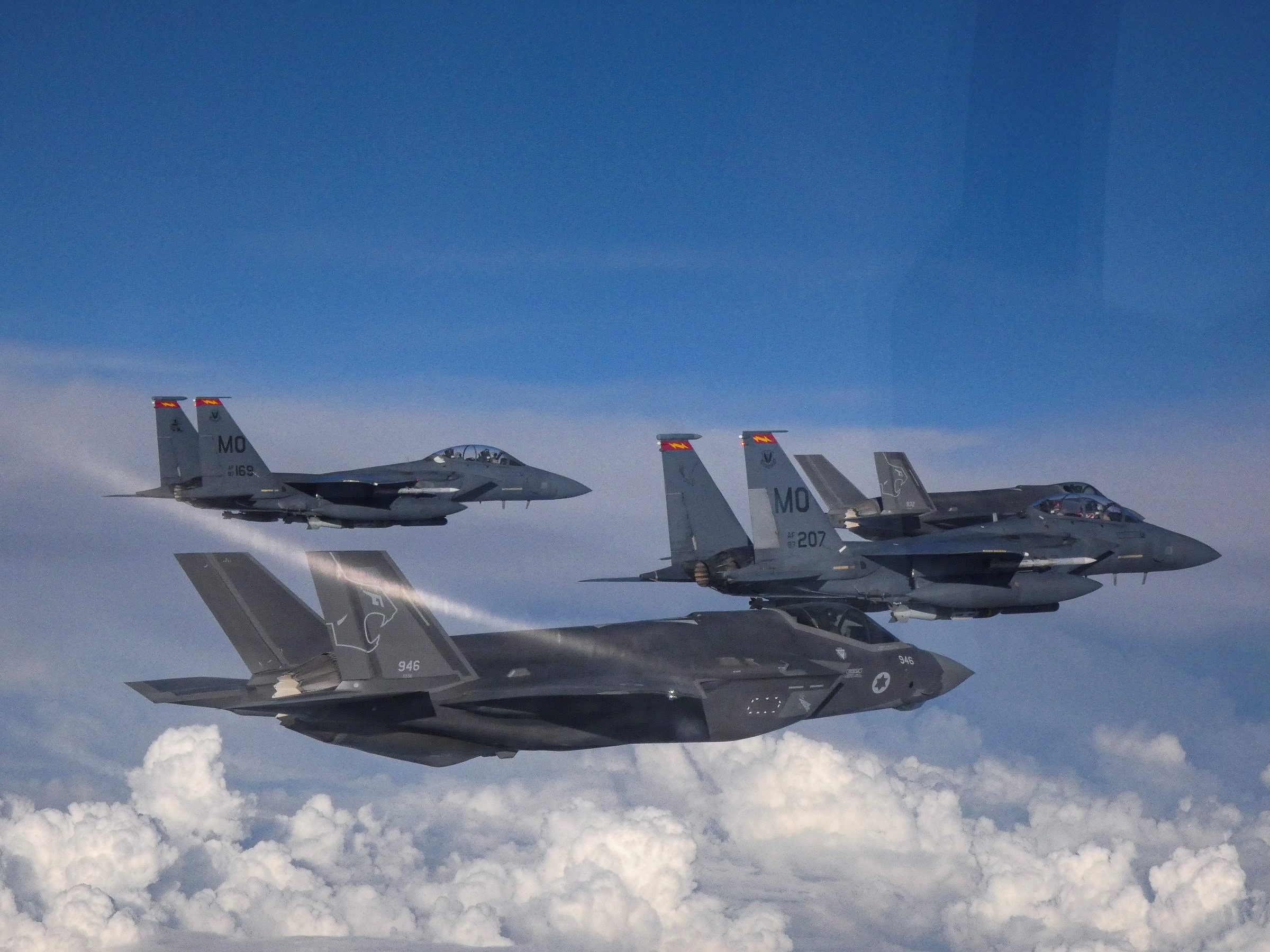
US Air Force F-15s and Israeli Air Force F-35s fly in formation as part of a bilateral exercise in the US Central Command area of responsibility, November 29, 2022. (US Air Force photo)

Gofman’s trip to the US coincided with a visit from Ron Dermer, Israel’s former strategic affairs minister and a close ally of Netanyahu. Dermer was also meeting with Trump administration officials and pushing for joint US-Israeli strikes on Iran, and the sources speaking to Reuters said both visits were part of Netanyahu’s effort to re-escalate the war. The report said that Gofman passed “intelligence” to US officials about Iran’s nuclear program.

A White House official told Reuters that Trump believes the economic campaign was “devastating” to Iran, so there was no need for “major combat operations.” But the war continues to escalate as the US and Iran have been trading strikes, and Iranian forces continue daily attacks on commercial shipping in the Strait of Hormuz.

If you liked this article, please support Antiwar.com.
We are 100% reader-supported.

Dave DeCamp is the news editor of Antiwar.com, follow him on Twitter @decampdave.

Wednesday, November 18, 2026

𝐏𝐨𝐥𝐢𝐭𝐢𝐜𝐚𝐥 𝐚𝐜𝐭𝐢𝐯𝐢𝐬𝐭𝐬 𝐜𝐚𝐥𝐥 𝐨𝐧 𝐭𝐡𝐞 𝐈𝐂𝐂 𝐭𝐨 𝐢𝐬𝐬𝐮𝐞 𝐰𝐚𝐫𝐫𝐚𝐧𝐭𝐬 𝐟𝐨𝐫 𝐓𝐫𝐮𝐦𝐩 𝐚𝐧𝐝 𝐑𝐮𝐛𝐢𝐨

 By Susan Abulhawa, Mundo Obero Workers World. org, posted on November 16, 2026

At The Hague in the Netherlands on Nov. 11, a delegation of U.S. taxpayers and international human rights attorneys hand-delivered evidence to the International Criminal Court and called for arrest warrants to be issued against President Donald Trump, Secretary of State Marco Rubio and other senior U.S. officials for allegedly aiding and abetting genocide in Gaza. The submission, organized with the Taxpayer Alliance Against Genocide (TAAG), includes sworn affidavits from doctors who worked in Gaza, eyewitness and whistleblower testimony, video and extensive documentation of U.S. political, military, diplomatic and financial support for Israel. It follows a federal court ruling protecting TAAG’s First Amendment right to share evidence with the ICC.

Susan Abulhawa

Susan Abulhawa, Palestinian American novelist and human rights advocate, delivered the following message:

I want to start by admitting that I am here not without fear but through that fear. We all know what happens to people who try to hold the powerful to account.

Careers and livelihoods are destroyed. Names are smeared. Families are threatened. The ability to function in the world is withheld. Sometimes people are put behind bars. And sometimes they are killed.

This court knows that fear. Its own judges and prosecutors have been sanctioned and threatened by the U.S. government, cut off from their banks and their lives turned upside down.

But there comes a time when the stakes are so high, when our very humanity is at stake, that one cannot remain idle even if all one has is to throw one’s body into the gears of the Empire’s awful machine. So I want to speak directly to the prosecutors and the judges of this court, because I suspect you, too, carry this particular fear.

For more than three years, we have all watched a genocide broadcast in high definition. Palestinian victims live stream their own demise. Israeli perpetrators celebrate it with the toys and lingerie of their victims, and our American tax dollars pay for it.

More than 74,000 people are recorded killed — violently so. And we know that count is actually only a fraction of the real total. Whole families have been erased from the civil registry.

Hospitals, universities, mosques, churches, bakeries, libraries, archives have been reduced to rubble. Hunger and starvation runs rampant. And so does the infestation of rodents and the spread of contagions.

More journalists have been killed in Gaza than any moment of conflict in modern memory. Nearly 2,000 people have been murdered under a so-called ceasefire.

And if you ask the people in Gaza, they will tell you that those were the lucky ones.

Ask any of the tens of thousands of children who’ve lost all their family, lost limbs, lost hope, lost their minds. Children around the world sneak into their parents’ bedrooms to sleep with their parents at night. In Gaza, children sneak out of their flimsy tents to sleep atop their parents’ graves.

As we speak, families already living in utter degradation were flooded. All their meager belongings, meager food, drowned in rain and sewage water, while Israel continues to block simple shelters waiting at the border that could give them some minimal protection in this fourth winter of genocide.

No one left on this earth can say, “I did not know.” If a genocide we all watched with our own eyes can go on into its fourth year, and the men who armed and paid for it walk free, then nothing is forbidden. There will be no law left, only power.

What is tested in Gaza never stays in Gaza. It is the same greed that uproots olive trees and poisons the seas. The same greed that is consuming our dying planet, sparing no plant or wildlife in its way. It is the same machine that runs on both silence and secrecy and that buries those who tell the truth. Sooner or later, it comes for everyone.

We want a better world. We deserve a kinder, gentler existence, one not built on hoarding resources without limits and without accountability. We want international law to apply to an American president as it has applied to African leaders in this court.

And we want a world where telling the truth is not a crime. We deserve that.

And it is something worth fighting for and worth risking our lives for. We cannot get there unless someone finds the courage to say, “No more.”

History, honorable judges and prosecutors, does not remember safe decisions.

It remembers those who stood up when standing up had a price. And history has given you this test. I know the weight of what we are asking. We are asking you to be afraid and to act anyway.

Ordinary people have crossed oceans and defied their own governments to put this evidence in your hand. Taxpayers, doctors, mothers, lawyers, we have done our part with fear in our throats, and we ask you to do yours now.

We ask you to take courage, because the world is watching, and because the dead are watching too.

******************************

Other speakers included: Francesca Albanese, U.N. Special Rapporteur on the Occupied Palestinian Territories (keynote); Curtis Doebbler and Maria Kari, TAAG legal team; Tariq Ra’ouf, Mohammad Ali and Anna Marie Stenberg, TAAG co-founders. Also speaking: Huwaida Arraf, human rights attorney, co-founder of the Freedom Flotilla Coalition; Dr. Feroze Sidhwa, trauma surgeon who has twice served in Gaza; David McIntosh, former Gaza Humanitarian Foundation manager; Jacqueline Luqman, Black Alliance for Peace; and Lamis Deek, P.A.L. Law Commission.

Solidarity statements from Veterans For Peace, Pal-Awda NY, Resistance Solidarity Network, World Beyond War and Palestinian human rights attorney Ahmed Abofoul were delivered.

Ballots and Bombs: Why US Foreign Policy Begins at Home

 by M. Reza Behnam, Antiwar. com, Nov 18, 2026 

 While an American election is a domestic political event, its shockwaves recognize no borders.  Every two to four years, the rest of the world becomes a captive audience to a high-stakes drama in which they have no vote.  Yet, they anxiously await to see how the votes of a few million Americans will impact global stability.

The solitary act of voting in a U.S. presidential or congressional election sends an immediate message across the globe; one that can alter alliances, ignite trade wars or upend the direction of foreign policy overnight.

When the U.S. Republic acts with moral clarity it inspires; when it doesn’t, the international community suffers. This is most evident in the Global South, where nations, with no formal electoral voice, routinely feel the consequences of Washington’s geopolitical and economic decisions and the heavy hand of America’s military might.

This essentially means that Americans implicitly carry global stewardship when they go to the polls.  Consequently, voting is not merely a domestic civic duty, but a powerful exercise that shapes the basic rights, livelihoods and futures of populations worldwide.

Most voters, across the political spectrum, cast their ballots through a purely economic lens.  This concentration on domestic issues, while paying little attention to foreign affairs and military entanglements, has given elected officials broad latitude to pass bloated “defense” budgets, authorize lethal military action, and enact monetary policies that devastate foreign economies.

The U.S. political system is defined by a notable paradox: elections are largely decided by parochial concerns, yet their outcomes carry profound global  consequences.  Because the United States is the world’s dominant military and economic superpower, a single ballot can determine matters of war, peace and the course of crises thousands of miles and oceans away.

What distinguished the November 3, 2026, midterms from past elections was that Americans experienced firsthand the adverse economic effects of a foreign policy that stemmed directly from their presidential and congressional choices years earlier.

Global conflicts have always impacted the domestic economy.  In the current U.S.-Israel war on Iran, however, the economic pain is hitting closer to home than ever before, due to the wartime disruption of vital maritime shipping lanes in the Strait of Hormuz in the Persian Gulf and Bab el-Mandeb in the Red Sea.

For decades, the geographic insulation of the United States created an illusion of consequence-free interventionism.  Separated by two vast oceans, the American electorate has repeatedly been insulated from the immediate visceral fallout of a foreign policy enacted in its name.  Yet, history rarely leaves a ledger unbalanced forever.

From the waters of the Pacific to the mountain ranges of Southeast Asia, from the ruins of Gaza, southern Lebanon, Baghdad and Kabul, to the volatile waters of the Strait of Hormuz, the bill for decades of manufactured pretext and unchecked militarism may have finally come due – not on distant battle fields, but at the gas pump and supermarket.

Mainstream American narratives have historically framed the retaliatory actions of opposing groups as the starting point of a conflict. By portraying these assaults as unprovoked aggression against a purely peaceful nation, political leaders and corporate media conveniently obscured the long trail of provocations that led to them.

Consider the historical amnesia of September 11, 2001. When 19 hijackers, predominantly Saudi nationals, struck New York City and Washington, D.C., the keepers of the status quo insisted that America was targeted simply because the hijackers “hated our freedom.”

Many Americans swallowed this simplistic explanation, which erased a long history of U.S. support for Israel, regional interventions and wars across West Asia.  What American officials framed as wanton hatred and hostility, the rest of the world recognizes as direct reactions, or blowback, to its policies.

What makes U.S. interventionism abroad, including the aftermath of 9-11, so unconscionable is the total absence of informed public consent.  Rather than transparency, support for war has been secured through deception, fabricated intelligence and manufactured crises.  Recent examples, include:

  • Southeast Asia: A contrived naval clash in the Gulf of Tonkin in August 1964 gave Washington a congressional blank check to escalate the Vietnam War, resulting in a catastrophe that killed millions of Southeast Asians and over 58,000 American soldiers. During the war (1964-1973), the U.S. conducted massive, secret aerial bombing campaigns in neutral Laos and Cambodia, making them the most heavily bombed countries per capita in human history; all hidden from the voters and taxpayers.
  • Afghanistan and Iraq: The U.S. “War on Terror,” following 9-11, has metastasized into decades of wars and counterterrorism efforts across West Asia, costing approximately $4 to $6 trillion. While Afghanistan became a graveyard for nation-building delusions, the 2003 invasion of Iraq – launched on lies about phantom weapons of mass destruction and non-existent ties to al-Qaeda – resulted in hundreds of thousands of dead Iraqis, ecocide and the destabilization of an entire region.
  • Occupied Palestine: Since 1948, administrations of both parties have funneled over $300 billion in aid and weaponry to Israel to legitimate its colonization of stolen Palestinian land.  They have used their diplomatic veto power to shield Tel Aviv from accountability for the dispossession and killing of Palestinians; characterizing its systemic violence as “self-defense;” all while actively working to silence domestic critics.
  • The Gaza Strip: Israel’s political influence, propaganda machine and massive lobbying campaign made certain that the regime’s genocide in Gaza was sidelined during the midterms – that it would never become a central issue. By focusing on bread-and-butter concerns, voters were kept from seeing how the failing economy is linked to the genocide.
  • The Islamic Republic of Iran: In 2026, Washington returned once again to an old familiar playbook.  Rejecting diplomatic off-ramps and recycling decades-old fictitious warnings of an imminent nuclear threat, the U.S. joined Israel’s illegal wars against Iran, plunging the Persian Gulf into active war zones and the world into an energy crisis. The United States did not enter these wars to defend its own borders; it joined to fight Israel’s battles.  In prioritizing Israel’s interests, Washington has subordinated American lives, treasure and its international credibility to a foreign agenda; leaving Americans to shoulder the immense human and economic costs.

For generations the true price of U.S. foreign hegemony has been paid entirely by others. While people abroad lost their lives, homes and futures, daily life in the American heartland continued largely undisturbed.  Aside from a small percentage  of military families, war remained a distant spectacle mediated through partisan sketchy media coverage.

Israel’s ongoing genocide in Gaza and Washington’s unprovoked, unexplained war of choice on Iran shattered that insulation. The daily slaughter, suffering, and ruin brought upon Gaza by Israeli bombs and blockades fractured the illusion of normalcy.

By reigniting the war with Iran in February 2026, Washington triggered a severe global energy shock that no conventional military shield could deflect.  Iran’s closure of the Strait of Hormuz – a vital shipping lane carrying roughly a quarter of global seaborne oil trade, significant volumes of liquefied natural gas and fertilizers – has been felt far beyond the region.

Suddenly, the repercussions of U.S. and Israeli actions were no longer just a distant headline.  American voters elected officials whose decisions were driving crude oil prices toward $100 a barrel.  Drivers watched retail gas prices climb by more than 50 percent in a matter of months; while the cost of groceries rose, as the national average price of diesel hit $6.13 per gallon, and airlines struggled under rising  aviation fuel costs.

For the first time, routine transactions at gas pumps and checkout counters made previously hidden “imperial taxes” immediately visible to the American public.

It is easy to blame politicians, officials and defense contractors for the endless cycle of violence.  In a representative democracy, however, ultimate accountability rests with the electorate.

However difficult, civic accountability requires recognizing that every bomb dropped on Southeast and West Asia, every arms transfer used to kill Palestinians and destroy Gaza, and every missile fired at Iranians has been authorized and funded by officials elected by the American public.

For far too long, foreign policy has been treated as an after-thought in U.S. elections; a secondary issue overshadowed by domestic culture wars and partisan tribalism.  Voters have routinely rewarded politicians who wrap their reckless militarism in the flag, while ignoring the covert bipartisan consensus that fuels the war machine, regardless of who occupies the Oval Office or walks the halls of Congress.

Recent economic challenges, resulting from Washington prioritizing Israel’s interests over America’s domestic needs, have been an overdue wake-up call.  Increasingly, citizens are realizing that prosperity at home and peace abroad are interconnected outcomes of their voting decisions; that ignoring international affairs when making political choices is no longer optional.

Without such recognition, the gap between the immense power of the American vote and awareness of how the government wields that power, will remain a paradox of the U.S. political system and one of its greatest domestic and international vulnerabilities.

© 2026, M. Reza Behnam, Ph.D.

Dr. Behnam is a political scientist who specializes in comparative politics with a focus on West Asia. His “Cultural Foundations of Iranian Politics,” published by University of Utah Press, and still in print, was recognized by Choice as Outstanding Academic Book for 1987–1988.

Tuesday, November 17, 2026

Díaz-Canel: Cuba Will Confront Any US Military Aggression


November 17, 2026


Share this:

    Tweet
    Email
    Print
    WhatsApp
    Reddit

Radio Havana, Resumen English.

Miguel Díaz-Canel Bermúdez, President of the National Defense Council, denounced repeated statements by U.S. spokespersons and politicians that encourage the prospect of military aggression against Cuba. He reaffirmed the nation’s resolve to reject any attempt at foreign aggression, according to sources from the Presidency.

During his activities on National Defense Day, the First Secretary of the Central Committee of the Communist Party of Cuba and President of the Republic discussed with participants in the capital’s Boyeros municipality how this preparation system strengthens the cohesion of all components of the territorial defense system.

He noted that this strategy was demonstrated last week during a nationwide military exercise—the “Moncada 2026 Strategic Exercise”—and is also evident during the National Defense Days.

The Cuban president explained that this persistent rhetoric threatening military aggression has compelled the country to activate wartime structures for operation during peacetime, and to engage in intensive efforts to prepare the population for defense.

In light of the escalating aggression from the U.S. government, the Cuban leader emphasized that the appropriate response is to demand that Washington lift and end the blockade against Cuba—a form of collective punishment imposed on the Cuban people—along with all such genocidal aggression.

Díaz-Canel reiterated that Cuba neither threatens nor attacks any nation. He described the pretexts being fabricated to poison public opinion through media manipulation as part of a slanderous policy rooted in the use of lies.

Accompanying the President were members of the Political Bureau and the National Defense Council, including Esteban Lazo Hernández, President of the National Assembly and the Council of State; Roberto Morales Ojeda, Secretary of Organization of the Party’s Central Committee; Corps Generals Álvaro López Miera and Lázaro Alberto Álvarez Casas, Ministers of the Revolutionary Armed Forces (FAR) and the Ministry of the Interior (MININT), respectively; and Division General Amado Ricardo Guerra, Secretary of the Council of Ministers.

Also in attendance were Division General Ernest Feijóo Eiró, Chief of the Western Army, and Liván Izquierdo Alonso, President of the Provincial Defense Council in Havana—along with various other commanders and officers—as well as Yucleidis Ramírez Ramírez, President of the Municipal Defense Council, and the presidents of the various Zonal Defense Councils (CDZs) in the Boyeros municipality.

With a population of just over 29,000, the Boyeros defense zone spans approximately 15 square kilometers and houses key entities that produce goods and provide services, such as the José Martí International Airport.

José Ramón Pérez Yonch, President of the Zonal Defense Council (CDZ), outlined the tasks to be carried out in the territory as part of defense preparedness, including measures for alerting and protecting the population.

Thirty-six “production and defense brigades”—composed of local residents and employees from various workplaces—are tasked with operating in the territory; in peacetime, these brigades also assist in addressing everyday challenges.

Pérez Yonch detailed the implementation and advancement of the 176 Economic and Social Transformations within this Zonal Defense Council, as well as efforts to support vulnerable individuals, ensure pension payments to retirees, and revitalize cultural, sports, and recreational facilities.

He placed special emphasis on the “My Neighborhood for the Homeland” (*Mi Barrio por la Patria*) grassroots movement—which operates across three fronts: “Productive Neighborhood,” “Safe Neighborhood,” and “Solidary Neighborhood”—as well as the contributions of the Community Youth Network, while acknowledging that there is still much work to be done.

Subscribe To ScheerPost

Editor’s Note: At a moment when the once vaunted model of responsible journalism is overwhelmingly the play thing of self-serving billionaires and their corporate scribes, alternatives of integrity are desperately needed, and ScheerPost is one of them. Please support our independent journalism by contributing to our online donation platform, Network for Good, or send a check to our new PO Box. We can’t thank you enough, and promise to keep bringing you this kind of vital news.

Donate Online

Send a Check

You can also make a donation to our PayPal or subscribe to our Patreon.
Please share this story and help us grow our network!
Share this:

    Facebook X Pinterest LinkedIn More

‘The People Have Spoken’: Largest US Nurses Union Backs Van Hollen for Senate Majority Leader

 Members of National Nurses United rally with lawmakers to show their support for the Medicare For All Act on April 29, 2025 in Washington, DC.

(Photo by Chip Somodevilla/Getty Images)

“Nurses and working people demand new Senate leadership that confronts the billionaire class, corporations, and governments to deliver transformative change for us,” said National Nurses United.

Jake Johnson

Nov 16, 2026

The largest union of nurses in the United States on Monday endorsed Sen. Chris Van Hollen to lead the Senate Democratic caucus in the new Congress, arguing he is the only candidate “ready to advance real, systemic change” following the party’s blowout midterm wins.

“The people have spoken,” National Nurses United (NNU), which represents more than 225,000 registered nurses across the US, said in a statement. “Sen. Van Hollen is the clear leadership choice for nurses because he firmly stands on the side of working-class people.”

RECOMMENDED…

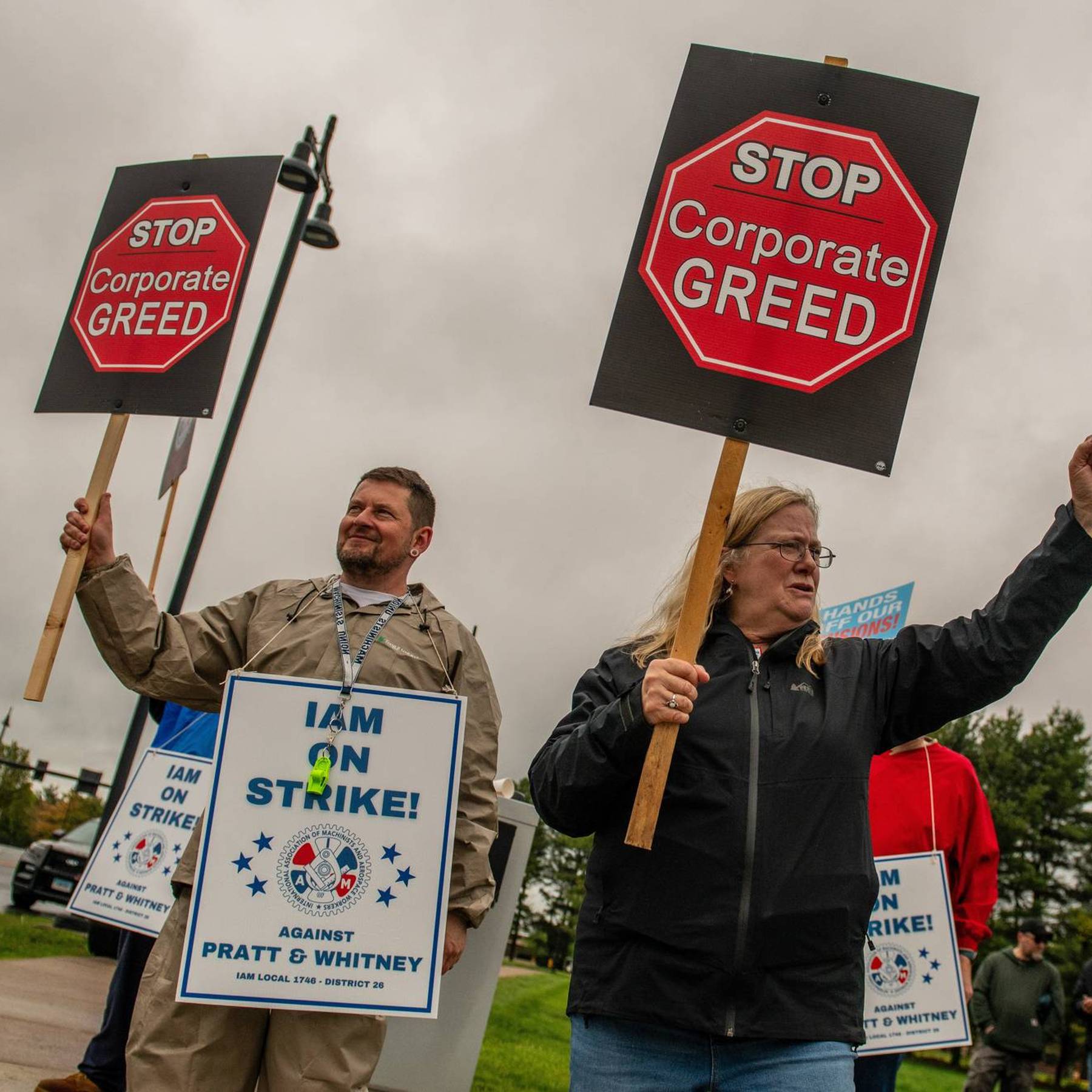
Machinists Union members hold placards during the

‘A Proven Champion of Working People’: Union With 600,000 Members Backs Van Hollen for Majority Leader

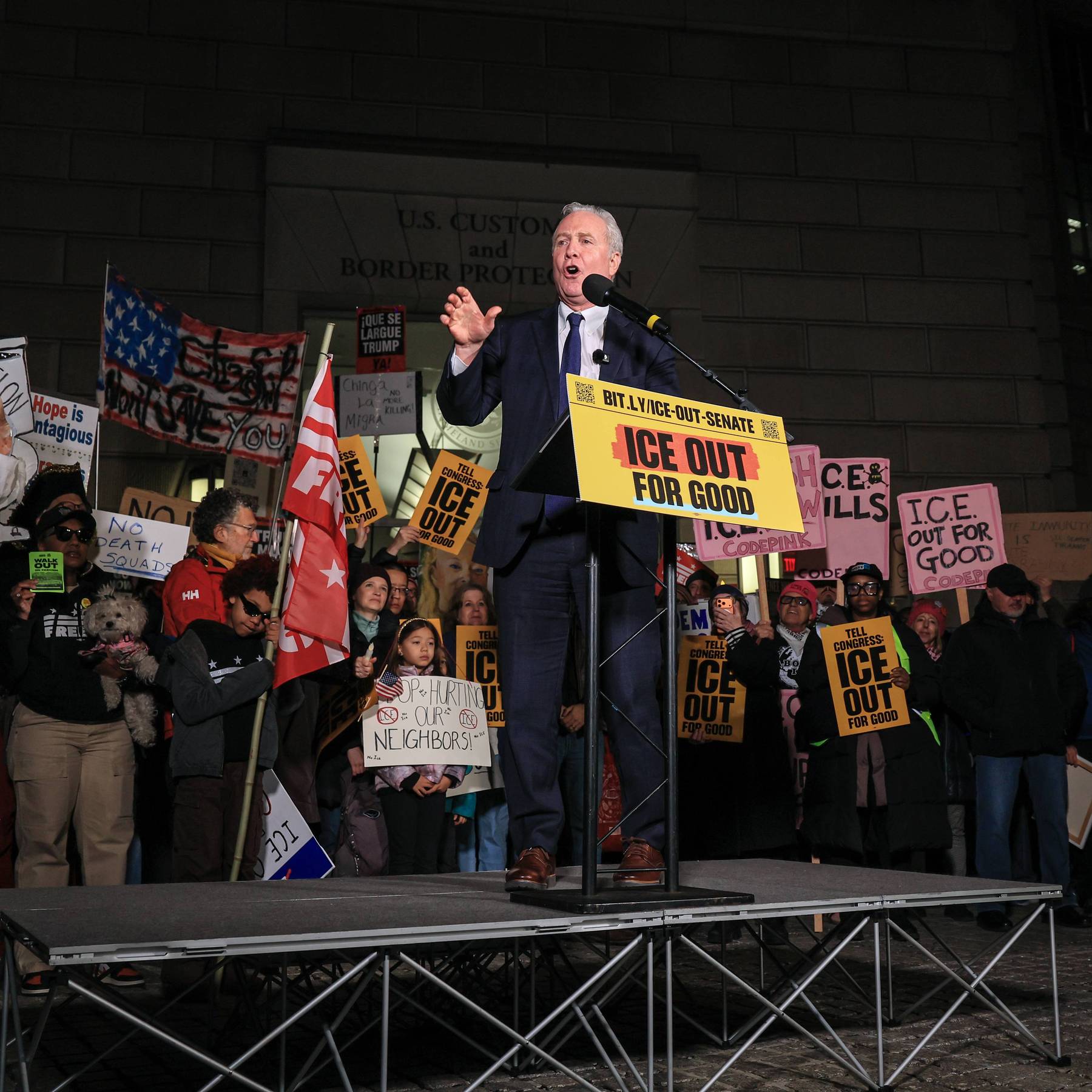
ICE Out for Good Protest and Vigil in Washington, DC

‘Man of Action, Not Just Words’: 75% of MoveOn Members Back Van Hollen Over Schumer in Fight for Senate Leadership

Unlike Sen. Chuck Schumer, the current Democratic leader, Van Hollen cosponsored the Medicare for All Act of 2025—NNU’s top legislative priority.

“Nurses witness every day, every shift how business-as-usual politics and policies have failed their patients, their communities and this country. Corporations have been allowed to steal from everyday working people,” Puneet Maharaj, NNU’s executive director, said Monday. “The Democratic Party must not squander the chance midterm voters have given it to tackle our nation in crisis. Nurses and working people demand new Senate leadership that confronts the billionaire class, corporations, and governments to deliver transformative change for us.”

“Sen. Van Hollen is the best person for the job,” Maharaj continued. “We want guaranteed healthcare, not warfare. We want to abolish ICE. We want billionaires to pay their fair share. We want our tax dollars to meet working people’s needs, not fund genocide in Gaza and the war in Iran. And this is just the beginning.”

NNU is the third major labor union to endorse Van Hollen’s bid for majority leader against Schumer, who has headed the Senate Democratic caucus for a decade. The 600,000-member International Association of Machinists and Aerospace Workers and the 90,000-member Office and Professional Employees International Union have also backed Van Hollen.

Growing union support for Van Hollen came as leaders and members of several major progressive advocacy organizations—including Indivisible, MoveOn, and the Working Families Party—threw their support behind the Maryland Democrat.

In the Senate Democratic caucus, Van Hollen has “around 15” supporters, the Maryland senator said on Sunday, calling his contest with Schumer “a wide open race.”

Speaking to Politico for an interview released on Monday, Van Hollen suggested that some senators are hesitant to publicly break with Schumer because “there’s a fear of retribution.”

“Nobody should be afraid of a little democracy in the Democratic caucus,” said the Maryland senator.

Van Hollen also said he has the votes to block any effort to fast-track the leadership election, which is currently scheduled for December 1.

“The more that time goes on, the more we have an open debate, the more we’ll see people voting for change,” said Van Hollen.

Mossad abducted Iranian general in Turkey, tortured him for weeks before killing him: Report

Israel killed one Iranian general and tortured another, while Israeli strikes on a Lebanese village killed at least 41 people in search for missing Israeli pilot


An Iranian walks over a flag depicting Israel and US during a rally in front of the former US embassy to mark the anniversary of the 1979 Iran hostage crisis, in Tehran on November 4, 2026. (Atta Kenare KENARE/AFP)

Elis Gjevori

Published date: 15 November 2026

Israel kidnapped two Iranian officials and killed one of them in a decades-long search for an Israeli pilot whose fighter jet crashed in Lebanon while bombing the country in 1986, The New York Times reported on Sunday.

Israeli pilot Ron Arad was bombing Lebanese villages in 1986 when one of his missiles malfunctioned, forcing him to eject from his fighter jet.

Since then, Israel has been on a mission to find out what happened to Arad, leaving a trail of death and destruction in its wake which has left more than 40 people dead and dozens more wounded.

The NYT said that the search for Arad was rooted in the “Jewish tradition” to bring its soldiers back to Israel.

In December 2006, Alireza Asgari, a former general in the Quds Force of Iran’s Islamic Revolutionary Guard Corps (IRGC), became one of the first victims.

New MEE newsletter: Jerusalem Dispatch

Sign up to get the latest insights and analysis on Israel-Palestine, alongside Turkey Unpacked and other MEE newsletters

Asgari, who had served as Iran’s deputy defence minister, arrived in Istanbul, Turkey and checked into the Ceylan Hotel near Taksim. Shortly afterwards, Mossad agents kidnapped him, the NYT reported.

Years later and after Iran requested information about Asgari’s whereabouts, Israeli officials told their US counterparts that they had tortured him for several weeks, believing incorrectly he had information about Arad.

Asgari knew nothing about the Israeli pilot, the Israeli spy agency concluded. Mossad agents killed Asgari anyway and dumped his body in the Black Sea, according to the NYT.

At the time, Meir Dagan headed Mossad. A decision to kill a senior Iranian official would likely have required the Israeli prime minister’s approval. Ehud Olmert held that position in 2007.

Iranian officials conducted their own investigation into Asgari’s disappearance and found that Israeli agents had broken into his hotel room in Istanbul, drugged and kidnapped him. Investigators also found the vehicle used in the operation abandoned near the Black Sea.

Despite the lack of evidence linking Iran to Arad’s disappearance, Israel went on to kidnap General Abdullah Saberi, an IRGC commander, while he was out for a morning run in Damascus in 2021.

Mossad operatives bundled Saberi into a refrigerator box and loaded him into a moving van.

After a lengthy interrogation involving torture, the Israelis dumped Saberi alive in Johannesburg, South Africa, in an attempt to conceal who was behind the kidnapping.

Saberi also knew nothing about Arad.

Turkey and Qatar sign mutual defence agreement

Read More »

A joint Hezbollah-Iranian investigation subsequently concluded that Arad most likely died in 1988 in Nabi Chit, a village in eastern Lebanon, around two years after his plane went down, according to the NYT.

Investigators believed his captors had held him there and later buried him in the village. Israeli officials, however, remained obsessed with the theory that Iran knew what had happened to him.

In December 2025, Israel kidnapped Ahmad Shukr, a retired Lebanese security officer who, according to the NYT, left home to attend what he believed was a business meeting.

Lebanese officials believe Israeli agents abducted him. Shukr has not been seen alive since and his whereabouts are unknown.

Israeli officials now believe that Shukr killed Arad in retaliation for the killing of his brother by Israeli forces near Nabi Chit in 1988.

There is no evidence to support the Israeli theory.

Earlier this year, Israeli forces launched more than 40 strikes on Nabi Chit between 6 and 7 March, believing Arad was buried in a cemetery in the village.

The Israeli attacks killed at least 41 people and wounded more than 40 others, and Arad’s body was not found.

Across Lebanon, Israeli attacks have killed at least 4,358 people between 2 March and early September 2026.