MEM, June 11, 2026
![An aerial view of destruction in Sheikh Ridwan neighborhood following the Israeli forces' withdrawal with the ceasefire agreement in Gaza City, Gaza on October 17, 2025. [Mohammed Abu Samra - Anadolu Agency]](https://i0.wp.com/www.middleeastmonitor.com/wp-content/uploads/2025/10/AA-20251017-39440420-39440381-SHEIKH_RIDWAN_NEIGHBORHOOD_SUFFERS_EXTENSIVE_DAMAGE_FOLLOWING_ISRAELI_FORCES_WITHDRAWAL.jpg?fit=920%2C613&ssl=1)
An aerial view of destruction in Sheikh Ridwan neighborhood following the Israeli forces’ withdrawal with the ceasefire agreement in Gaza City, Gaza on October 17, 2025. [Mohammed Abu Samra – Anadolu Agency]
Listen
0:00/11:32
1.0x
Ready
Since the launch of Israel’s devastating war on Gaza, Tel Aviv—heavily shielded by Western political pressure and strategic intimidation against any state rejecting its actions—has faced widespread regional rhetorical backlash. Almost all Arab states, including those with formal ties to Israel, have issued varying forms of public condemnation. Yet behind the theatre of diplomatic outrage, a far more cynical reality has solidified: the core normalizers—including the Abraham Accords signatories, alongside Jordan and Egypt—have fiercely protected their foundational ties to Tel Aviv, ensuring that the machinery of state relations remains fundamentally uninterrupted.
In other words, business continued as usual, albeit with varying degrees of public caution. Shockingly, not a single normaliser country took concrete diplomatic or legal steps that could amount to the actions taken by non-Arab European nations.
While European governments like Spain and Norway formally recognised the State of Palestine, and Madrid officially intervened in the genocide case against Israel at the International Court of Justice, Arab capitals remained entirely absent from these legal mechanisms.
Even the United Kingdom, a staunch Western ally of Tel Aviv, moved to partially suspend arms export licenses over international humanitarian law concerns. By contrast, the Arab normalizers refrained from any punitive measures—whether legal, economic, or diplomatic—that could fundamentally disrupt their bilateral frameworks with Israel.
READ: Israel plans wide Gaza operation amid ceasefires elsewhere
The profound irony lies in the stark divergence between rhetoric and responsibility. From the constituent members of the League of Arab States (LAS), the regional public naturally expected serious, immediate, and material reactions to the catastrophe in Gaza. After all, the Palestinian struggle is explicitly enshrined in almost every single LAS document as the supreme, ‘central cause’ of the Arab world—a boilerplate phrase mechanically inserted into nearly every summit declaration, including those ostensibly dedicated to economic reform or environmental cooperation. Yet, despite the immense, unyielding public rage boiling across the Arab streets, these governments stood their ground.
Instead of translating their institutional mandates into punitive diplomatic, legal and economic actions against Israel, they chose to hide behind empty rhetoric and meaningless communiqués, weaponising the Palestinian cause as a convenient distraction to pacify local populations while ensuring that their actual state policies remained entirely unchanged.
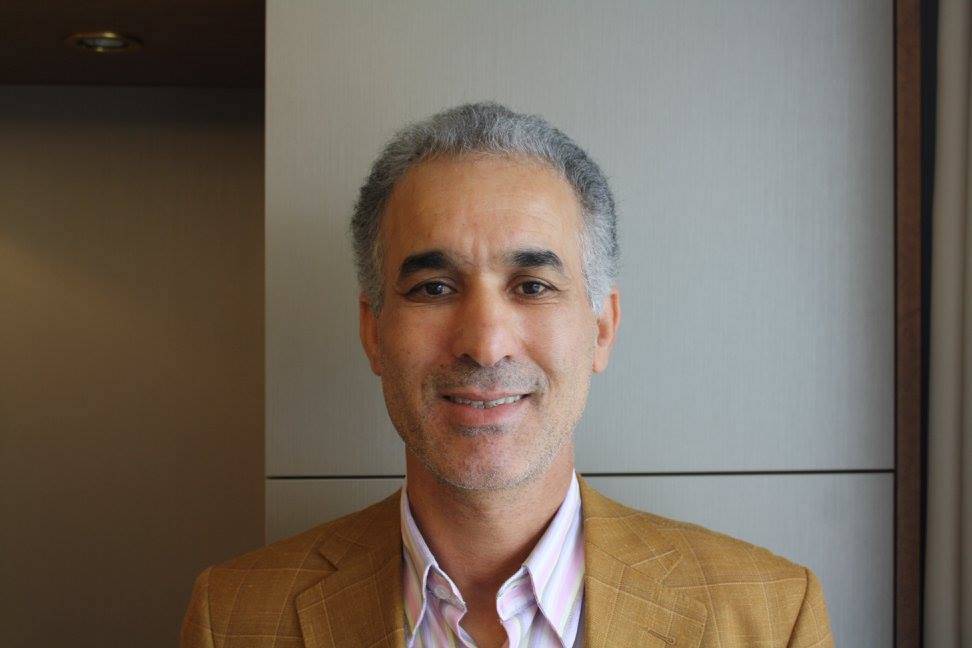
Even the official media apparatuses of the LAS countries actively collude in disillusioning the Arab audience. They tirelessly repeat empty government slogans and safe debates on Israeli aggression—though even this minimal coverage is heavily sanitized or absent in the UAE and Bahrain, and strictly curtailed in Morocco. Crucially, these networks enforce an absolute embargo on debating their own governments’ shameful positions. As a frequent guest on these regional talk shows, I have witnessed this systemic paralysis firsthand. I repeatedly pleaded with a Libyan TV station to dedicate a few episodes of its flagship program to analysing these regional diplomatic failures. They never did. The explanation they gave me was chillingly simple: ‘We are based in Jordan, and doing anything like that is highly likely to generate severe problems for us with the host authorities. The same happened with another one based in Istanbul.
Nowhere is the disconnect between moral posturing and material reality more visible than in the ledger of regional trade. As I have previously argued in these pages, Arab capitals possess immense economic and financial levers—ranging from sovereign wealth divestments to the suspension of market access—that could exert genuine pressure on Tel Aviv. Yet, they have deliberately chosen not to leverage them. Instead, the economic machinery has hummingly defied all expectations.
The UAE-Israel Comprehensive Economic Partnership Agreement (CEPA), which systematically removed tariffs on 96 percent of goods and was signed just months before October 2023, went into full force implementation within months as if nothing was happening, and it remains so today.
According to the UN Comtrade Israel-UAE Registry Israel-UAE Registry, bilateral commerce did not freeze nor even slow; it thrived. The UAE alone exported over $1.6 billion worth of goods to Israel. Most damningly, this transactional pipeline included hundreds of millions of dollars in refined petroleum—highly needed to keep Israel’s killing machine turning—beside vital industrial metals. While the streets of Amman, Cairo, and Casablanca burned with indignation, the normalisers ensured that the fuel, funds, and supply lines keeping the Israeli economy resilient were never compromised.
READ: Former European leaders urge tougher EU action against Israel over Gaza and West Bank
This absolute insulation of state policy from popular will exposes the grim effectiveness of the modern Arab security state. Historically, authoritarian regimes across the region approached the Palestinian cause very cautiously, fearing that a failure to project nominal solidarity had the potential to become a lightning rod for domestic uprisings. Today, that calculus has fundamentally shifted. Through sophisticated digital surveillance networks—frequently utilising Israel’s own advanced cyber-intelligence and surveillance products—intense policing, and a strategic pivoting toward hyper-nationalistic or purely transactional domestic development projects, such as the UAE’s tech-driven economic models, these ruling elites have effectively decoupled public sentiment from executive state actions. In countries like Egypt and Jordan, security apparatuses are highly adept at acting as pressure valves. They systematically permit tightly controlled, heavily policed street protests within designated perimeters, allowing the public to exhaust its emotional fury and chant anti-normalisation slogans for the cameras. Yet, the moment that popular outrage attempts to cross the line from performative condemnation to demanding actual structural policy changes—such as the blockage of transit corridors or the total severance of treaties—the state security fist clamps down instantly. The message written into this enforcement strategy is as clear as it is cynical: public rage is tolerated as an emotional outlet, but it will never be permitted to interfere with the permanent geostrategic and economic architecture of the state. Even a country like Libya, despite its long history of unyielding ideological, financial, and military support for Palestine under the late Muammar Gaddafi, has been neutralised by internal division; today, its fragmented authorities are no more active or effective in confronting Tel Aviv than, say, Egypt.
Ultimately, the ongoing tragedy in Gaza has pulled back the curtain on a profound structural mutation in Middle Eastern geopolitics.
The era in which the Palestinian struggle served as the ultimate litmus test for Arab state legitimacy is effectively over, replaced by cold, hyper-transactional policies.
Even the LAS’ usually empty statements now hardly criticise Israel more openly than some of its individual members do, showcasing a total institutional breakdown. By protecting the underlying architecture of normalization, keeping the trade pipelines operational, and managing domestic anger as a security threat rather than a political mandate, the region’s leaders have sent an unmistakable signal to the global community: business as usual is outlasting a genocide. While the modern security apparatus can successfully suppress the rage of the Arab street today, building a regional order on such a cavernous moral vacuum is a dangerous gamble. In their desperate bid to secure immediate geostrategic alignments, the Arab normalisers may have preserved their treaties, but they have undeniably sown the seeds of deep, systemic instability for generations to come.


No comments:
Post a Comment